
Gas-liquid two-phase thermoacoustic refrigerator
A thermoacoustic refrigeration, vapor-liquid technology, applied in refrigerators, refrigeration and liquefaction, lighting and heating equipment, etc., can solve the problems that affect the application, low density, low heat transfer coefficient, etc.
Patent Information
- Authority / Receiving Office
- CN · China
- Patent Type
- Patents(China)
- Current Assignee / Owner
- Publication Date
- 2010-01-20
- Estimated Expiration
- Not applicable · inactive patent
Smart Images
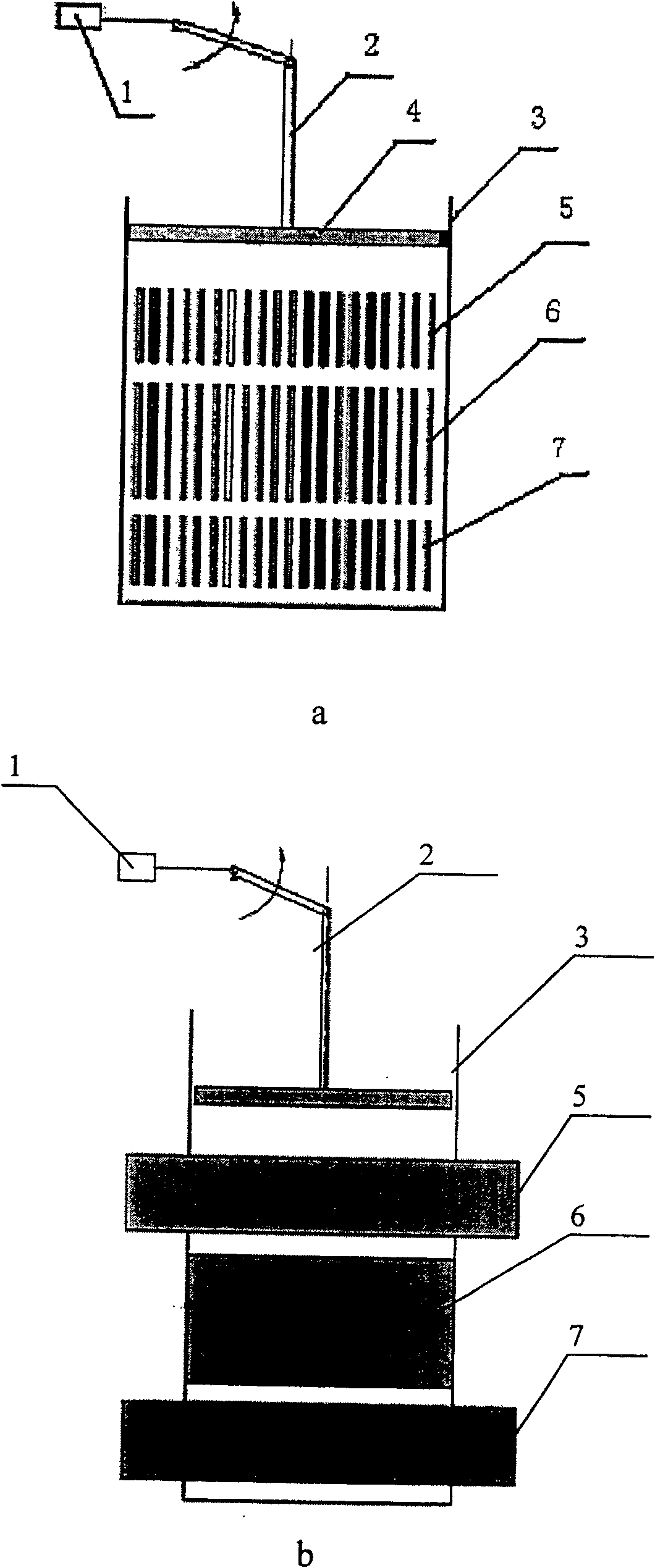
Figure 1 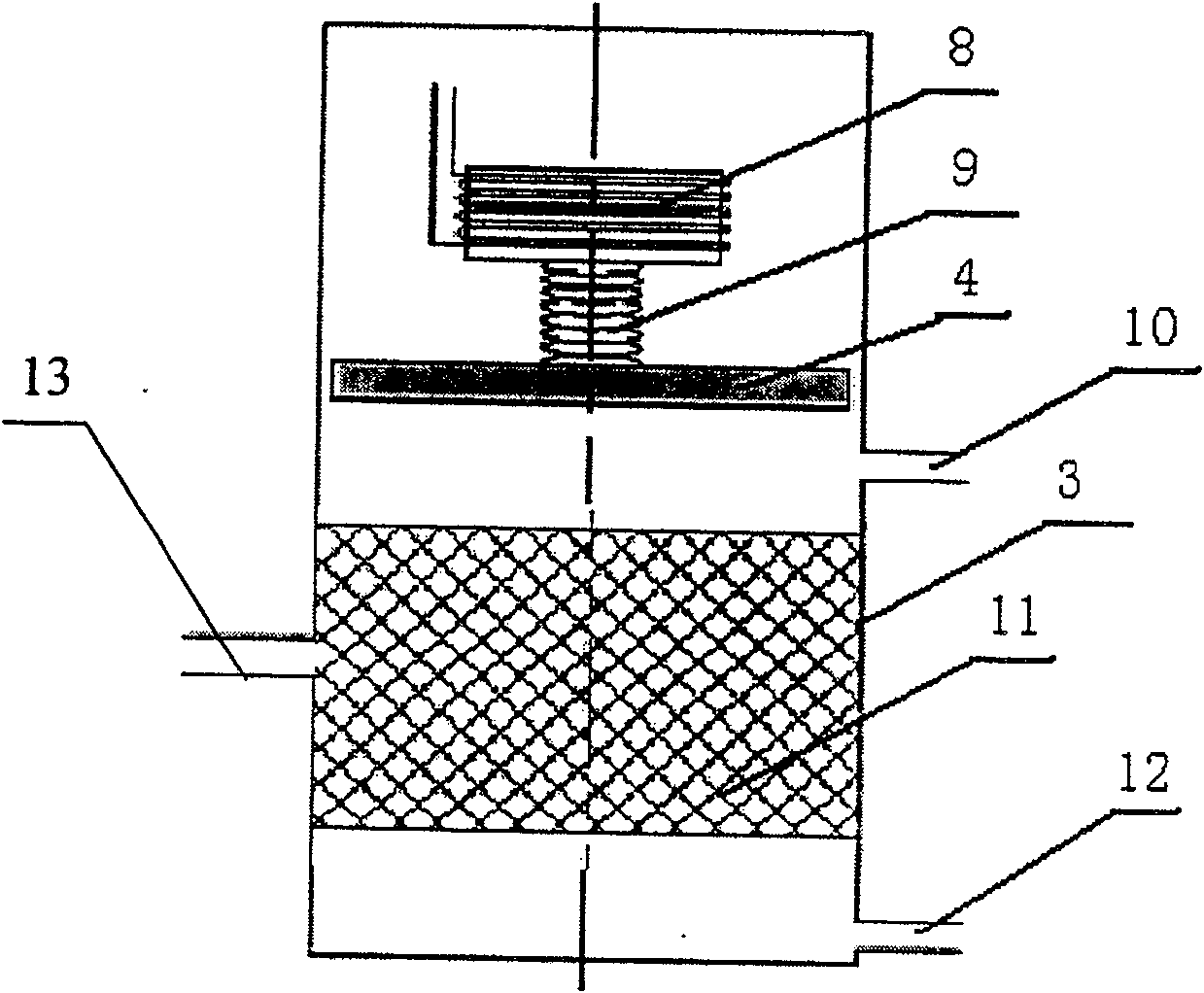
Figure 2
Abstract
Description
technical field
[0001] The invention belongs to the technical field of air conditioning and refrigeration, and in particular relates to a vapor-liquid two-phase thermoacoustic refrigeration device which utilizes mechanical energy to realize refrigeration through the vapor-liquid phase transition process of working fluid. Background technique
[0002] Refrigeration devices are widely used in industrial processes and everyday life, and play an important role in modern civilization. But its refrigeration process consumes a large amount of energy, and its device is complicated and expensive. Therefore, the development of high-efficiency, simple and cheap refrigeration devices is an urgent problem to be solved at present. Thermoacoustics is a physical phenomenon that has long been recognized by people. The interaction between fluid working medium and solid can realize the direct conversion between mechanical energy and thermal energy. Therefore, thermal power devices based on t...
Examples
Embodiment 1
[0011] Example 1, see figure 1 (a), the present invention includes a cavity 3 and a cooler 5, a thermoacoustic sheet 6 and an evaporator 7, which are fixed in the cavity 3 from top to bottom and are composed of parallel plates with equal spacing, and two adjacent parallel plates Fluid working medium channels are formed, and the spacing thereof is 0.05-0.1 times the height of the thermoacoustic sheet 6 . see figure 1 (b) The cooler 5 is composed of metal sheets with good thermal conductivity, the middle part is located inside the cavity 3, and the two ends are in some kind of cooling medium; its function is to discharge the heat generated during the cooling process. The evaporator 7 is composed of a metal sheet with good thermal conductivity, and the two ends protrude out of the cavity to output cooling capacity, and the height of the cooler 5 and the evaporator 7 is 0.4-0.6 of the height of the thermoacoustic sheet 6 made of non-metallic materials times. The functions of th...
Embodiment 2
[0012] Example 2: see figure 2 In this embodiment, a three-dimensional grid-shaped heat transfer enhancement element 11 made of wire is arranged in the cavity 3, and a hot water outlet 10, a cold water outlet 12 and a water inlet 13 are opened at the upper and lower ends of the cavity 3 , the piston 4 is connected with the electromagnet 8 through the spring 9, and the electromagnet 8 is connected with the AC power supply. Since the AC power supply alternately transmits power to the electromagnet 8, a magnetic field is alternately generated around the electromagnet 8, and the piston 4 is connected between the magnetic field and the spring 9. Under the action of the cavity 3, it moves up and down, and under the action of the heat transfer strengthening element 11, the water entering the cavity 3 from the water inlet 13 changes, the hot water is discharged from the hot water outlet 10, and the cold water is discharged from the cold water outlet 12 discharge.