
Partitioning device for connecting pipes
A technology of connecting pipes and connecting shafts, which is applied to machines/engines, internal combustion piston engines, mechanical equipment, etc., can solve the problems of complex structure of the supercharging system, and achieve the effect of simple structure and reasonable design.
Patent Information
- Authority / Receiving Office
- CN · China
- Patent Type
- Applications(China)
- Current Assignee / Owner
- Publication Date
- 2012-11-07
- Estimated Expiration
- Not applicable · inactive patent
Smart Images
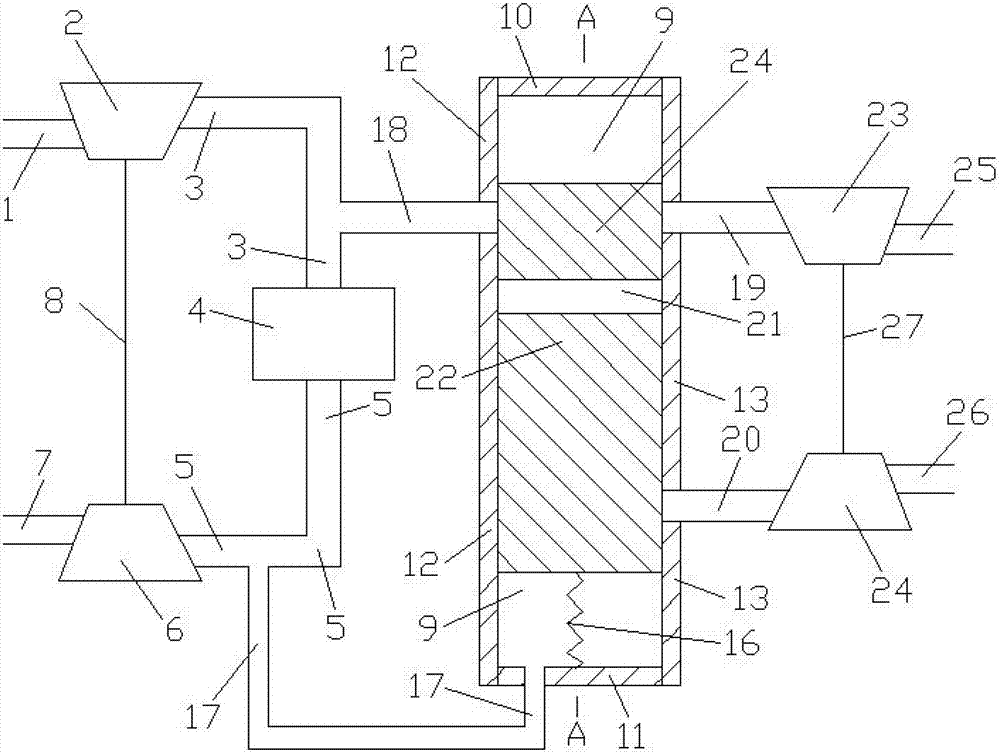
Figure 1 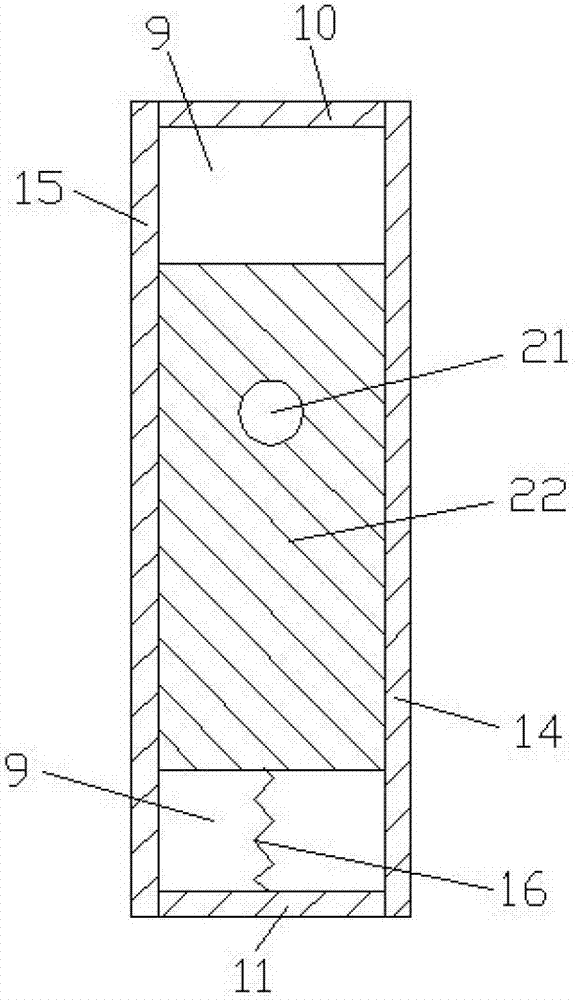
Figure 2
Abstract
Description
technical field
[0001] The invention relates to a turbocharging system in the field of internal combustion engines, in particular to a connecting pipe isolating device. Background technique
[0002] With the development of society and the improvement of environmental protection requirements, the application of engine supercharging technology is becoming more and more extensive. Most of the engines with medium and high power adopt turbocharging technology to improve power and reduce fuel consumption. The two basic types of turbocharging systems are constant pressure supercharging system and pulse supercharging system. Constant-pressure supercharging system, each cylinder shares a large-volume exhaust pipe, the structure of the exhaust pipe system is relatively simple, the equivalent flow area of the turbine is relatively large, the pressure in the exhaust pipe is basically kept constant, and the pressure is only related to the load of the engine It is related to the rotati...
Examples
Embodiment
[0014] Such as figure 1 and figure 2 As shown, the present invention includes: a first air intake pipe 1, a first compressor 2, an engine intake pipe 3, an engine 4, an engine exhaust pipe 5, a first turbine 6, a first air outlet pipe 7, and a first connecting shaft 8 , volume cavity 9, volume cavity upper wall 10, volume cavity lower wall 11, volume cavity left wall 12, volume cavity right wall 13, volume cavity front wall 14, volume cavity rear wall 15, spring 16, first connecting pipe 17, The second connecting pipe 18, the third connecting pipe 19, the fourth connecting pipe 20, the through pipe 21, the moving body 22, the second compressor 23, the second turbine 24, the second suction pipe 25, the second air outlet pipe 26 and The second connection shaft 27, the air inlet and outlet of the first compressor 2 are connected with the air outlet of the first air intake pipe 1 and the air inlet of the engine intake pipe 3 respectively, and the air inlet and outlet of the engi...