
Preparation method of super-molecular nano fiber for magnetic resonance imaging radiography
A magnetic resonance imaging and nanofiber technology, which is applied in the field of supramolecular nanofiber preparation, can solve the problems of long detection time, high detection cost, low sensitivity, etc., and achieves the advantages of simple preparation method, strong bonding ability and broad application prospects. Effect
Patent Information
- Authority / Receiving Office
- CN · China
- Patent Type
- Applications(China)
- Current Assignee / Owner
- Publication Date
- 2013-03-13
- Estimated Expiration
- Not applicable · inactive patent
Smart Images
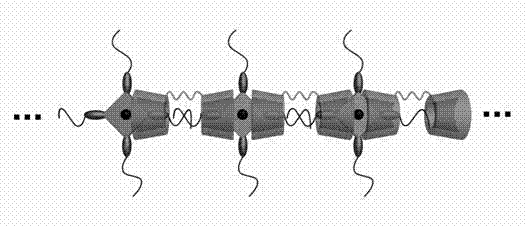
Figure 1 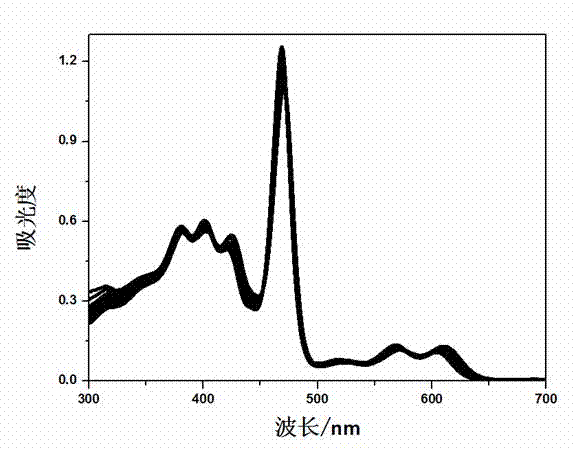
Figure 2 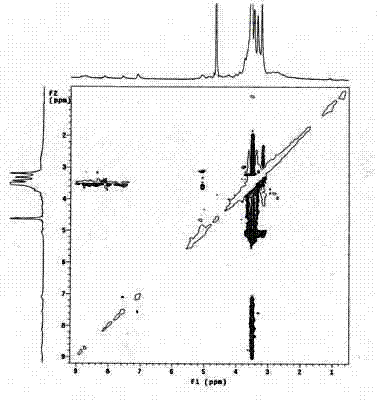
Figure 3
Abstract
Description
Technical field
[0001] The invention belongs to nano supramolecular materials, in particular to a preparation method of supramolecular nanofibers used for magnetic resonance imaging contrast.
Background technique
[0002] Magnetic Resonance Imaging (Magnetic Resonance Imaging) is a new type of high-tech imaging examination method in recent years, which uses non-invasive radiation to obtain spatially and temporally resolved three-dimensional (3D) images of the entire living body. Although this new diagnostic technique was only used in clinical medicine in the early 1980s, it has no ionizing radiation (radiation) damage, no bony artifacts, and can be multi-directional (transverse, coronal, sagittal, etc.) And the unique advantages of multi-parameter imaging, high soft tissue resolution, and the ability to display vascular structures without the use of contrast agents have become the main means of diagnosis and monitoring of some diseases, see: 1) C.H.Polman, S.C.Reingold, ...
Examples
Embodiment
[0024] A method for preparing supramolecular nanofibers for magnetic resonance imaging contrast, comprising the steps of:
[0025] 1) Dissolve 630mg of 6-isothiocyanato-6-deoxy-permethylated β-cyclodextrin and 13mg of ethylenediamine in 10mL of acetonitrile solvent under the protection of argon, and stir at 22°C for 10 hours, The solvent was removed by rotary evaporation, and the remaining solid was purified by column chromatography to obtain 300 mg of white diPMCD solid with a yield of 51%.
[0026]1H NMR (400MHz, CDCl3) δ7.54(s,2H),6.28(s,2H),5.13(d,J=10.4Hz,10H),5.01(s,2H),4.94(s,2H),4.20 –3.04(m,208H).13C NMR(100MHz,CDCl3)δ182.63,99.88,99.08,98.98,98.82,82.29,82.10,81.92,81.76,81.63,81.10,80.41,80.24,80.13,77.26,71.40, ,71.07,71.00,70.90,70.83,70.01,61.64,61.54,61.41,61.36,61.32,59.41,59.24,59.11,59.04,58.86,58.71,58.65,58.53,58.39,43.95,42.97 z:[M+Na]+calcd for C 128 h 226 N 4 o 68 S 2 Na + 2994.3638;found: 2994.3680.
[0027] 2) Dissolve 15mg diPMCD and 12.5mg m...