
MicroRNA detection method based on non-enzymatic amplification and electrochemiluminescence principles
A technology of non-enzyme amplification and detection method, which is applied in the field of detection of microRNA based on the principle of non-enzyme amplification combined with electrochemiluminescence, which can solve the problems of cumbersome operation and achieve the effect of simple reaction device, simple operation and low cost
Patent Information
- Authority / Receiving Office
- CN · China
- Current Assignee / Owner
- Publication Date
- 2013-11-06
- Estimated Expiration
- Not applicable · inactive patent
Smart Images
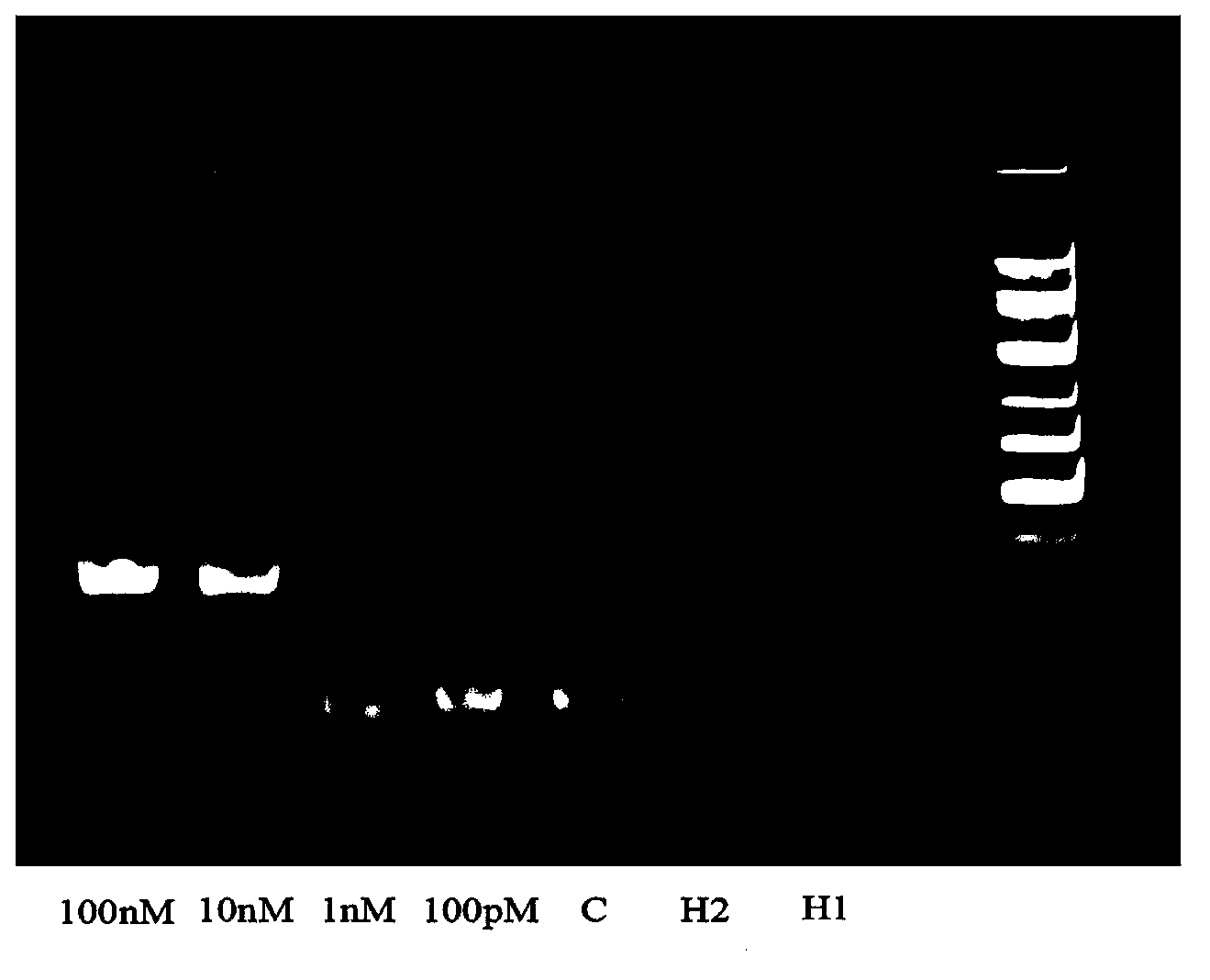
Figure 1 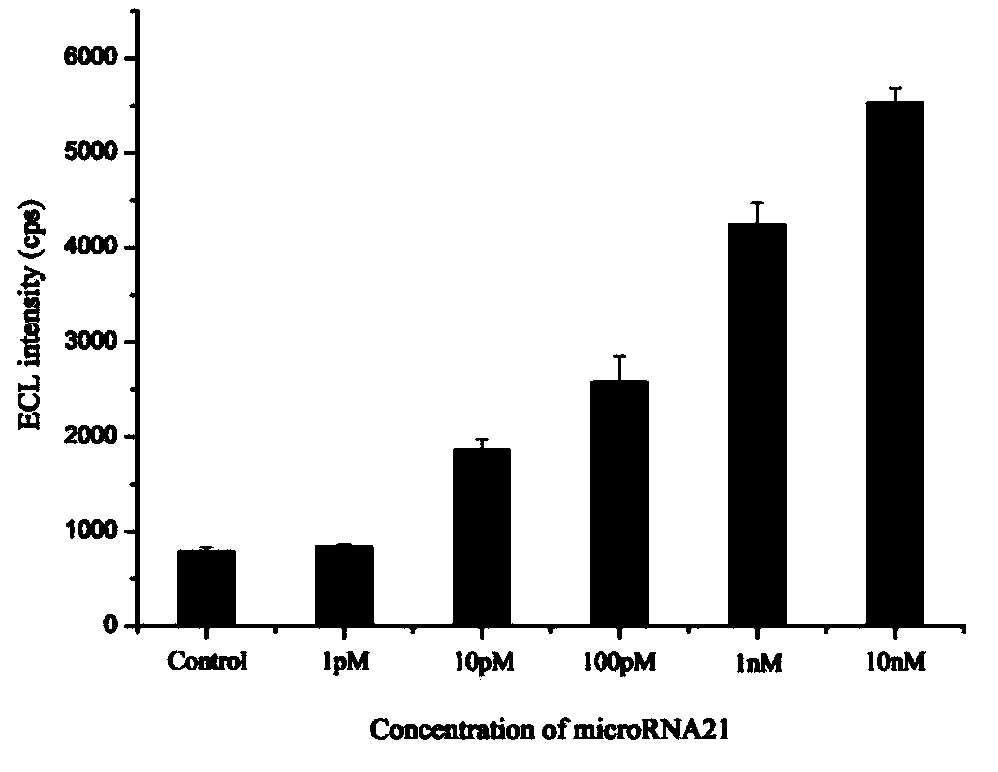
Figure 2 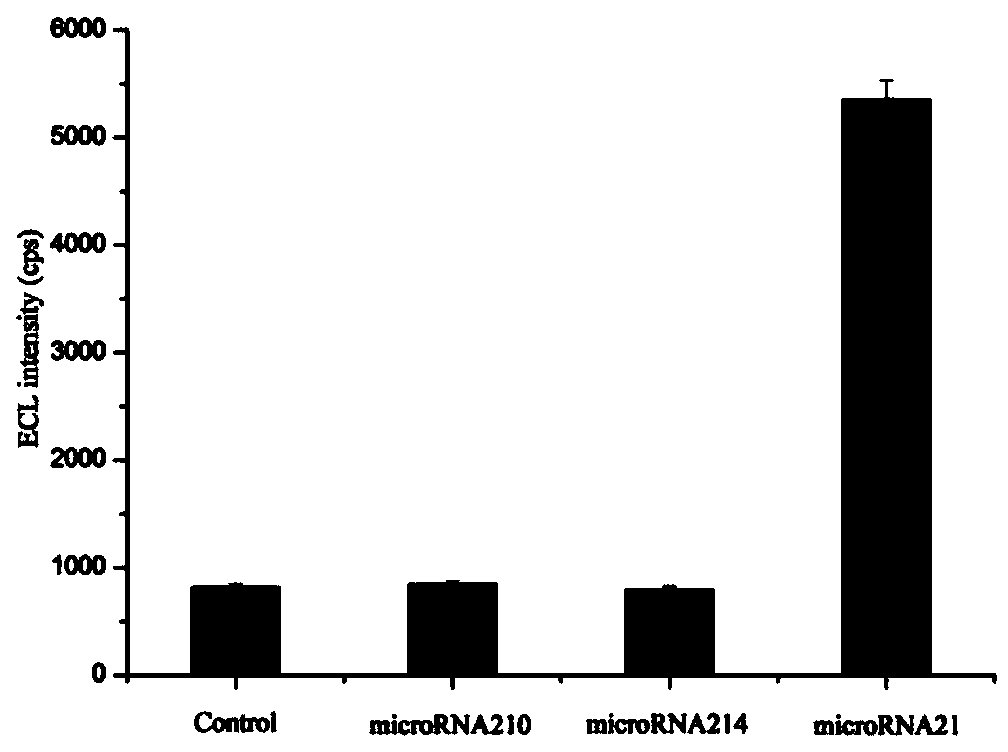
Figure 3
Abstract
Description
technical field
[0001] The invention belongs to the technical field of nucleic acid detection, in particular to a method for detecting microRNA based on the principle of non-enzyme amplification combined with electrochemiluminescence. Background technique
[0002] microRNA (miRNA) is a class of non-coding, endogenous RNA with a length of 19-25 nucleotides. It is widely distributed in eukaryotic cells. In recent years, researchers have discovered hundreds of microRNAs in animals and plants, and determined the main functions of microRNAs. This type of RNA mainly has a regulatory function, and its in vivo synthesis process mainly includes: first, transcribe a longer primary transcript from the non-coding sequence in the genome; then, the primary transcript is produced by cutting and processing different nucleases. This type of RNA can be assembled into the RNA-induced silencing complex, recognize the target mRNA through complementary base pairing, and guide the silencing comp...
Examples
Embodiment 1
[0033] The microRNA-21 closely related to human cancer was selected as the detected microRNA. The sequence of microRNA-21 is: UAGCUUAUCAGACUGAUGUUGA.
[0034] The steps for detecting microRNA-21 using the microRNA detection method based on the principle of non-enzyme amplification and electrochemiluminescence are as follows:
[0035] 1) Design DNA hairpin probes
[0036] According to the principle of non-enzymatic amplification and microRNA-21 sequence, the hairpin H1 and hairpin H2 sequences required by the non-enzymatic amplification system were designed; the microRNA-21 sequence was UAGCUUAUCAGACUGAUGUUGA, and the hairpin H1 and hairpin H2 sequences were shown in Table 1. The 3' segment of hairpin H1 is labeled with 6-carbon amino group, and the 3' end of H2 is labeled with biotin.
[0037] Table 1
[0038] name Sequence (5'-3') H1 TCAACATCAGTCTGATAAGCTACCATGTGTAGATAGCTTTATCAGACT (6-carbon amino group labeled at the 3' end) H2 TAAGCTATCTACACATGGT...