
Stent and method of inserting stent into delivery catheter
A frame and deformation element technology, applied in the field of aneurysm treatment, can solve the problems of no supply, large radial strength, blockage of branch vessels, etc., and achieve the effects of preventing blockage, strong radial strength, and reducing the occupying effect
Patent Information
- Authority / Receiving Office
- CN · China
- Patent Type
- Patents(China)
- Current Assignee / Owner
- Publication Date
- 2016-09-14
Smart Images
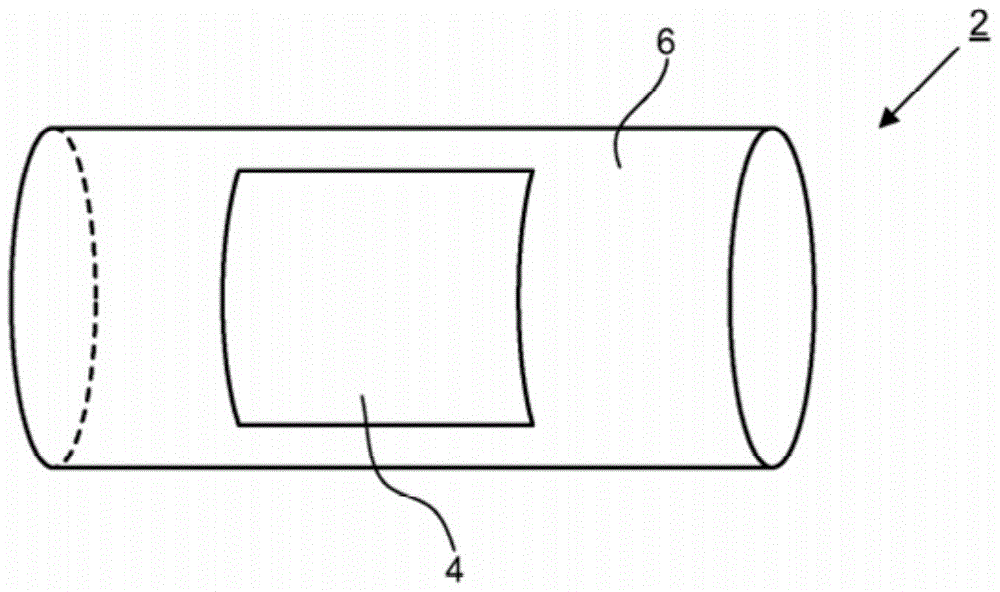
Figure 1 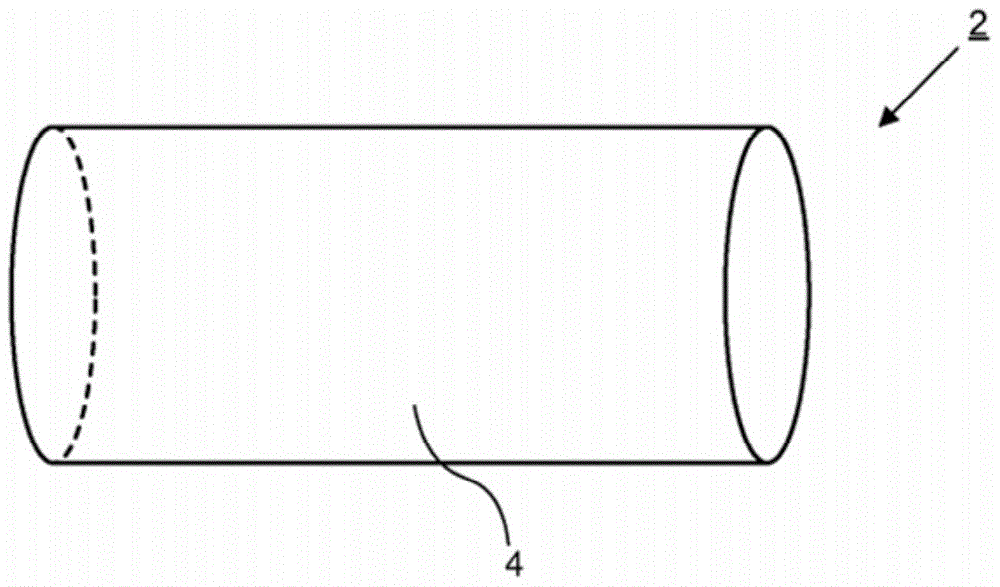
Figure 2 
Figure 3
Abstract
Description
technical field
[0001] The present invention relates to the field of stents for the treatment of aneurysms, such as intracranial aneurysms (also known as cerebral aneurysms). Background technique
[0002] An intracranial aneurysm is a weak area in the wall of an artery in the brain where dilation or bulging of the artery wall may occur. Histologically, narrowing of the arterial media, muscularis intermediary, and internal elastic lamina causes structural defects. These defects combined with hemodynamic factors lead to out-punching of the aneurysm. Intracranial aneurysms are very common, affecting one to five percent of adults, according to autopsy studies. In the United States alone, perhaps 10 to 12 million people have intracranial aneurysms.
[0003] Current methods used to treat intracranial aneurysms include surgical clipping and endovascular coiling. In the surgical clipping method, the patient's skull is opened and surgical clips are placed across the neck of the a...
Examples
Embodiment Construction
[0031]In the following description, any reference to a deformable element should be understood to include both forward deformation (eg stretching, stretching) and reverse deformation (eg contraction). Typically, the scaffold will be formed from a material that is elastic at room temperature and / or body temperature. Typically, the stent will be configured such that the stent frame is resilient to all deformations during normal use at room temperature and / or body temperature. However, this is not required. The stent frame may be configured to allow some degree of plastic deformation at room temperature and / or body temperature.
[0032] figure 1 with figure 2 is a schematic side view of an example stent in a radially fully expanded state. The support comprises an elongated frame 2 . Frame 2 can be cylindrical, for example. When the frame 2 is cylindrical, its maximum transverse dimension is the same (ie equal to the diameter) at all positions and angles. When the frame 2 ...