
Anhydrous fracturing fluid suitable for shale gas and preparation method of anhydrous fracturing fluid
An anhydrous fracturing fluid and shale gas technology, applied in chemical instruments and methods, drilling compositions, etc., can solve the problems of high price of triethanolamine oleate, difficult on-site construction, and increased fracturing cost. , to achieve the effect of convenient industrial production, good sand carrying performance, and short gelling time
Patent Information
- Authority / Receiving Office
- CN · China
- Patent Type
- Applications(China)
- Current Assignee / Owner
- Publication Date
- 2015-01-21
- Estimated Expiration
- Not applicable · inactive patent
Smart Images
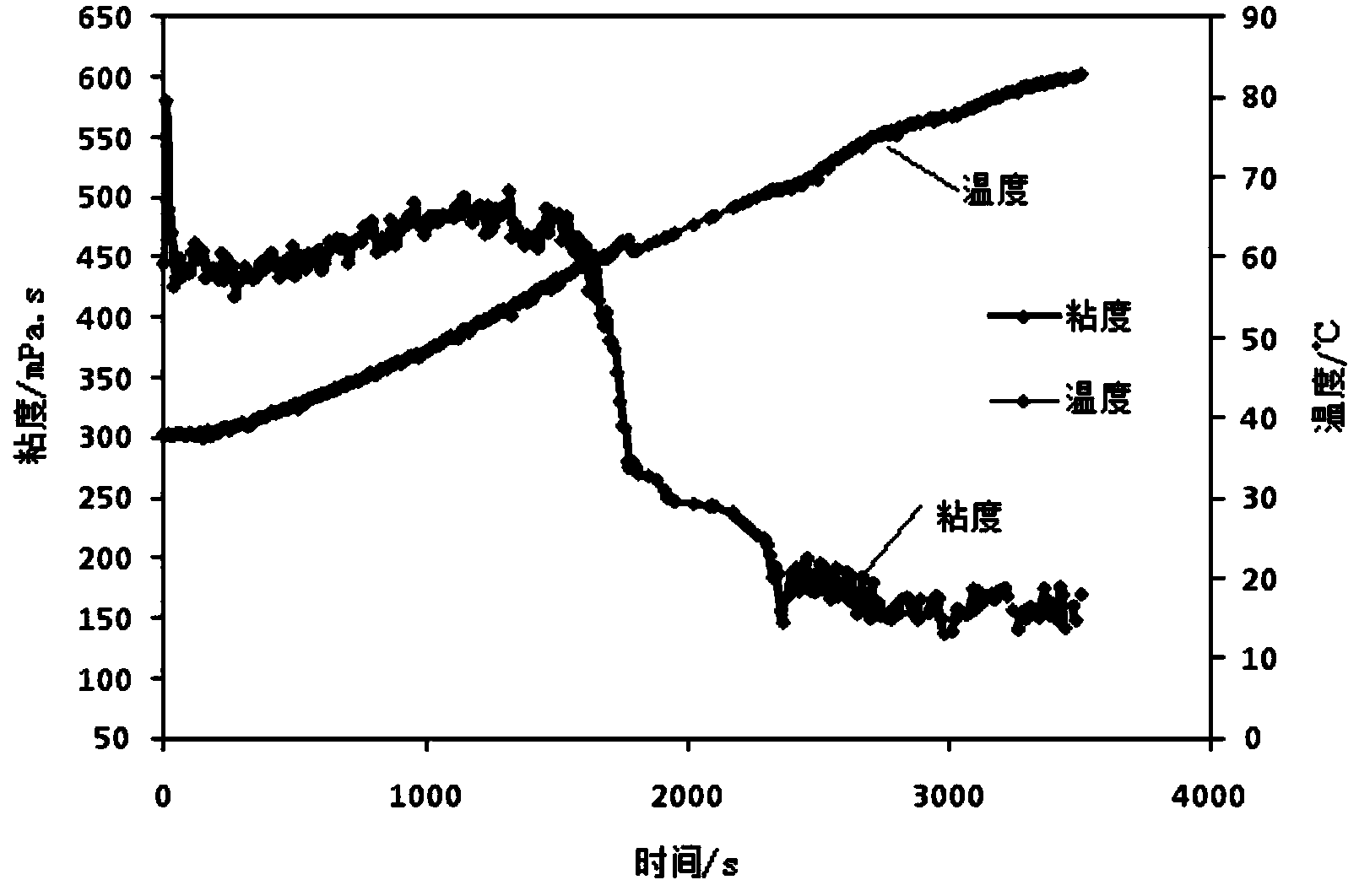
Figure 1
Abstract
Description
technical field
[0001] The invention belongs to the technical field of petrochemical industry, and in particular relates to an anhydrous fracturing fluid suitable for shale gas and a preparation method thereof. Background technique
[0002] In the development process of shale oil and gas, the method of volume fracturing is usually used for fracturing. According to statistics, each well needs to be fractured to consume millions of cubic meters of water, and the fracturing fluid contains a large amount of chemical substances, which are harmful to water. Both resources and the environment present enormous challenges. However, the method of waterless fracturing requires almost no water during the entire fracturing process, and has good compatibility with oil and gas reservoirs, and can almost 100% flow back.
[0003] For the study of shale gas fracturing fluid, the preparation of the thickener is the key, and the thickening effect of the thickener determines the performance of ...
Examples
Embodiment 1
[0015] The anhydrous fracturing fluid suitable for shale gas is made of the following raw materials in mass percentage: 1.5% crosslinking agent, 4.0% complex iron activator, and the rest are low-carbon hydrocarbons.
[0016] Described low carbon hydrocarbon is the mixture of propane and butane;
[0017] Described linking agent is alkyl phosphate, and the content of dialkyl phosphate in alkyl phosphate is 65.8%, and the synthetic method of alkyl phosphate comprises the following steps:
[0018] (1) First by P 2 o 5 React with triethyl phosphate at 80°C for 2 hours, and react with a feed molar ratio of 1:1 to obtain a polyphosphate intermediate.
[0019] (2) Add mixed alcohol to the polyphosphate intermediate described in step (1), mixed alcohol and P 2 o 5 The molar ratio is 3:1, react at 80°C for 4h to obtain alkyl phosphate. The mixed alcohols include ethanol, n-butanol, n-octanol and dodecanol, and the molar ratio between the alcohols is 1:1:1:1. The content of dialkyl...
Embodiment 2
[0023] Anhydrous fracturing fluid suitable for shale gas, made of the following raw materials in mass percentage: 1.8% crosslinking agent, 5% complex iron activator, and the rest are low-carbon hydrocarbons;
[0024] Described low carbon hydrocarbon is the mixture of propane and butane;
[0025] The cross-linking agent is an alkyl phosphate, and the content of dialkyl phosphate in the alkyl phosphate is 68.8%, and the synthetic method of the alkyl phosphate comprises the following steps:
[0026] (1) First by P 2 o 5 React with triethyl phosphate at 80°C for 2 hours, and react with a feed molar ratio of 1.3:1 to obtain a polyphosphate intermediate.
[0027] (2) Add mixed alcohol to the polyphosphate intermediate described in step (1), mixed alcohol and P 2 o 5 The molar ratio is 3:1, react at 90°C for 3h to obtain alkyl phosphate. The content of dialkyl phosphate is 68.8% measured by double indicator titration method.
Embodiment 3
[0032] Anhydrous fracturing fluid suitable for shale gas, made of the following raw materials in mass percentage: 0.5% crosslinking agent, 2% complex iron activator, and kerosene as the rest;
[0033] The cross-linking agent is an alkyl phosphate, and the content of dialkyl phosphate in the alkyl phosphate is 57.4%. The synthetic method of the alkyl phosphate comprises the following steps:
[0034] (1) First by P 2 o 5 React with triethyl phosphate at 80°C for 2 hours, and react with a feed molar ratio of 1.4:1 to obtain a polyphosphate intermediate.
[0035] (2) Add mixed alcohol to the polyphosphate intermediate described in step (1), mixed alcohol and P 2 o 5 The molar ratio is 3:1, react at 100°C for 4h to obtain alkyl phosphate. The content of dialkyl phosphate is 57.4% measured by double indicator titration method.
[0036] Mixed alcohols include n-butanol, n-octanol, tetradecyl alcohol, the molar ratio between alcohols is 1:1:2, mixed alcohols and P 2 o 5 The mol...