

A rapid preparation of high-performance cufes 2 Thermoelectric Materials Approach
A thermoelectric material and high-performance technology, applied in the direction of iron sulfide, etc., can solve the problems of long preparation cycle, unfavorable commercial application, complex process, etc., and achieve high efficiency, energy saving, heating and cooling rate, shortening preparation cycle, and good repeatability.
Patent Information
- Authority / Receiving Office
- CN · China
- Patent Type
- Patents(China)
- Current Assignee / Owner
- Publication Date
- 2016-09-21
Smart Images
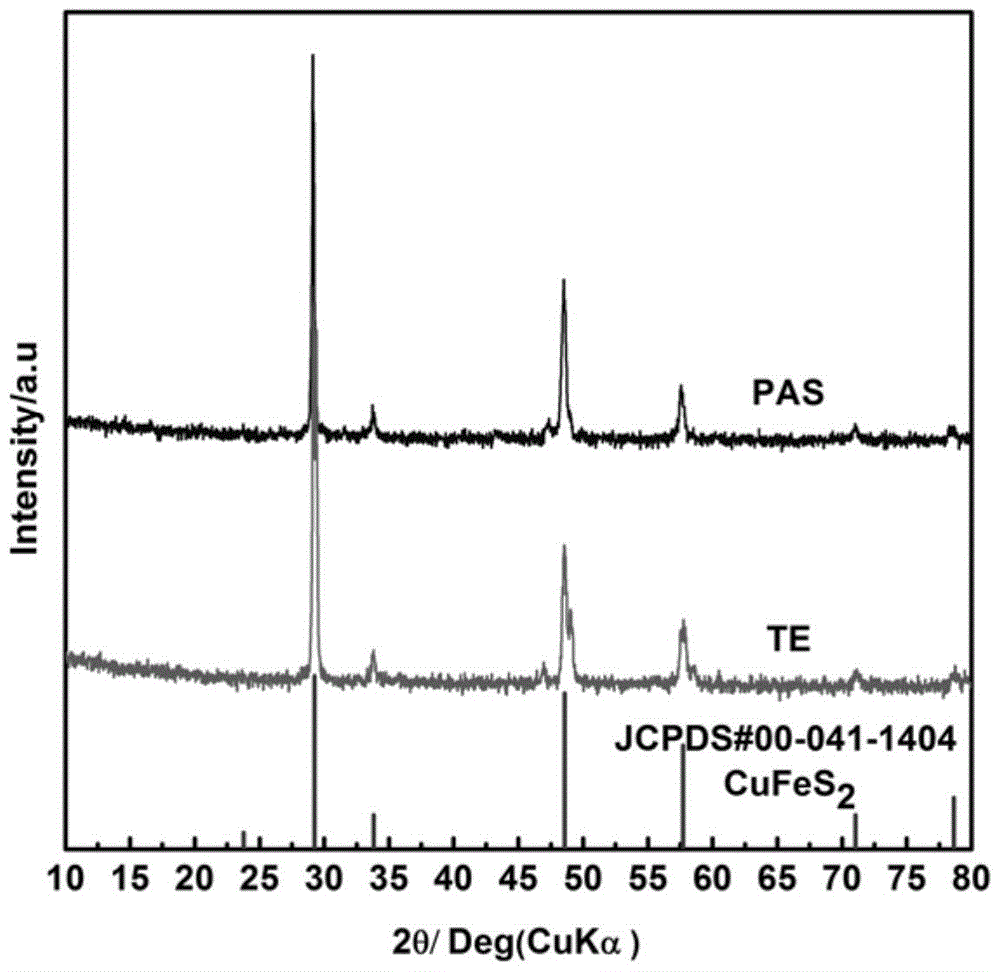
Figure 1 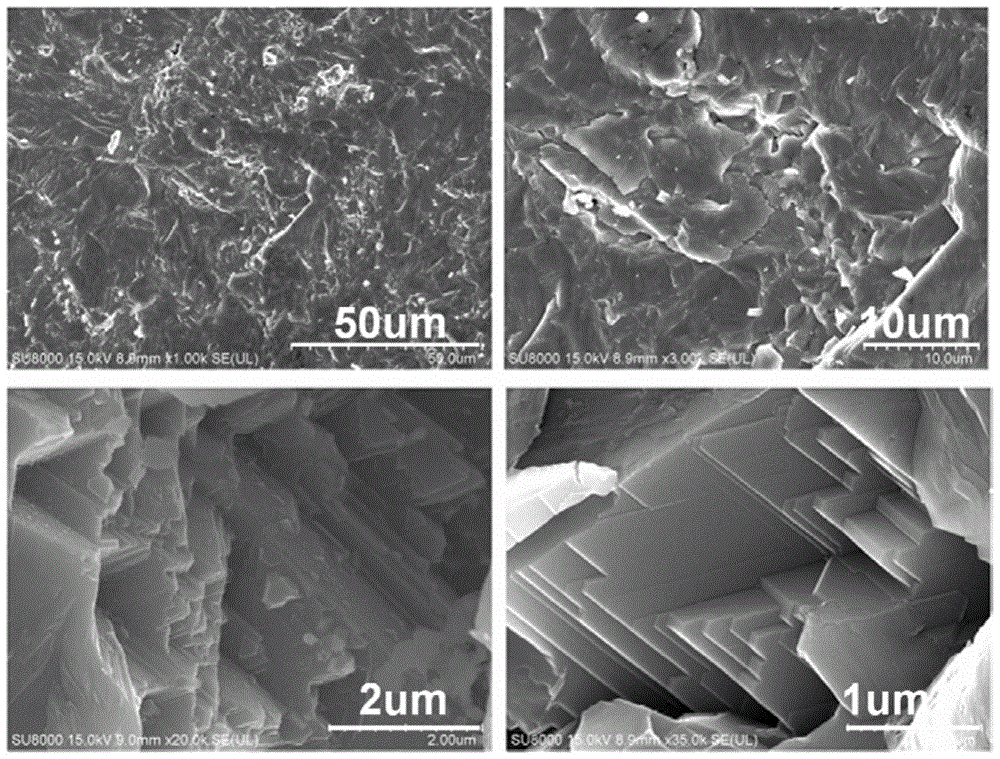
Figure 2 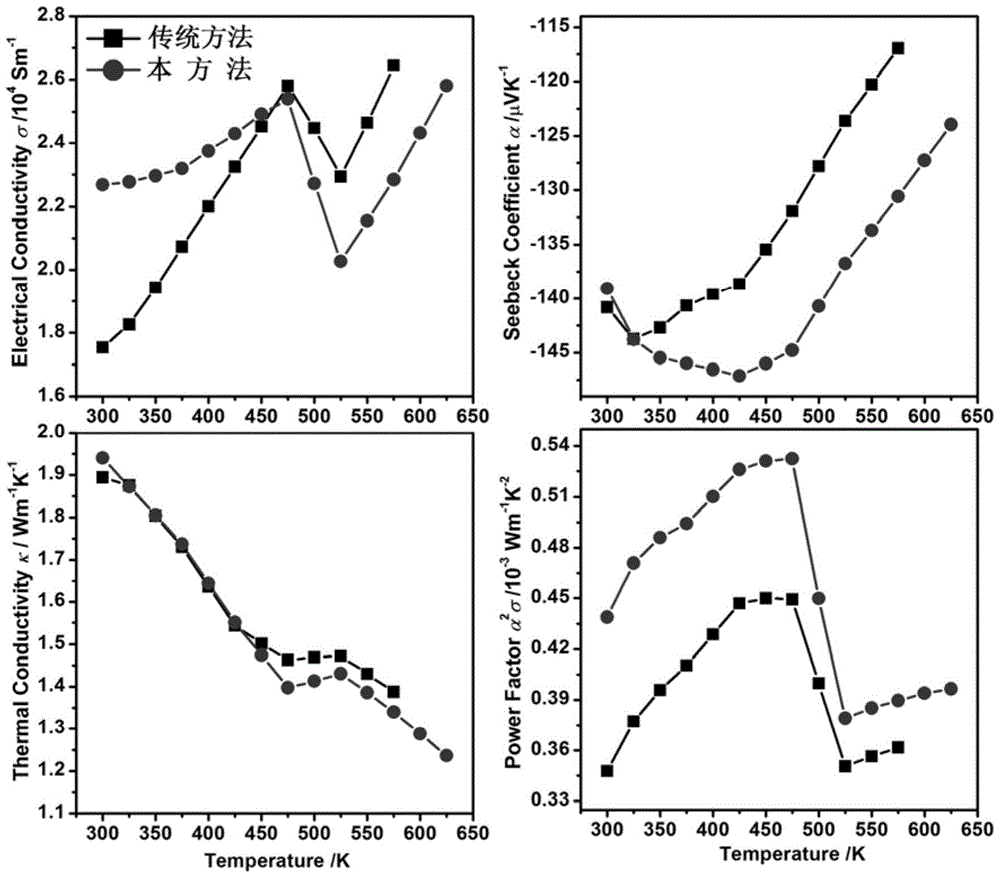
Figure 3
Abstract
Description
technical field
[0001] The invention belongs to the technical field of preparation of new energy materials, in particular to a method for rapidly preparing high-performance CuFeS 2 methods for thermoelectric materials. Background technique
[0002] With the development of social economy and the rapid increase of the world population, the demand for energy in countries around the world is becoming more and more vigorous. In order to reduce environmental pollution and dependence on fossil energy, countries in the world have stepped up their efforts in renewable energy and new energy in recent years. The development of materials, among them, thermoelectric materials that can directly convert thermal energy and electrical energy have also become a research hotspot.
[0003] Thermoelectric materials can realize direct mutual conversion between electric energy and heat energy through Seebeck effect and Peltier effect. Power generation or refrigeration devices made of thermoelectr...
Examples
Embodiment 1
[0031] A rapid preparation of high performance CuFeS 2 A method for thermoelectric materials, comprising the steps of:
[0032] 1) Press CuFeS 2 The stoichiometric ratio of elements Cu, Fe, and S is 1:1:2. Weigh Cu powder, Fe powder, and S powder as raw materials. The total mass of the raw material powder is 5g, and then they are ground and mixed evenly, and the uniformly mixed powder is pressed into a diameter 10mm cylindrical block (8MPa holding pressure 5min);
[0033] 2) Vacuum-seal the block obtained in step 1) into a quartz glass tube, and quickly put it into a constant temperature furnace at 1000°C to detonate, triggering a thermal explosion reaction (TE), take it out after reacting for 90s, and cool naturally;
[0034] 3) Grinding the product obtained in step 2) into powder, performing plasma-activated sintering (PAS), packing the powder into a graphite mold with a diameter of 15 mm for compaction, and then sintering under the conditions of a vacuum degree of less th...
Embodiment 2
[0037] A rapid preparation of high performance CuFeS 2 A method for thermoelectric materials, comprising the steps of:
[0038] 1) Press CuFeS 2 The stoichiometric ratio of elements Cu, Fe, and S is 1:1:2. Weigh Cu powder, Fe powder, and S powder as raw materials. The total mass of the raw material powder is 5g, and then they are ground and mixed evenly, and the uniformly mixed powder is pressed into a diameter 10mm cylindrical block (8MPa holding pressure 5min);
[0039]2) Vacuum-seal the block obtained in step 1) into a quartz glass tube, and quickly put it into a constant temperature furnace to detonate and initiate a thermal explosion reaction (TE). The reaction time is 20-90s, and the reaction is naturally cooled after the completion of the reaction. Among them, the conditions of different thermal explosions are as follows: when the temperature of the furnace body (that is, the thermal explosion temperature) is 900°C, the reaction time is set to 60s; the temperature of ...
Embodiment 3
[0042] A rapid preparation of high performance CuFeS 2 A method for thermoelectric materials, comprising the steps of:
[0043] 1) Press CuFeS 2 The stoichiometric ratio of elements Cu, Fe, and S in medium is 1:1:(2+x) (x is 0, 0.1, 0.2, 0.3, 0.4 or 0.5 respectively). Weigh Cu powder, Fe powder, and S powder as raw materials. The total powder mass is 5g, and then they are ground and mixed uniformly, and the uniformly mixed powder is pressed into a cylindrical block with a diameter of 10mm (8MPa holding pressure for 5min);
[0044] 2) Vacuum-seal the block obtained in step 1) into a quartz glass tube, and quickly put it into a constant temperature furnace at 1000°C to detonate, triggering a thermal explosion reaction (TE), take it out after 60 seconds of reaction, and let it cool naturally.
[0045] It can be seen from Figure 3 that the product powder and the PAS sintered block after step 2) thermal explosion reaction in this embodiment are all single-phase CuFeS 2 .