
Extraction method of tartary buckwheat flavonoid extract and tartary buckwheat wine obtained therefrom
A technology of tartary buckwheat flavonoids and an extraction method is applied in the directions of pharmaceutical formulations, plant raw materials, preparation of alcoholic beverages, etc., can solve the problems of no further utilization of tartary buckwheat residue, high cost, complicated operation procedures, etc., and achieves attractive color and luster. The effect of improved degree and high purity
Patent Information
- Authority / Receiving Office
- CN · China
- Patent Type
- Patents(China)
- Current Assignee / Owner
- Publication Date
- 2019-12-17
Smart Images

Figure 1 
Figure 2 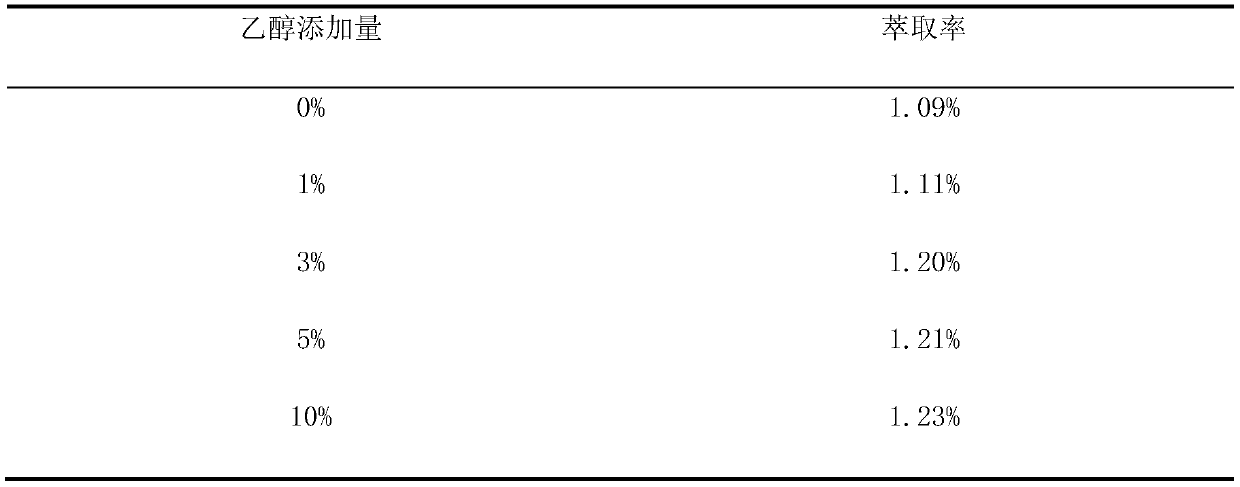
Figure 3
Abstract
Description
Technical field
[0001] The invention relates to the technical field of medical preparation, in particular to a method for extracting tartary buckwheat flavonoids and the obtained tartary buckwheat wine. Background technique
[0002] Tartary buckwheat is a kind of medicinal and edible homologous crop, and its medicinal value is mainly reflected in flavonoids, which is a class of natural polyphenol products, mainly including rutin, quercetin, aromatic glycosides, kaempferol, etc. Flavonoids have certain auxiliary effects on reducing blood lipids, blood sugar and anti-cardio-cerebrovascular diseases. Therefore, buckwheat containing flavonoids has received extensive attention from modern people, and health foods developed with tartary buckwheat as raw materials are even more popular.
[0003] At present, the method of making wine with tartary buckwheat as raw material generally uses tartary buckwheat as raw material or main raw material, and is prepared by saccharification, fermentati...
Examples
Embodiment 2
[0038] Example 2 The effect of adding ethanol to the filler on the extraction rate
[0039] Add absolute ethanol to buckwheat flour to supercritical CO 2 The polarity of the fluid is adjusted to increase the extraction rate of buckwheat flavonoids. It can be seen from Table 2 that the addition of ethanol can significantly increase the extraction rate of buckwheat flavonoids compared with no addition of ethanol. However, when the amount of ethanol is greater than 3%, the extraction rate of buckwheat flavonoids does not increase significantly. Therefore, the The research selected the addition amount of ethanol to be 3%-10%, and the best addition amount is 3%.
[0040] Table 2 Effect of ethanol addition
[0041]
Embodiment 3
[0042] Example 3 Effect of extraction time on extraction rate
[0043] The extraction time is an important factor affecting the extraction rate. Table 3 shows the effect of extraction time on the extraction rate at 30MPa and 35°C. It can be seen from the table that as the extraction time is extended from 0min to 120min, the extraction rate of buckwheat flavonoids gradually increases; when the extraction time is extended from 120min to 150min, the extraction rate changes minimally and basically tends to be stable.
[0044] Table 3 Effect of extraction time on extraction rate
[0045]
[0046]
Embodiment 4
[0047] Example 4 Effect of extraction pressure and temperature on extraction rate
[0048] Table 4 shows the results of the effect of extraction pressure and temperature on the extraction rate. It can be seen from the table that when the pressure is 20MPa and 30MPa, the extraction rate of buckwheat flavone increases with the increase of temperature and pressure. The extraction rate at 30MPa and 50°C is 14% higher than that at 20MPa and 30°C. At 40MPa, the extraction rate of buckwheat flavonoids decreased to a certain extent, and did not increase with the increase of pressure. The reason may be related to the increase of pressure to 40MPa, CO 2 Flow rate drop is related (the experiment found that when the pressure is 20-30MPa, CO 2 The flow rate is 12L / h; when the pressure is 40MPa, it is difficult for the equipment to maintain a flow rate of 12L / h, and the actual CO 2 The flow is only about 9L / h).
[0049] Table 4 The influence of extraction pressure and temperature on extraction r...