
Scheduling method and system of multi-cluster resources in uplink shared channel
A technology of shared channel and scheduling method, applied in the field of multi-cluster resource scheduling, can solve the problems of PUSCH resource utilization efficiency deterioration, resource transmission impact, low flexibility of multi-cluster resource scheduling, etc., so as to improve resource utilization efficiency and ensure spectrum efficiency. Effect
Patent Information
- Authority / Receiving Office
- CN · China
- Patent Type
- Applications(China)
- Current Assignee / Owner
- Publication Date
- 2017-04-19
Smart Images
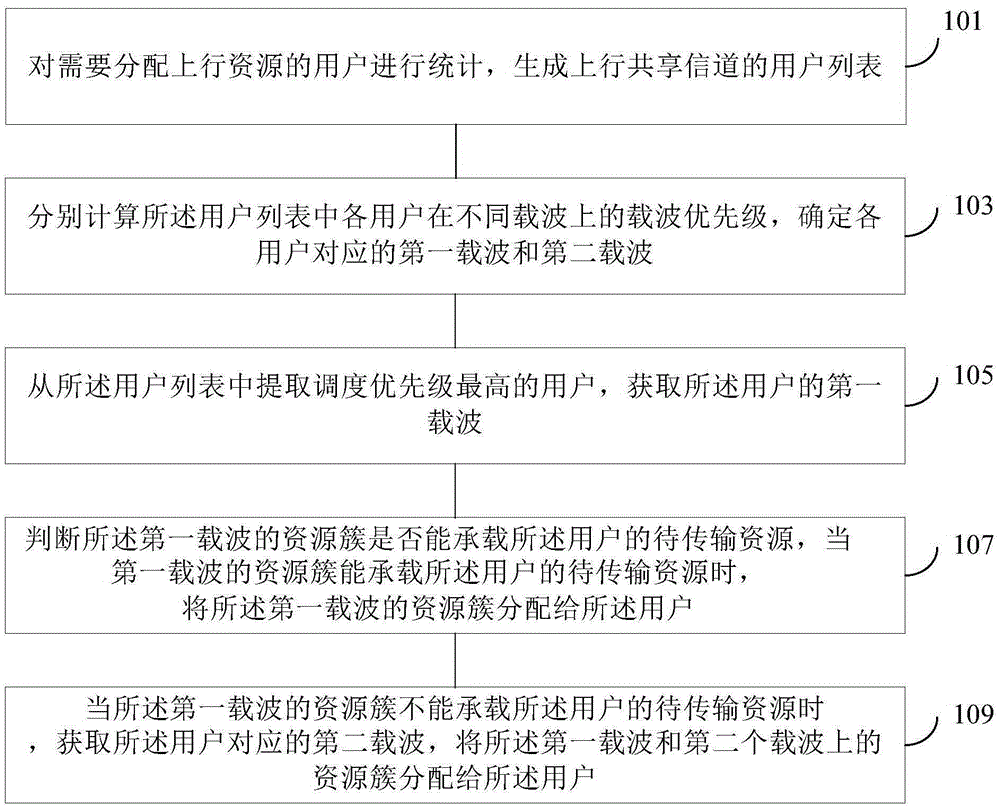
Figure 1 
Figure 2 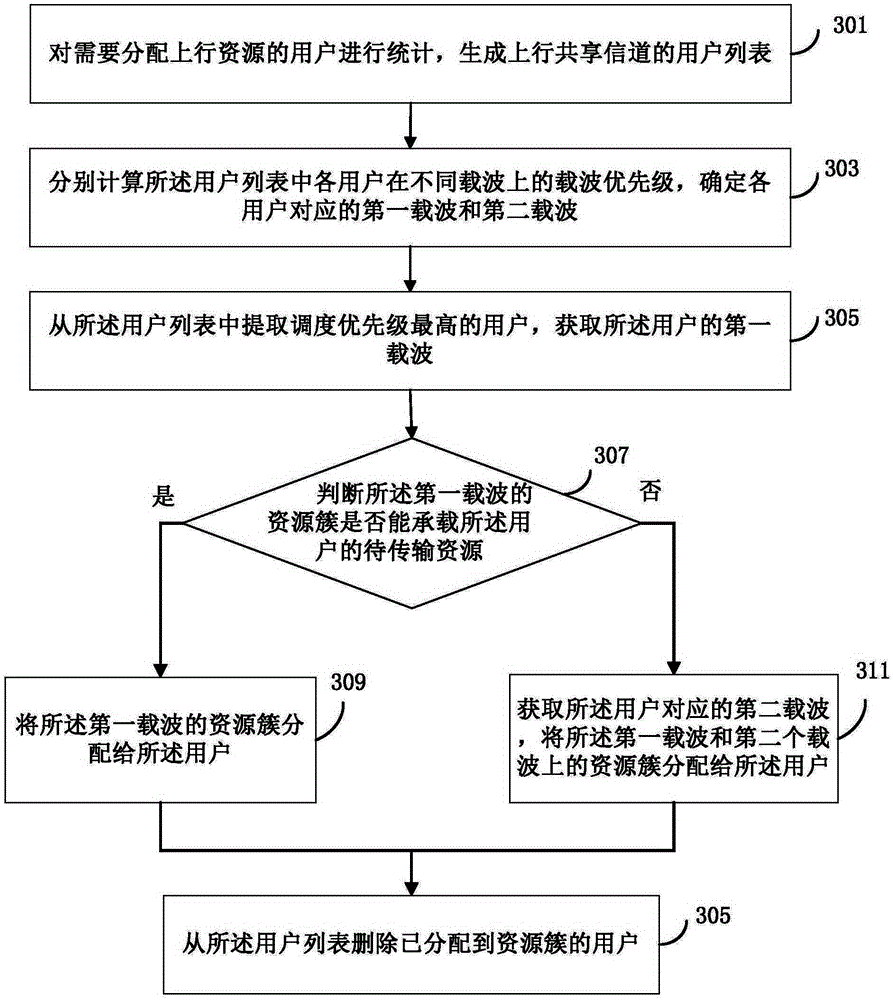
Figure 3
Abstract
Description
technical field
[0001] The present application relates to the field of communication technologies, and in particular to a method and system for scheduling multi-cluster resources in an uplink shared channel. Background technique
[0002] LTE-A is an abbreviation of LTE-Advanced, and is a subsequent evolution of a Long Term Evolution (Long Term Evolvement, LTE) technology. In the LTE-A system, uplink channel estimation and signal demodulation are mainly completed by a demodulation reference signal (Demodulation Reference Signal, DMRS) of a physical uplink shared channel (Physical Uplink Share Channel, PUSCH). Specifically, after receiving the DMRS, the base station obtains the channel response on the PUSCH transmission bandwidth according to a certain channel estimation algorithm, and uses it for demodulating the PUSCH data on the corresponding bandwidth. Due to the single carrier characteristic of uplink, the longer the DMRS sequence, the more accurate the channel estimatio...
Examples
Embodiment Construction
[0077] In order to make the above objects, features and advantages of the present application more obvious and comprehensible, the present application will be further described in detail below in conjunction with the accompanying drawings and specific implementation methods.
[0078] A new feature of the LTE-A system is to support uplink discontinuous transmission, which can obtain diversity gain and improve uplink throughput performance.
[0079] In PUSCH discontinuous resource allocation, the concept of multi-cluster transmission is introduced. Each cluster (that is, resource cluster) includes one or more continuous RBs, multiple resource clusters can be allocated to a UE at the same time, and the size and number of resource clusters can be flexibly scheduled.
[0080] The new standard (Rel-10) of the LTE-A system already supports the simultaneous allocation of two resource clusters on the same component How is the channel quality of each component carrier, multiple resourc...