
Hinge module for refrigerator and refrigerator with same
A technology for a hinge assembly and a refrigerator, which is applied to the hinge assembly and refrigerator field, can solve the problems such as the collision between the door body of the refrigerator door body and the foreign object, inconvenience, etc., and achieves reduced leakage, convenient access to items, and slow opening. effect of speed
Patent Information
- Authority / Receiving Office
- CN · China
- Patent Type
- Applications(China)
- Current Assignee / Owner
- Publication Date
- 2017-06-23
Smart Images
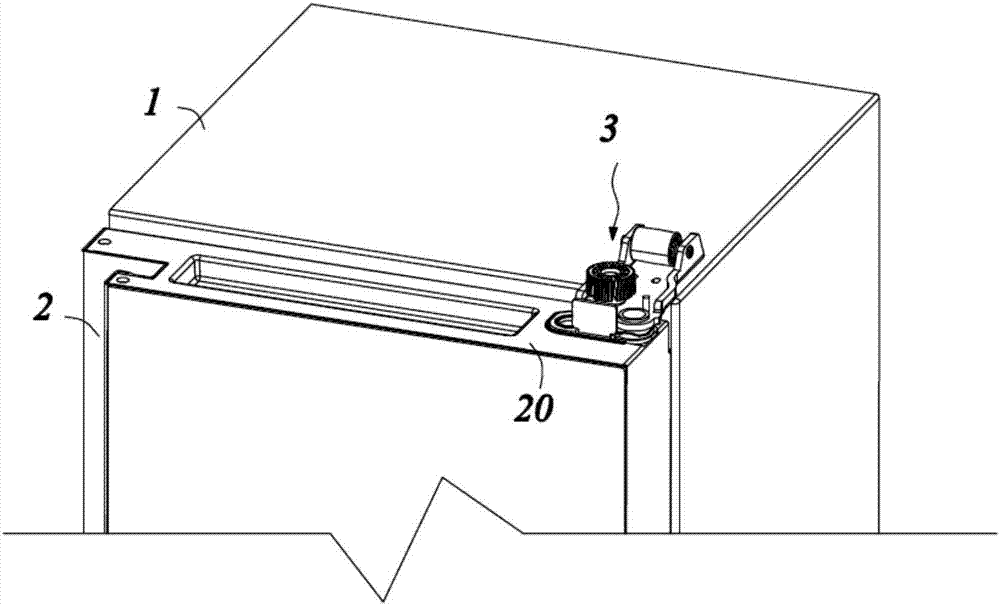
Figure 1 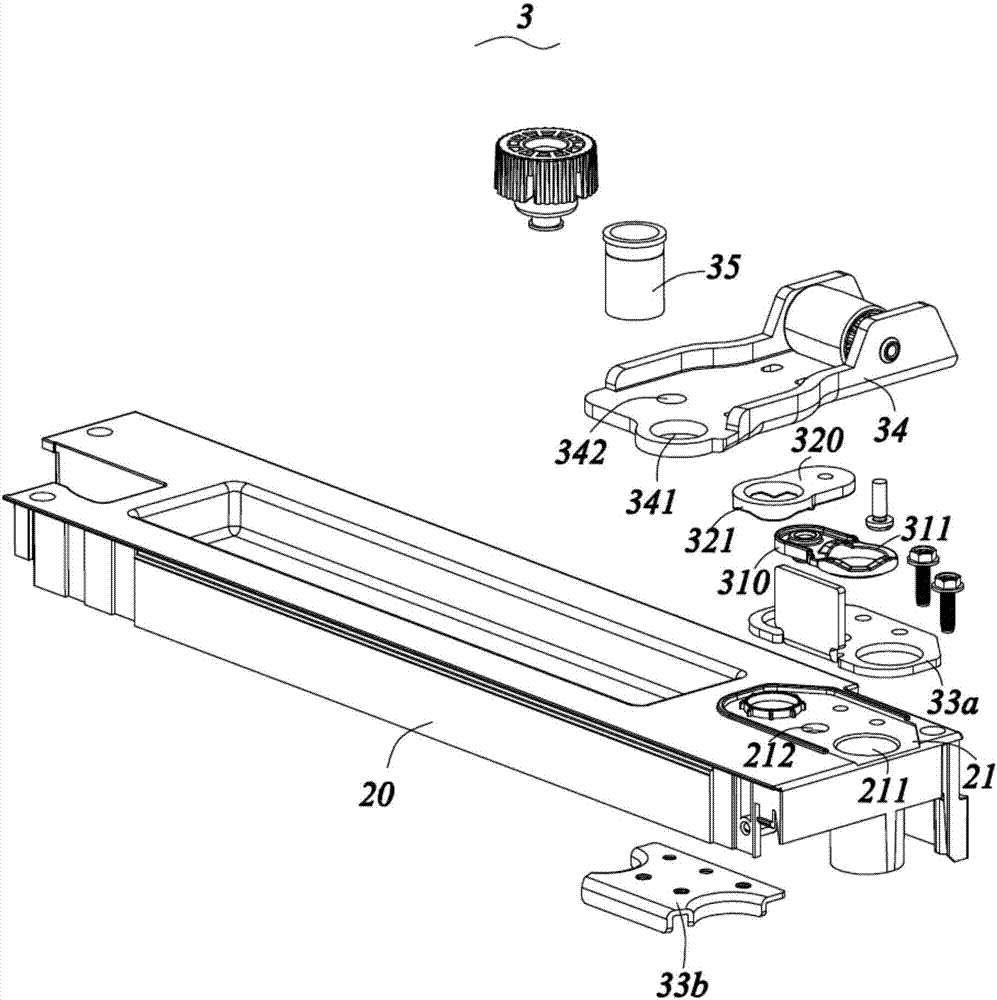
Figure 2 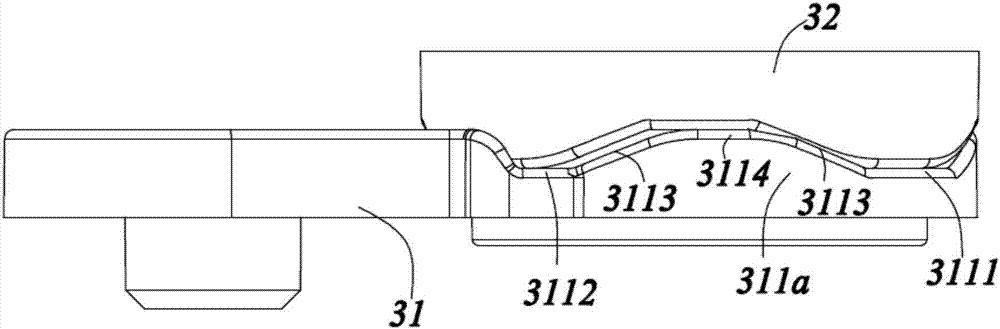
Figure 3
Abstract
Description
technical field
[0001] The invention relates to the technical field of refrigeration equipment, in particular to a hinge assembly for a refrigerator and a refrigerator having the same. Background technique
[0002] At present, refrigerators all realize the rotation of the door body through hinges to realize the purpose of opening and closing the door. During use, when the refrigerator door is opened to a certain angle, it will be in a state of free movement. When users take and place items, they need to fix the door with one hand and use the other hand to take and place items, which is very inconvenient. In addition, there may also be situations where the refrigerator door collides with foreign objects when the door is opened due to the excessively large opening angle of the refrigerator door. Based on this, how to enable the refrigerator door to hover at a set opening angle has become an urgent technical problem to be solved. Contents of the invention
[0003] The objec...
Examples
Embodiment Construction
[0026] The present invention will be described in detail below in conjunction with various embodiments shown in the drawings. However, these embodiments do not limit the present invention, and any structural, method, or functional changes made by those skilled in the art according to these embodiments are included in the protection scope of the present invention.
[0027] The terms used herein to denote relative spatial positions such as "upper", "above", "under", "under", etc. are for convenience of description to describe the relative position of one element or feature relative to another as shown in the drawings. Relationships of units or features. The terms of spatial relative position may be intended to encompass different orientations of the device in use or operation in addition to the orientation depicted in the figures. For example, if the device in the figures is turned over, elements described as "below" or "beneath" other elements or features would then be oriente...