
Garden nursery stock cultivation planting method
A seedling and gardening technology, applied in horticultural methods, botanical equipment and methods, planting substrates, etc., can solve the problems of low survival rate of transplantation, achieve the effects of reducing fertilizer pollution, sufficient fertilizer, and improving seedling survival rate
Patent Information
- Authority / Receiving Office
- CN · China
- Patent Type
- Applications(China)
- Current Assignee / Owner
- Publication Date
- 2017-08-22
- Estimated Expiration
- Not applicable · inactive patent
Smart Images
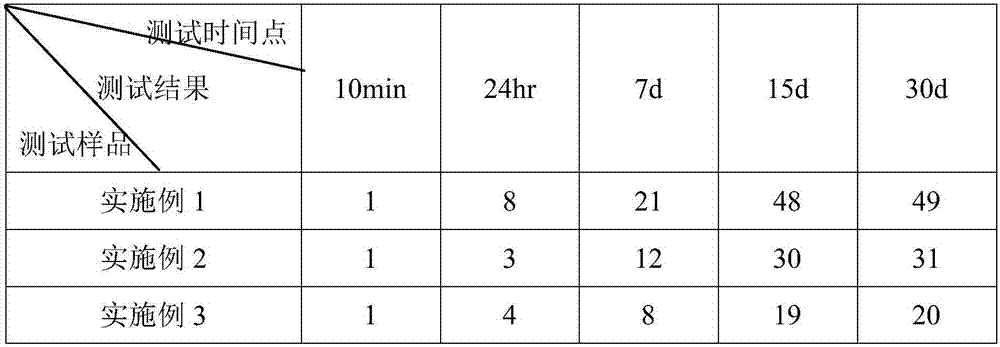
Figure 1 
Figure 2
Abstract
Description
technical field
[0001] The invention relates to seedling transplanting technology, in particular to a garden seedling cultivation method. Background technique
[0002] Transplantation refers to the method of digging up seedlings from the original nursery ground and transplanting them to a new nursery ground according to a certain row spacing to continue to cultivate. It is also called changing beds. Through transplantation, the density of seedlings is reduced, the nutrient area of seedlings is expanded, the conditions of light and ventilation are improved, the root system and aboveground parts of seedlings have a larger development space, and conditions are created for the cultivation of large-scale seedlings. Therefore, transplanting in Plays a more critical role in the cultivation of seedlings.
[0003] The application publication date is September 12, 2012, and the Chinese patent application publication number CN102657061A discloses a method for transplanting garden se...
Examples
Embodiment 1
[0020] Embodiment 1: Controlled-release nutritional microspheres, prepared by the following method:
[0021] (1) Preparation of insoluble fertilizer layer: respectively pulverize commercially available low cross-linking silicon-calcium network smelting slag and active non-ferrous metal ore tailings, mix it with water to form a uniformly dispersed suspension, and spray dry to obtain particles: 20-50μm particles; then mix the smelting slag particles with low cross-linking degree silicon-calcium network and active non-ferrous metal ore tailings particles in a mass ratio of 1:1;
[0022] (2) Preparation of controlled-release nutrient microspheres: pulverize activated carbon, heat, add a mixture of smelting slag particles and active non-ferrous metal ore tailings particles into it, and sinter it at 5-8°C Cool at a speed of / 10min, add molten HDPE when the temperature drops to 125-135°C, and then cool to room temperature, wherein the mass ratio of activated carbon, low cross-linking...
Embodiment 2
[0023] Example 2: Controlled-release nutrient microspheres. The difference from Example 1 is that the dosage ratio of activated carbon, low cross-linking silicon-calcium network smelting slag, active non-ferrous metal tailings and HDPE is 100:0:10:2.
Embodiment 3
[0024] Example 3: Controlled-release nutrient microspheres. The difference from Example 1 is that the dosage ratio of activated carbon, low cross-linking silicon-calcium network smelting slag, active non-ferrous metal tailings and HDPE is 100:10:0:4.