
Dihydro pyrrolidone derivative and application of same in preparing antitumor drugs
A technology for dihydropyrrolidone and antitumor drugs, which is applied in the preparation of application fields as a variety of tumor suppressor drugs, can solve problems such as the inability to meet the needs of cancer patients and the like
Patent Information
- Authority / Receiving Office
- CN · China
- Patent Type
- Applications(China)
- Current Assignee / Owner
- Publication Date
- 2018-02-02
- Estimated Expiration
- Not applicable · inactive patent
Smart Images
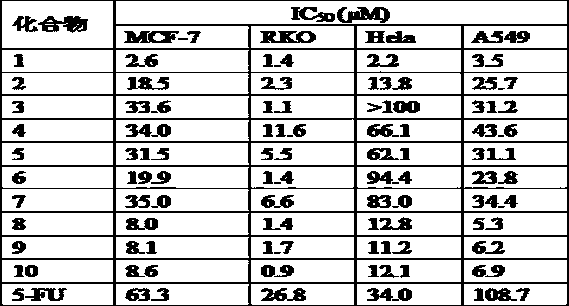
Figure 1 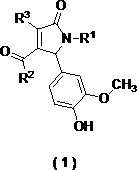
Figure 2 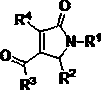
Figure 3
Abstract
Description
technical field
[0001] The present invention relates to a class of dihydropyrrolone derivatives with multiple antitumor activities and their application in the preparation of various tumor suppressor drugs. Background technique
[0002] Cancer is becoming the "second killer" after cardiovascular disease, which seriously endangers human health (CA-Cancer JClin. 2016, 66(1): 7-30), and it is also one of the main diseases causing human death. According to statistics, the incidence and mortality of cancer in my country are generally on the rise, among which lung cancer, breast cancer, and colorectal cancer are at the forefront. At present, the means of clinical cancer treatment include surgical resection, radiation therapy, chemical drug therapy, immunotherapy and gene therapy which have emerged in recent years. Chemotherapy is a method of systemic treatment, and it is the first choice for tumors that have spread and metastasized. However, the existing anticancer drugs are sti...
Examples
Embodiment 1
[0057] 2,5-Dihydro-1-(3-trifluoromethylphenyl)2-(3-methoxy-4-hydroxyphenyl)-4-(3-trifluoromethylphenylamino)-5-oxo- 1 H-Methyl 4-(3-(trifluoromethyl)phenylamino)-1-(3-(trifluoromethyl)phenyl)-2,5-dihydro-2-(4-hydroxy-3-methoxyphenyl) -5-oxo-1 H -pyrrole-3-carboxylate Compound 1) 54% yield, yellow solid, mp: 121–122 ºC; IR(KBr) ν max = 3783, 3354, 2923, 2851, 2309, 1701, 1640, 1451, 1330, 1273, 1167, 1124, 1028, 881, 785, 688, 532; 1 H NMR (400 MHz, CDCl 3 ) δ =8.28 (s, 1H), 7.80(s, 1H), 7.71 (d, J = 7.3 Hz, 1H), 7.53–7.35 (m, 6H), 6.83 (s, 2H), 6.66 (s,1H), 5.83 (s, 1H), 5.61 (s, 1H), 3.83 (s, 3H) , 3.63 (s, 3H) ppm; 13 C NMR (101MHz, CDCl 3 ) δ =164.4, 163.7, 146.7, 145.7, 141.1, 138.9, 136.9, 131.2, 130.9,129.4, 129.0, 127.1, 126.0, 125.6, 122.2, 121.3, 121.1, 119.3, 119.2, 119.2,119.2, 114.5, 111.4, 109.2, 63.0 , 55.9, 51.4 ppm; HR-ESI-MS for C 27 h 20 f 6 N 2 o 5 ([M+H] + ) Calcd: 567.1340; Found: 567.1340.
Embodiment 2
[0059] 2,5-Dihydro-1-phenyl-2-(3-methoxy-4-hydroxyphenyl)-4-phenylamino-5-oxo-1 H - Ethyl pyrrole-3-carboxylate
[0060] (ethyl 2,5-dihydro-2-(4-hydroxy-3-methoxyphenyl)-5-oxo-1-phenyl-4-(phenyl-amino)-1 H -
[0061] pyrrole-3-carboxylate compound 2) 58% yield, yellow solid, mp: 107– 108 ºC;IR (KBr) ν max = 3294, 2929, 1693, 1599, 1507, 1375, 1231, 1122, 1032, 758,692, 506; 1 H NMR (400 MHz, CDCl 3 ) δ = 8.19 (s, 1H), 7.48 (d, J = 8.0 Hz, 2H),7.40 –7.05 (m, 8H), 6.84 (m, 2H), 6.65 (s, 1H), 5.79 (s, 1H), 5.56 (s, 1H),4.05 (dt, J = 6.7, 4.5 Hz, 2H), 3.81 (s, 3H), 1.06 (t, J = 7.1 Hz, 3H) ppm; 13 C NMR (101 MHz, CDCl 3 ) δ = 164.4, 164.0, 146.5, 145.4, 141.6, 138.7, 136.5,128.8, 128.4, 125.7, 124.5, 122.5, 121.6, 114.1, 109.1,63.2, 55.9, 53.8, 13.8 PPM; HR- ESI-MS for C 26 h 24 N 2 o 5 ([M+H] + ) Calcd: 445.1758; Found: 445.1755.
Embodiment 3
[0063] 2,5-Dihydro-1-phenyl-2-(3-methoxy-4-hydroxyphenyl)-4-phenylamino-5-oxo-1 H -Methyl 2,5-dihydro-2-(4-hydroxy-3-methoxyphenyl)-5-oxo-1-phenyl-4-(phenyl-amino)-1 H -
[0064] pyrrole-3-carboxylate compound 3) 54% yield, yellow solid, mp: 183– 184 ºC; 1 H NMR (400 MHz, CDCl 3 ) δ = 8.16 (s, 1H), 7.47 (d, J = 7.9 Hz, 2H), 7.40– 7.06(m, 8H), 6.83 (m, 2H), 6.65 (s, 1H), 5.78 (s, 1H), 5.56 (s, 1H), 3.81 (s, 3H) , 3.58 (s, 3H) ppm; 13 C NMR (101 MHz, CDCl 3 ) δ = 164.7, 164.0, 146.6, 145.4, 141.8, 138.6, 136.5, 128.8, 128.4, 128.3, 125.8, 124.7, 122.9, 122.8, 121.3, 114.2, 109.4, 109.2, 5.5 pm