
Method for preparing Y-type molecular sieve from FCC waste catalyst by microwave heating
A waste catalyst and microwave heating technology, which is applied in the field of comprehensive recycling of secondary resources, can solve the problems of large quantities of emissions, and achieve the effects of reducing the content of poisoned metals, convenient operation, and short crystal formation
Patent Information
- Authority / Receiving Office
- CN · China
- Patent Type
- Applications(China)
- Current Assignee / Owner
- Publication Date
- 2018-06-22
- Estimated Expiration
- Not applicable · inactive patent
Smart Images
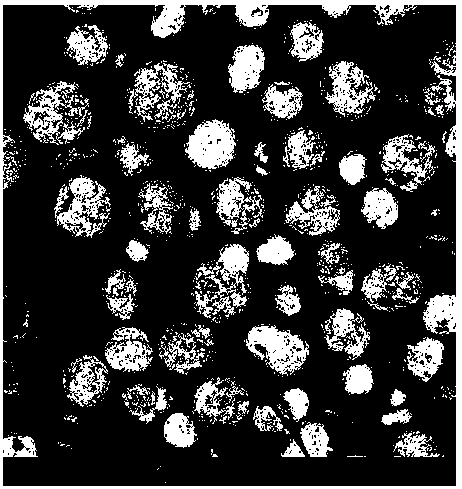
Figure 1 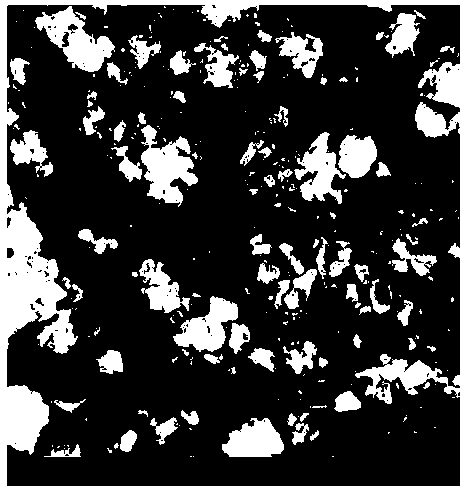
Figure 2 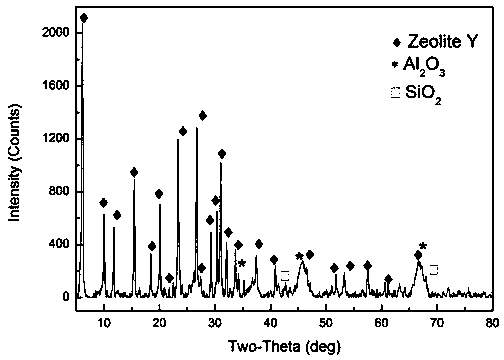
Figure 3
Abstract
Description
technical field
[0001] The invention relates to a method for preparing Y-type molecular sieves from FCC waste catalysts by microwave heating, and belongs to the technical field of comprehensive recovery and utilization of secondary resources. Background technique
[0002] FCC catalyst is the most widely used catalyst in the petroleum refining process, which has the characteristics of high catalytic activity, good selectivity, stability and strong anti-toxicity. With the increasingly heavy and inferior crude oil and the continuous recycling of FCC catalysts, the metals deposited on the FCC catalysts will gradually increase, resulting in a decrease in activity and heavy oil conversion capacity, and the formation of spent catalysts. At present, the global FCC waste catalyst emissions are 150,000 to 170,000 tons per year, and it is estimated that the annual increase of FCC waste catalysts is about 5%.
[0003] The main component of spent FCC catalysts is molecular sieve, which ...
Examples
Embodiment 1
[0025] This microwave heating prepares the method for Y-type molecular sieve from FCC waste catalyst, and its concrete steps are as follows:
[0026] Step 1. First, mix the spent FCC catalyst with the leaching mother liquor (5wt% HCl solution) at a liquid-solid ratio of 6:1mL / g, and then leaching for 30 minutes at a temperature of 80°C to obtain vanadium, nickel, and iron poisoning metals. The leaching solution (the leaching rates of Fe, V, and Ni are 44%, 46%, and 33%, respectively, and the Al loss rate is 10%) and the spent FCC catalyst with basically complete molecular sieve structure after demetallization and revival; the molecular sieve structure after demetallization and revival The basically complete SEM image of FCC spent catalyst is shown in Fig. figure 1 shown;
[0027] Step 2. Use the spent FCC catalyst with basically complete molecular sieve structure obtained in step 1 as the aluminum source, and add 6.5 kilograms of silicon source (silica sol) and 2.1 kilograms ...
Embodiment 2
[0030] This microwave heating prepares the method for Y-type molecular sieve from FCC waste catalyst, and its concrete steps are as follows:
[0031]Step 1. First, mix the spent FCC catalyst with the leaching mother liquor (3wt% HCl solution) at a liquid-solid ratio of 10:1mL / g, and then leaching for 30 minutes at a temperature of 80°C to obtain vanadium, nickel, and iron poisoning metals. Leaching solution (the leaching rates of Fe, V, and Ni are 42%, 40%, and 28%, respectively, and the loss rate of Al is 12%) and the spent FCC catalyst with basically complete molecular sieve structure after demetallization and resurrection;
[0032] Step 2. Use the spent FCC catalyst with basically complete molecular sieve structure obtained in step 1 as the aluminum source, and add 6.8 kilograms of silicon source (silica sol) and 2.0 kilograms of sodium source (sodium source is sodium hydroxide), 12.0 kg of water and 2.8 kg of directing agent (the molecular formula of the directing agent is...
Embodiment 3
[0035] This microwave heating prepares the method for Y-type molecular sieve from FCC waste catalyst, and its concrete steps are as follows:
[0036] Step 1. First, mix the spent FCC catalyst with the leaching mother liquor (concentration: 1wt% oxalic acid solution) at a liquid-solid ratio of 15:1mL / g, and then leaching for 50 minutes at a temperature of 50°C to obtain vanadium, nickel, and iron poisoning metals. The leaching solution (the leaching rates of Fe, V, and Ni are 63%, 58%, and 32%, respectively, and the loss rate of Al is 3%) and the spent FCC catalyst with basically complete molecular sieve structure after demetallization and resurrection;
[0037] Step 2. Use the spent FCC catalyst with basically complete molecular sieve structure obtained in step 1 as the aluminum source, and add 6.7 kilograms of silicon source (silica sol) and 1.9 kilograms of sodium source (sodium source is sodium hydroxide), 11.9 kg of water and 3.0 kg of directing agent (the molecular formul...