
Method for preparing proportion-adjustable nickel-rich positive electrode material of lithium ion battery
A technology for lithium ion batteries and cathode materials, which is applied in battery electrodes, secondary batteries, circuits, etc., can solve the problems of incomplete co-precipitation, poor electrolyte matching and compatibility, and high surface pH, and achieves simple process, electric The effect of excellent chemical properties and high tap density
Patent Information
- Authority / Receiving Office
- CN · China
- Current Assignee / Owner
- Publication Date
- 2018-06-22
- Estimated Expiration
- Not applicable · inactive patent
Smart Images
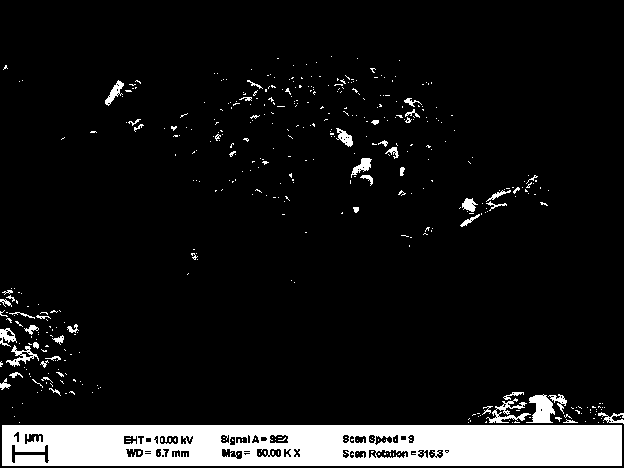
Figure 1 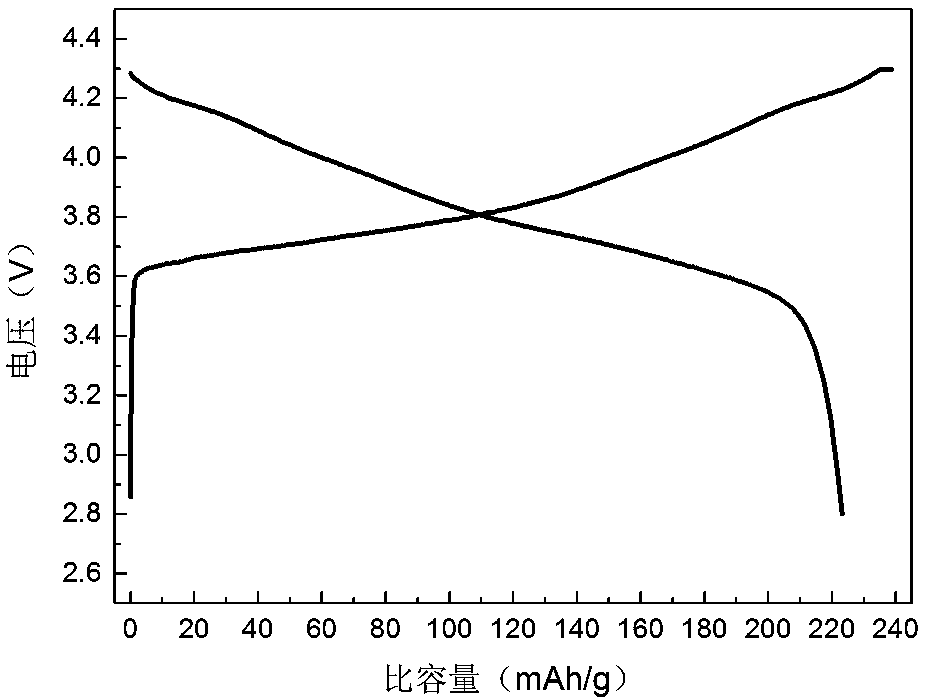
Figure 2 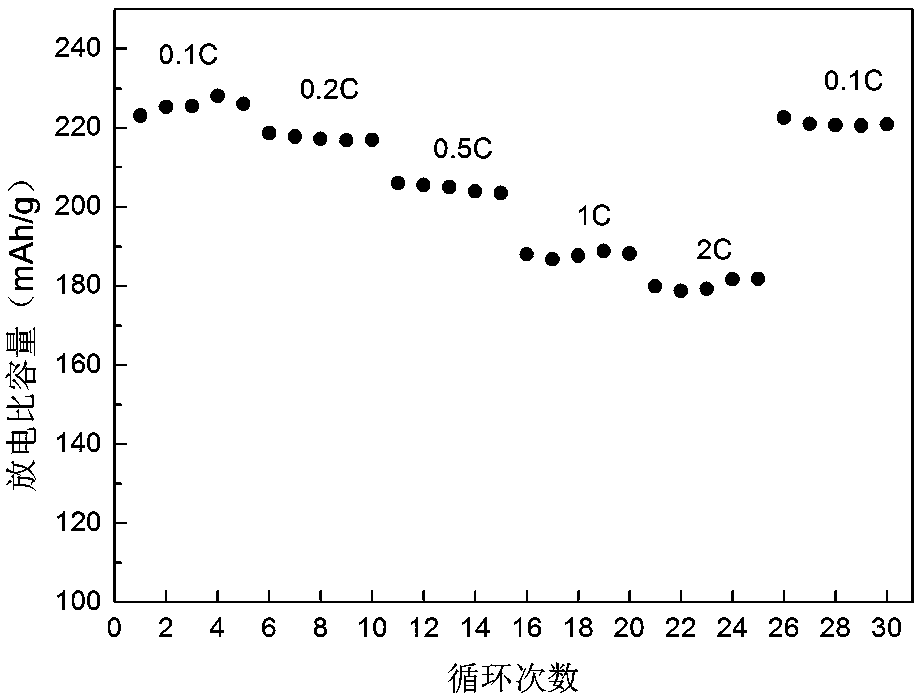
Figure 3
Abstract
Description
technical field
[0001] The invention belongs to the technical field of preparation of lithium-ion battery materials, and in particular relates to a preparation method of a nickel-rich cathode material for a lithium-ion battery with an adjustable ratio. Background technique
[0002] With the improvement of social modernization, the number of cars in the world is increasing, burning a large amount of fossil raw materials such as petroleum, resulting in serious environmental pollution problems, and the development of electric vehicles has become a common goal of the world. Lithium-ion batteries have broad application prospects in the field of electric vehicles due to their high voltage, high specific capacity, high specific energy, no pollution, long cycle life, small self-discharge and good safety performance.
[0003] The performance of lithium-ion batteries is closely related to the performance of positive and negative electrode materials. At present, negative electrode mate...
Examples
Embodiment 1
[0025] What this example prepares is nickel-rich cathode material 0.3LiNi 1 / 3 co 1 / 3 mn 1 / 3 o 2 0.7 LiNiO 2 0.025Al 2 o 3 .
[0026] In this example x=0.3, y=0.7, z=0.025, x:y=3:7.
[0027] Prepare 2mol / L NiSO according to stoichiometric ratio 1:1:1 4 ·6H 2 O. CoSO 4 ·7H 2 O and MnSO 4 ·H 2 O metal salt solution A600mL, prepare 2mol / L NiSO 4 ·6H 2O solution B1400mL, prepare 4mol / L NaOH and 1.6mol / L ammonia water mixed solution C2200mL; put 200mL deionized water in the reaction kettle, heat the water bath to the water temperature of 55°C, keep stirring, the stirring speed is 800rpm, and nitrogen gas For protection, first add the above-mentioned C solution to the kettle dropwise to pH=11.60, then drop the above-mentioned two solutions of A and C into the reaction kettle at the same time, the feed rate of the A solution is 0.9mL / min, adjust the feed rate of the C solution so that The pH in the kettle was maintained at 11.60±0.02 (monitored with a pH meter); after 1...
Embodiment 2
[0031] What this example prepares is nickel-rich cathode material 0.4LiNi 1 / 3 co 1 / 3 mn 1 / 3 o 2 0.6LiNiO 2 0.03Al 2 o 3 .
[0032] In this example x=0.4, y=0.6, z=0.03, x:y=2:3.
[0033] Prepare 2mol / L NiSO according to stoichiometric ratio 1:1:1 4 ·6H 2 O. CoSO 4 ·7H 2 O and MnSO 4 ·H 2 O metal salt solution A800mL, prepare 2mol / L NiSO 4 ·6H 2 O solution B1200mL, prepare 4mol / L NaOH and 0.6mol / L ammonia water mixed solution C2200mL; put 300mL deionized water in the reaction kettle, heat the water bath to the water temperature of 50°C, keep stirring, the stirring speed is 700rpm, and nitrogen gas For protection, first add the above-mentioned C solution to the kettle dropwise to pH=11.40, then drop the above-mentioned two solutions of A and C into the reaction kettle at the same time, the feed rate of the A solution is 1.2mL / min, adjust the feed rate of the C solution so that The pH in the kettle was kept at 11.40±0.05 (monitored with a pH meter); after 0.5h, sol...
Embodiment 3
[0035] What this example prepares is nickel-rich cathode material 0.25LiNi 1 / 3 co 1 / 3 mn 1 / 3 o 2 0.75LiNiO 2 .
[0036] In this example x=0.25, y=0.75, z=0, x:y=1:3.
[0037] Prepare 2mol / L NiSO according to stoichiometric ratio 1:1:1 4 ·6H 2 O. CoSO 4 ·7H 2 O and MnSO 4 ·H 2 O metal salt solution A800mL, prepare 2mol / L NiSO 4 ·6H 2 O solution B2400mL, prepare 4mol / L NaOH and 0.6mol / L ammonia water mixed solution C3500mL; put 250mL deionized water in the reaction kettle, heat the water bath to the water temperature of 55 ° C, keep stirring, stirring speed 500rpm, nitrogen gas For protection, first add the above-mentioned C solution to the kettle dropwise to pH=11.80, then drop the above-mentioned two solutions of A and C into the reaction kettle at the same time, the feed rate of the A solution is 1.0mL / min, adjust the feed rate of the C solution so that The pH in the kettle was kept at 11.80±0.03 (monitored with a pH meter); after 2 hours, the A solution was stop...