
A Maximum Correlation Principal Component Analysis Method Based on Deep Parameter Learning
A technology of principal component analysis and depth parameters, applied in the field of data processing, can solve problems such as data destruction, hindering analysis of data correlation, and increasing the difficulty of data analysis
Patent Information
- Authority / Receiving Office
- CN · China
- Patent Type
- Patents(China)
- Current Assignee / Owner
- Publication Date
- 2020-04-14
Smart Images
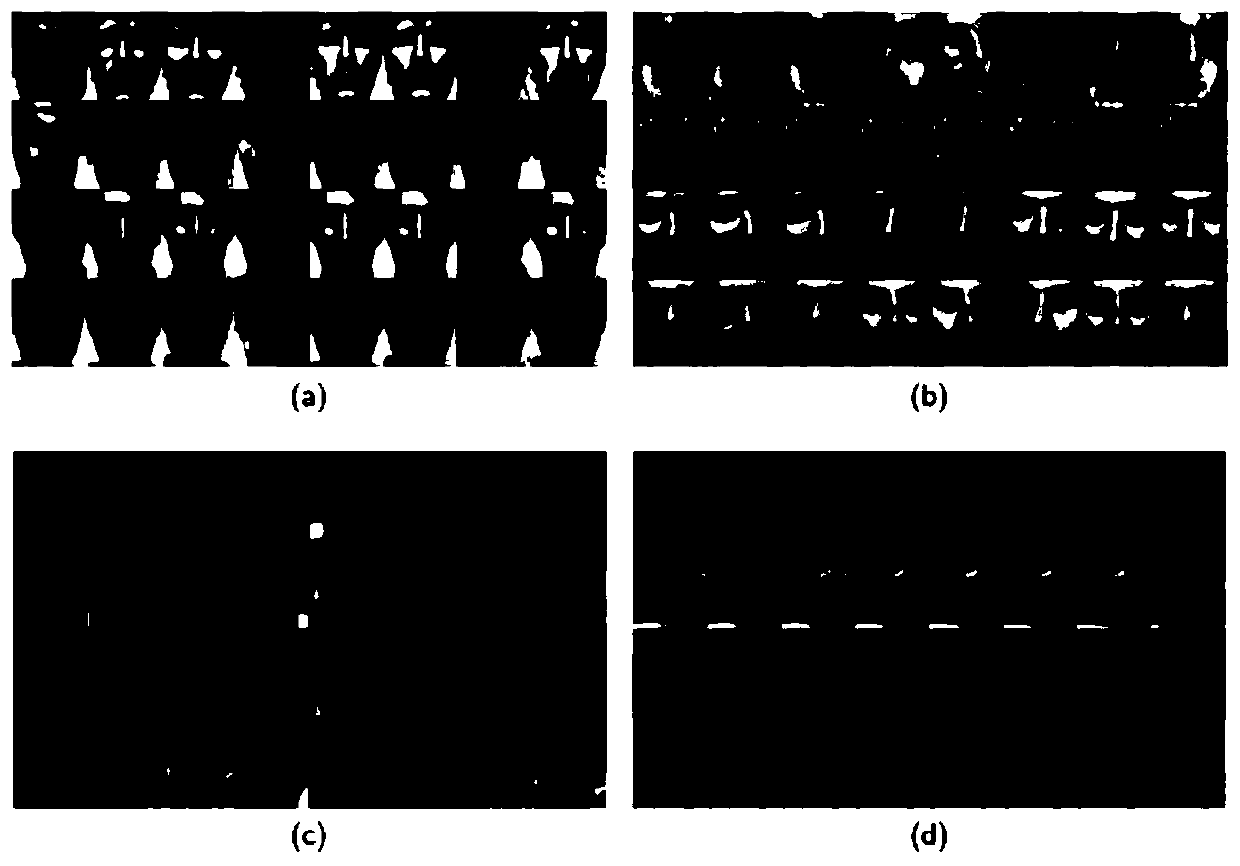
Figure 1 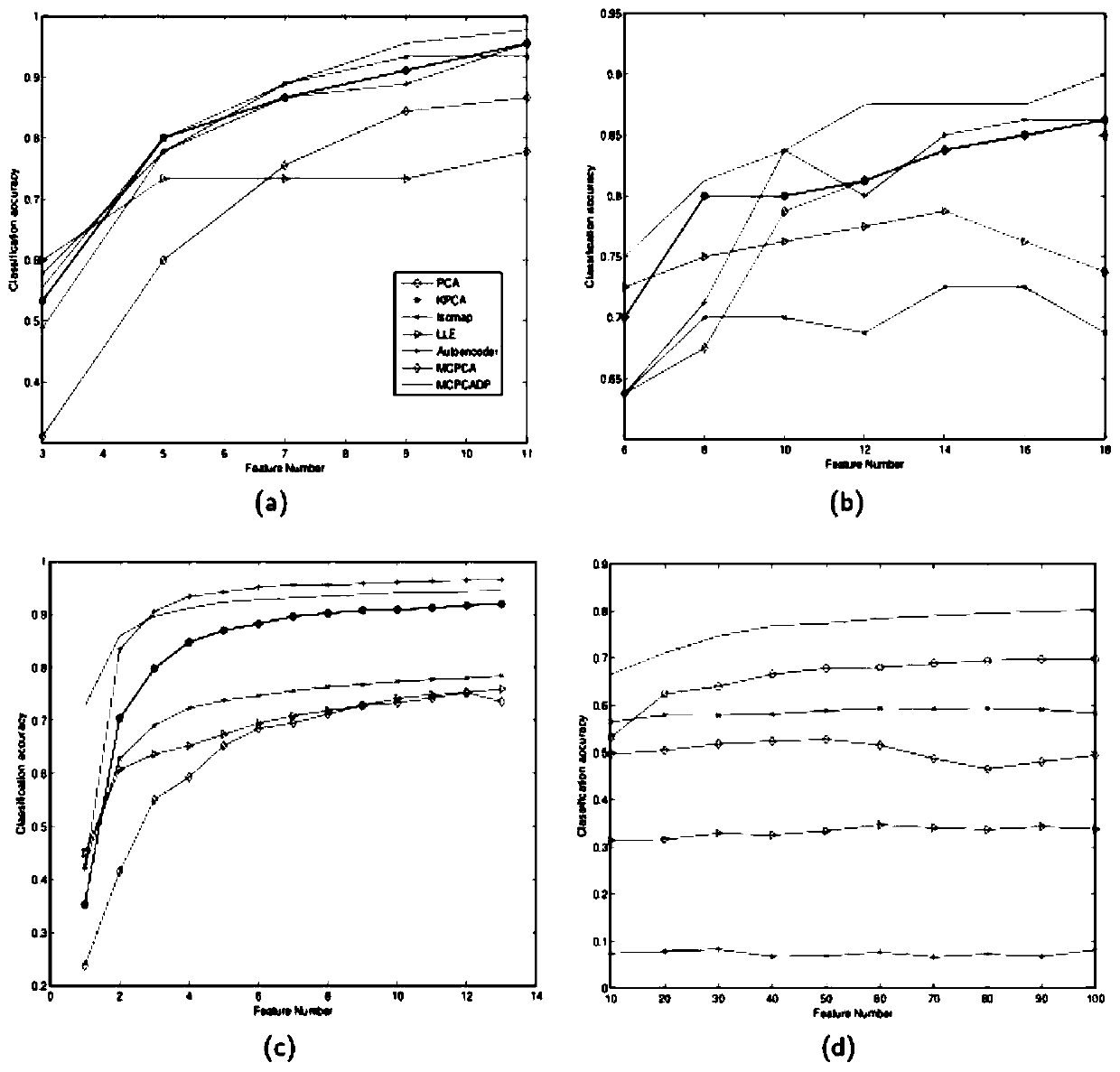
Figure 2 
Figure 3
Abstract
Description
technical field
[0001] The invention belongs to the technical field of data processing, especially the dimensionality reduction of face database data, and in particular relates to a maximum correlation principal component analysis method based on deep parameter learning. Background technique
[0002] In the era of big data, we are faced with more and more data analysis and data processing tasks. There are two main problems when faced with these tasks. One is that in the real world, data in higher dimensional forms are usually obtained. These data generally embed the intrinsic low-dimensional structure hidden in the low-dimensional subspace or manifold in the high-dimensional data space. High dimensions not only require more storage space and computational costs, but also increase the difficulty of data analysis due to the "curse" of dimensionality. The second is that real-world data is likely to be corrupted by various noises, which hinders the analysis of real informatio...
Examples
Embodiment Construction
[0012] This method of maximum correlation principal component analysis based on deep parameter learning uses deep parameterization to approach unknown but existing nonlinear functions, maps high-dimensional data with nonlinear structures to data of the same dimension with linear structures, and then uses Principal component analysis reduces the dimensionality of the data.
[0013] The invention parametrizes the transfer operator through learning. The method uses independent mapping chains for each feature, which is similar to the forward propagation structure of the neural network, but the interaction between variables is independent. Therefore, each mapping chain has only one input variable and approximates a non-linear transition operator. This method uses a deep parameterization method to approximate unknown but existing nonlinear functions, maps high-dimensional data with a nonlinear structure to data of the same dimension with a linear structure, and then uses principal c...