
A non-destructive testing method for hydroxyl content in quartz glass
A quartz glass and non-destructive testing technology, applied in the direction of color/spectral characteristic measurement, etc., can solve problems such as product damage and difficult processing, and achieve the effect of simplifying the measurement steps, reducing difficulty, and improving accuracy
Patent Information
- Authority / Receiving Office
- CN · China
- Patent Type
- Patents(China)
- Current Assignee / Owner
- Publication Date
- 2021-02-09
Smart Images
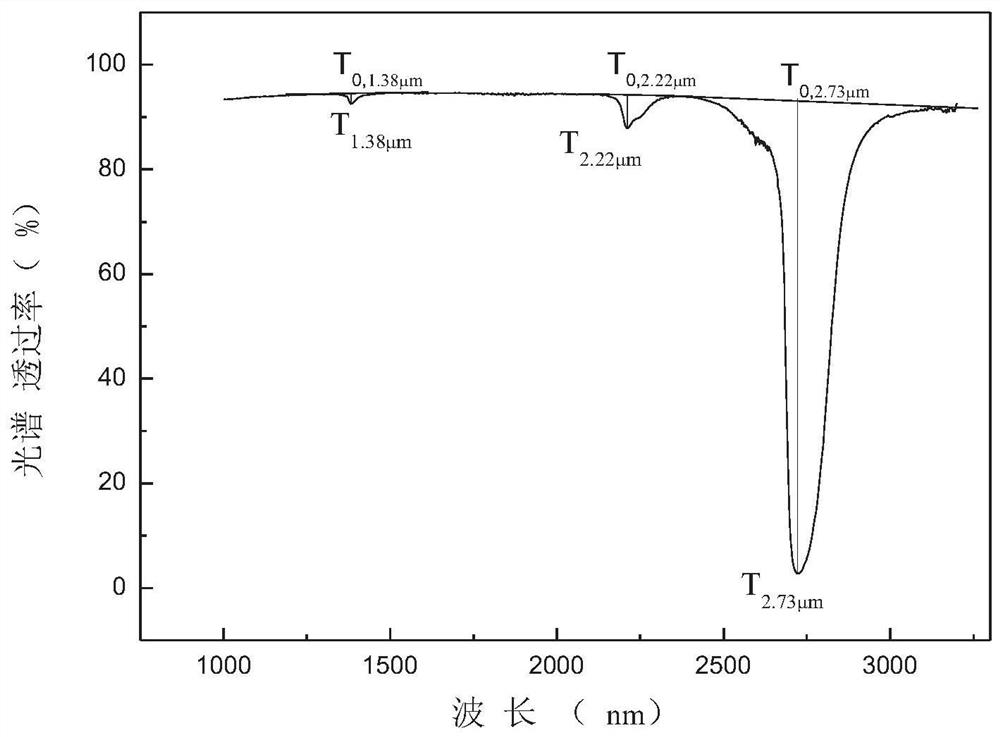
Figure 1 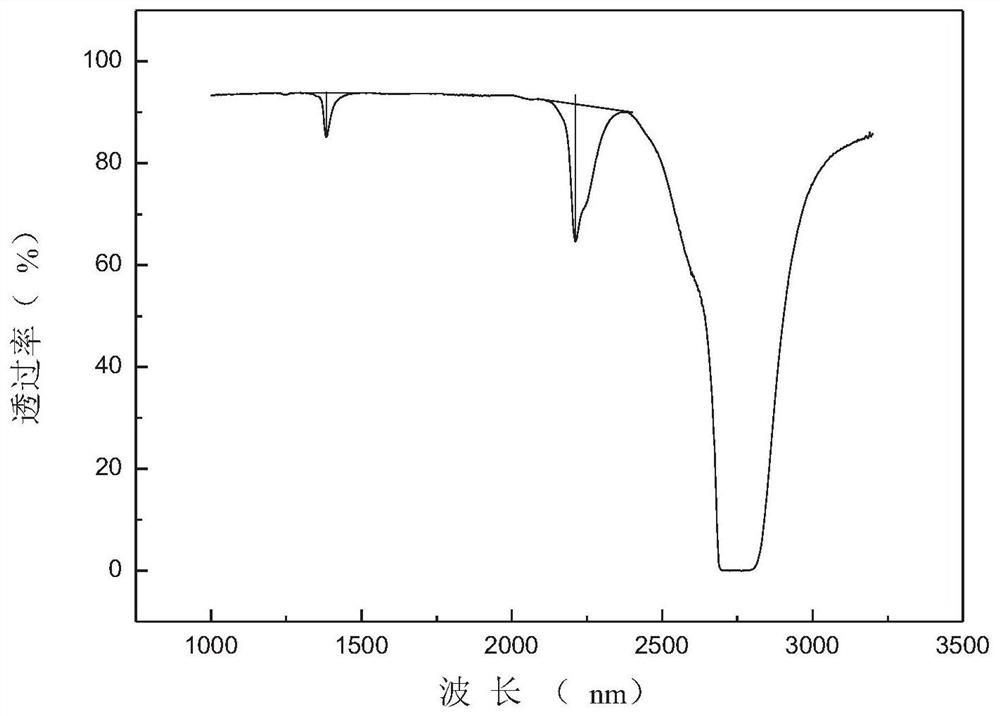
Figure 2 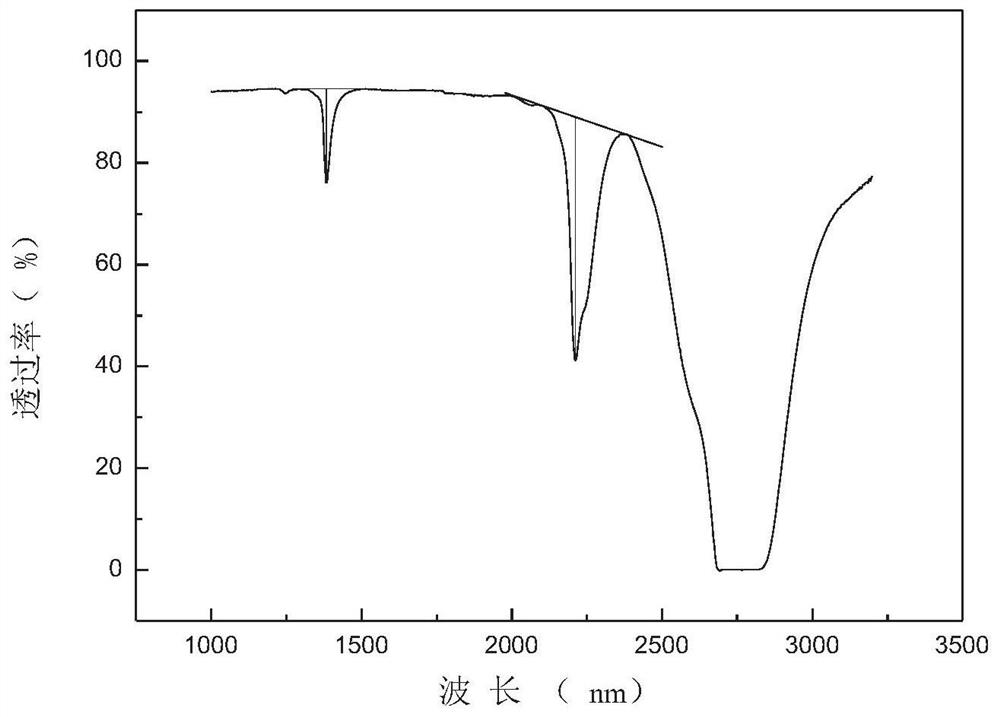
Figure 3
Abstract
Description
technical field
[0001] The invention relates to the field of glass detection, in particular to a nondestructive detection method for hydroxyl content in quartz glass. Background technique
[0002] Quartz glass is widely used because of its high purity, low thermal conductivity, excellent thermal shock resistance, high deformation temperature and softening temperature, wide optical transmission ability and other comprehensive properties that other materials do not have. It is used in many fields such as electric light source, infrared optics, laser engineering and aerospace engineering.
[0003] Quartz glass is made of a single [SiO 4 ] composed of glass, hydroxyl (OH) is the main impurity component of quartz glass, is an important factor affecting the performance of quartz glass. When used in the field of electric light sources, high hydroxyl content will seriously affect the service life of electric light sources, so the content of hydroxyl groups should be controlled and...
Examples
Embodiment 1
[0098] This example provides the extinction coefficient ε of hydroxyl groups in quartz glass at 1.38 μm and 2.22 μm 1.38μm , ε 2.22μm calculation method.
[0099] In this embodiment, the quartz glass is synthetic quartz glass with a thickness of 1mm.
[0100] In this embodiment, the spectral transmittance curve of quartz glass in the wavelength range of 1000nm to 3200nm is as follows figure 1 shown. figure 1 The baseline spectral transmittance T at the positions of 2.73μm, 2.22μm and 1.38μm 0 See Table 1 for the absorption peak spectral transmittance T.
[0101] Table 1 figure 1 T at the positions of 2.73μm, 2.22μm and 1.38μm 0 and T
[0102]
[0103] In this embodiment, the extinction coefficient ε of the hydroxyl group in quartz glass at 2.73 μm is selected. 2.73μm Value 80.1L·mol -1 cm -1 , calculated according to the second formula, the extinction coefficient ε of the hydroxyl group in quartz glass at 1.38 μm is obtained 1.38μm 0.45Lmol -1 cm -1 ; Accordin...
Embodiment 2
[0112] This embodiment provides a non-destructive testing method for hydroxyl content in synthetic quartz glass.
[0113] The thickness of the synthetic quartz glass 1 in this embodiment is 5.25 mm.
[0114] In this embodiment, the spectral transmittance curve of synthetic quartz glass 1 in the wavelength range of 1000nm to 3200nm is as follows figure 2 shown.
[0115] If the detection method of hydroxyl content in quartz glass recorded in the prior art GB / T 12442-90 is adopted, since the thickness of synthetic quartz glass 1 in this embodiment is 5.25mm, it has exceeded the thickness of artificial quartz glass specified in this standard by 0.4- 0.7mm, and, by figure 2 It can be seen that the synthetic quartz glass 1 of this embodiment cannot display the spectral peak at 2.73 μm, so the method described in GB / T12442-90 cannot be used for detection.
[0116] figure 2 The baseline spectral transmittance T at the position of 2.22μm and 1.38μm 0 And the absorption peak spe...
Embodiment 3
[0121] This embodiment provides a non-destructive testing method for hydroxyl content in synthetic quartz glass.
[0122] In this embodiment, the thickness of the synthetic quartz glass 2 is 11 mm.
[0123] In this embodiment, the spectral transmittance curve of the synthetic quartz glass 2 in the wavelength range of 1000nm to 3200nm is as follows image 3 shown. image 3 The baseline spectral transmittance T at the position of 2.22μm and 1.38μm 0 And the absorption peak spectral transmittance T is shown in Table 3.
[0124] table 3 image 3 T at the positions of 1.38μm and 2.22μm in 0 and T
[0125]
[0126] With the extinction coefficient ε obtained in embodiment 1 2.22μm , The baseline spectral transmittance T at the position of 2.22μm 0 and the absorption peak spectral transmittance T are substituted into the first formula described, and the calculation obtains that the hydroxyl content of the synthetic quartz glass 2 in the present embodiment is 1469ppm; the ex...