
O-carborane-tetraphenylethylene compound and its preparation method and use
A technology of tetraphenylethylene and o-carborane, which is applied in the field of o-carborane-tetraphenylethylene compounds and their preparation, can solve the problems of lack of synthesis methods and complex synthesis steps, etc.
Patent Information
- Authority / Receiving Office
- CN · China
- Patent Type
- Patents(China)
- Current Assignee / Owner
- Publication Date
- 2021-04-09
Smart Images
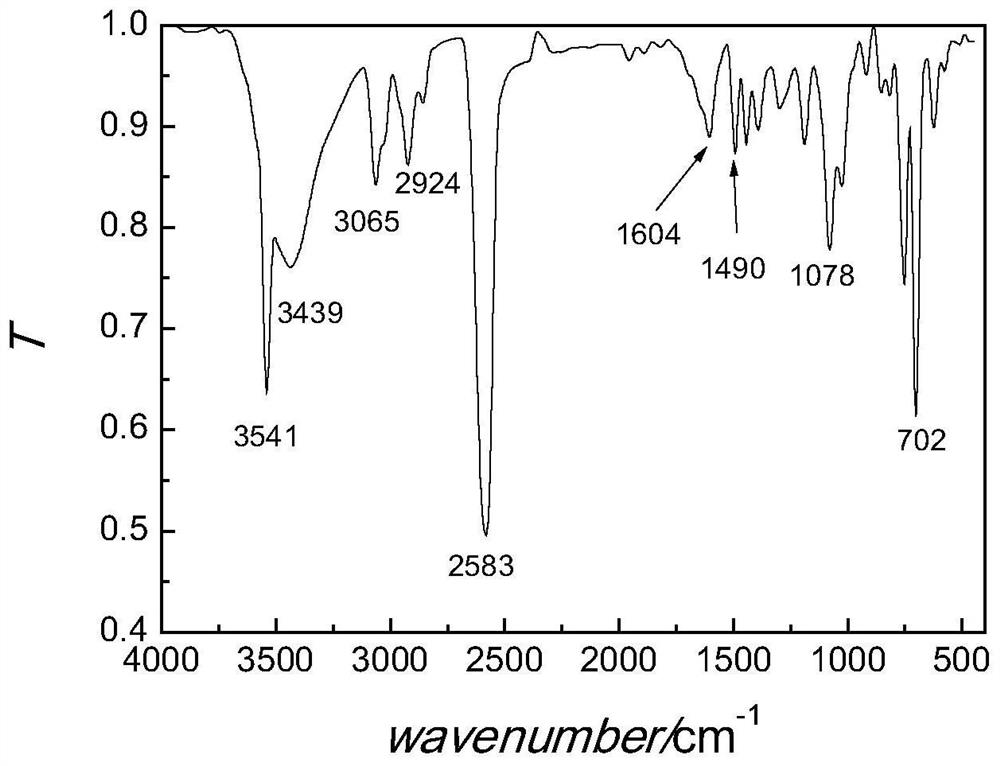
Figure 1 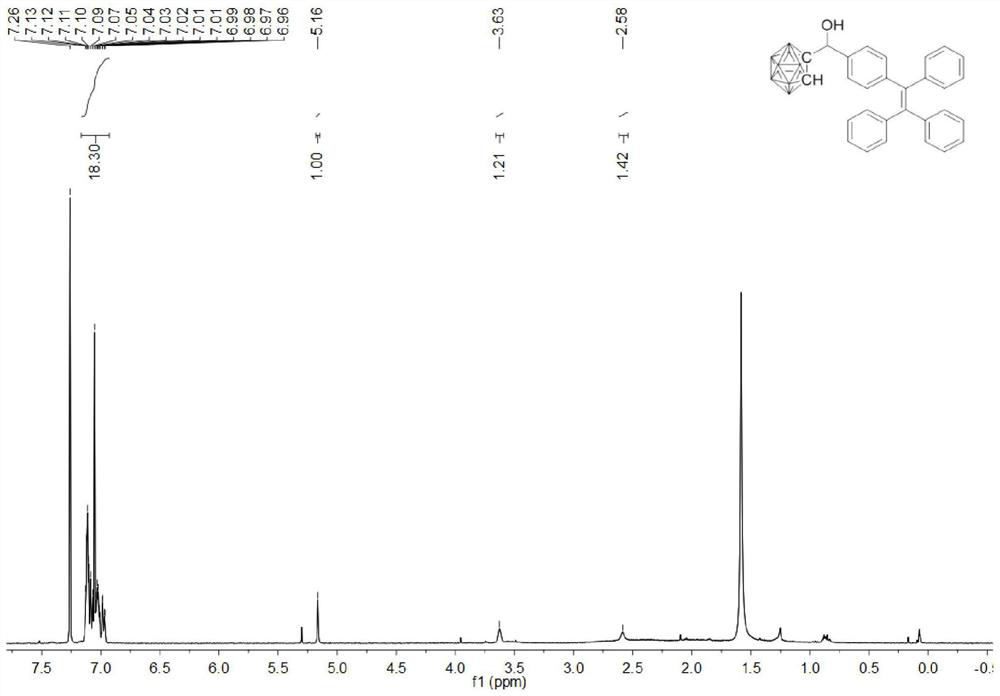
Figure 2 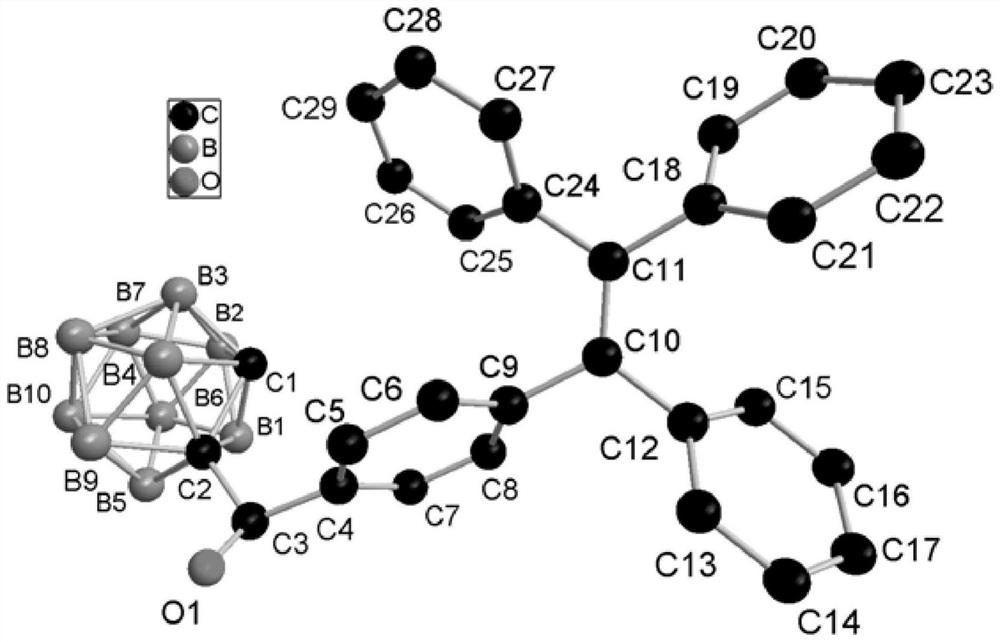
Figure 3
Abstract
Description
technical field
[0001] The invention relates to the field of organic synthesis and luminescent materials, in particular to an o-carborane-tetraphenylethylene compound and a preparation method and use thereof. Background technique
[0002] With the discovery and research of the aggregation-induced emission (AIE) phenomenon, researchers have synthesized a large number of compounds with AIE properties, and began to involve the synthesis and application of new AIE materials in different high-tech fields.
[0003] Aggregation-induced luminescent materials have a wide range of applications in the fields of chemistry, materials, and life sciences, covering biological probes, chemical sensors, optoelectronic devices, and stimuli-responsive materials. At present, the AIE organic compound systems that have been studied more mainly include tetraphenylethylene (TPE), silole (silole) and 9,10-distyryl anthracene. Among them, TPE, as a typical molecule with AIE properties, is mainly used...
Examples
preparation example Construction
[0060] The preparation method of thin-layer chromatography in the embodiment of the present invention is a conventional method, and the single crystal cultivation method is also a conventional method in the art.
[0061] Preferably, the thin-layer chromatography preparation method is as follows: take GF-254 silica gel, pour it into a prepared 0.5% sodium carboxymethylcellulose solution, stir and grind it thoroughly, spread the silica gel evenly on a square glass plate, vibrate the glass plate to make the silica gel Flatten it, place it in a cool place to dry, then place it in an oven to dry, cool to room temperature, and take it out. Among them, the volume-to-weight ratio of 0.5% sodium carboxymethylcellulose solution to silica gel is 2.5:1; the drying temperature in the shade is 20-30°C; the oven drying temperature is 100-120°C; the oven drying time is 2 ~3h; the cooling temperature in the oven is 40~50°C.
[0062] Preferably, the single crystal cultivation method is: dissol...
Embodiment 1
[0064]
[0065] In this embodiment, the reaction process and the addition process were all carried out under the protection of argon.
[0066] Add o-carborane (77.1mg, 0.54mmol), 1-(4-formylphenyl)-1,2,2-triphenylethylene (217.4mg, 0.60mmol) successively in the reaction flask, add 20mL to dry 1 mol / L tetrabutylammonium fluoride tetrahydrofuran solution (1 mol / L, 1.6 mL, 1.6 mmol) was added dropwise under stirring, and stirred at room temperature for 1 h.
[0067] The reaction was quenched by adding 15 mL of saturated aqueous ammonium chloride solution, and stirring was continued for 10 min. The reaction system was transferred to a separatory funnel for liquid separation, the aqueous phase was extracted with dichloromethane (15 mL×3), the organic phases were combined, dried over anhydrous sodium sulfate, filtered, and the filtrate was evaporated to dryness to obtain a crude product. Thin-layer chromatography was used to separate and purify the crude product. The developer w...
Embodiment 2
[0074]
[0075] In this embodiment, the reaction process and the addition process were all carried out under the protection of argon.
[0076] Add o-carborane (72.3mg, 0.50mmol), 1,1-bis(4-formylphenyl)-2,2-diphenylethylene (116.6mg, 0.30mmol) successively in the reaction flask, add 10mL Dry tetrahydrofuran was added dropwise with 1 mol / L tetrabutylammonium fluoride tetrahydrofuran solution (1 mol / L, 1.5 mL, 1.5 mmol) under stirring, and stirred at room temperature for 65 min.
[0077] The reaction was quenched by adding 10 mL of saturated aqueous ammonium chloride solution, and stirring was continued for 10 min. The reaction system was transferred to a separatory funnel for liquid separation, the aqueous phase was extracted with dichloromethane (15 mL×3), the organic phases were combined, dried over anhydrous sodium sulfate, filtered, and the filtrate was evaporated to dryness to obtain a crude product. Use thin-layer chromatography to separate and purify the crude produc...