
Application of pratia begoniifolia in ecological control of orchard
A copper hammer jade belt grass and ecological technology, applied in the application field of ecological control, can solve the problems of limited promotion and high maintenance costs, and achieve the effects of extensive and simple management, strong resistance to stress, and simple planting methods
Patent Information
- Authority / Receiving Office
- CN · China
- Patent Type
- Applications(China)
- Current Assignee / Owner
- Publication Date
- 2020-04-17
- Estimated Expiration
- Not applicable · inactive patent
Smart Images
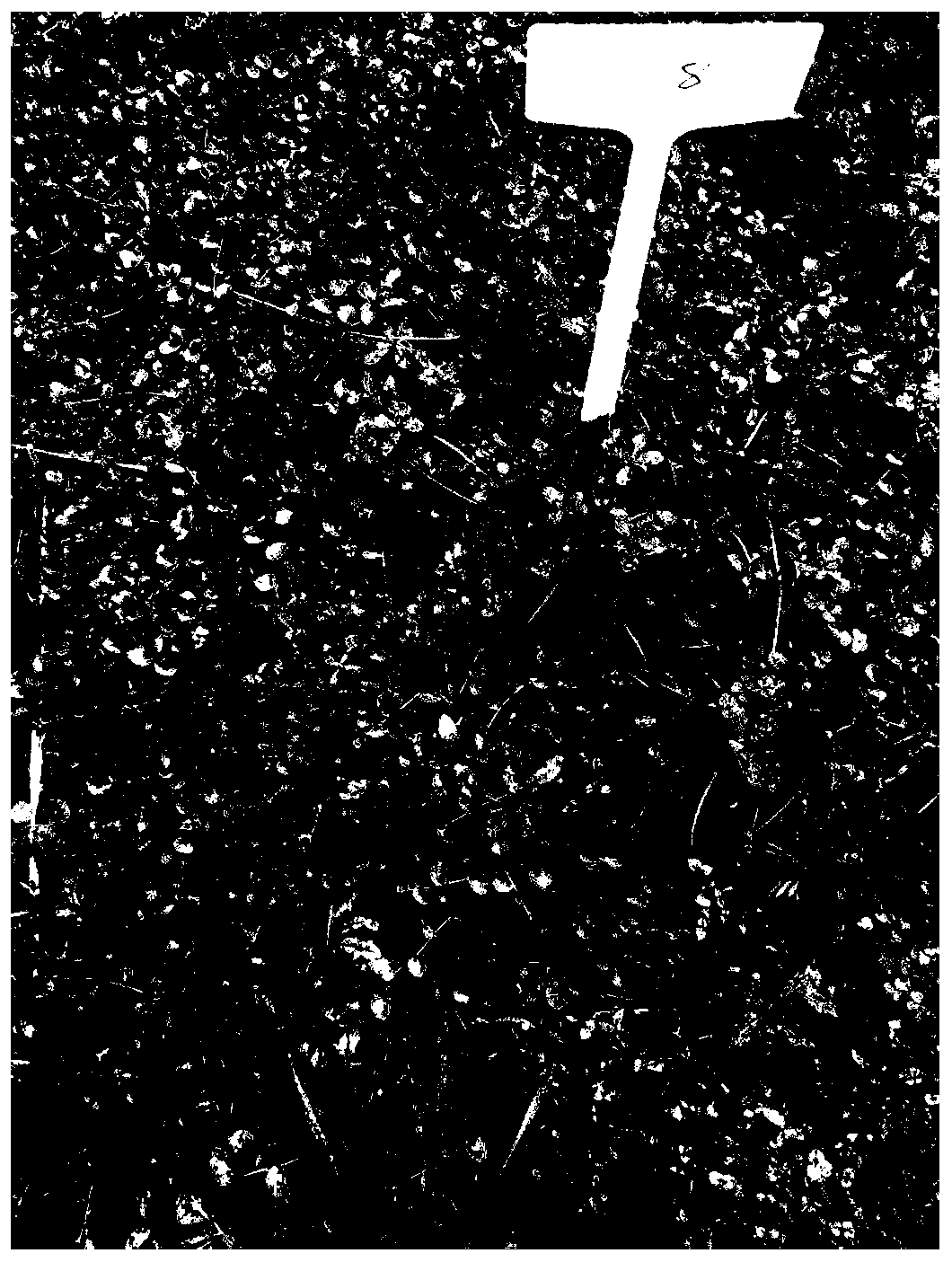
Figure 1 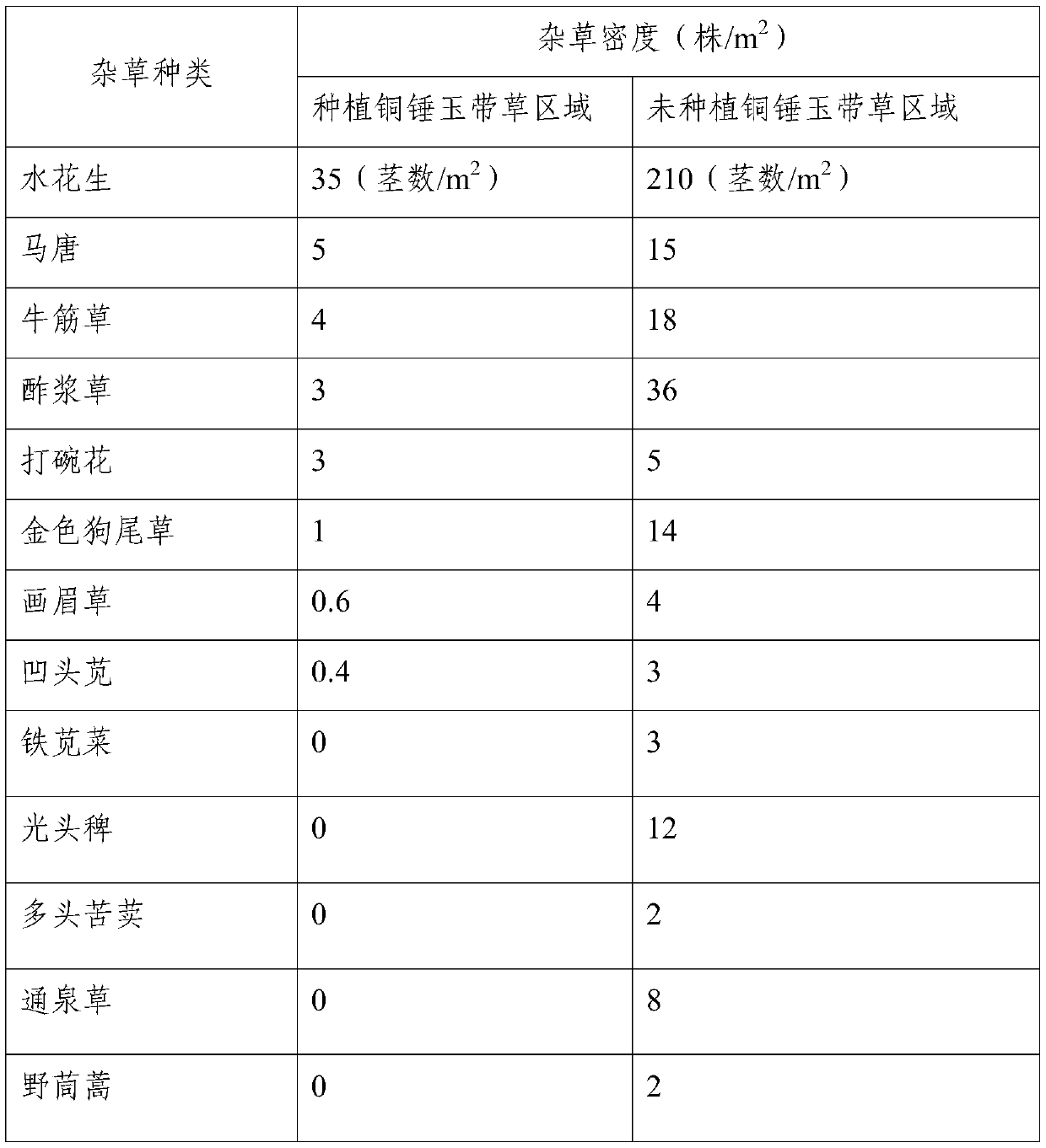
Figure 2 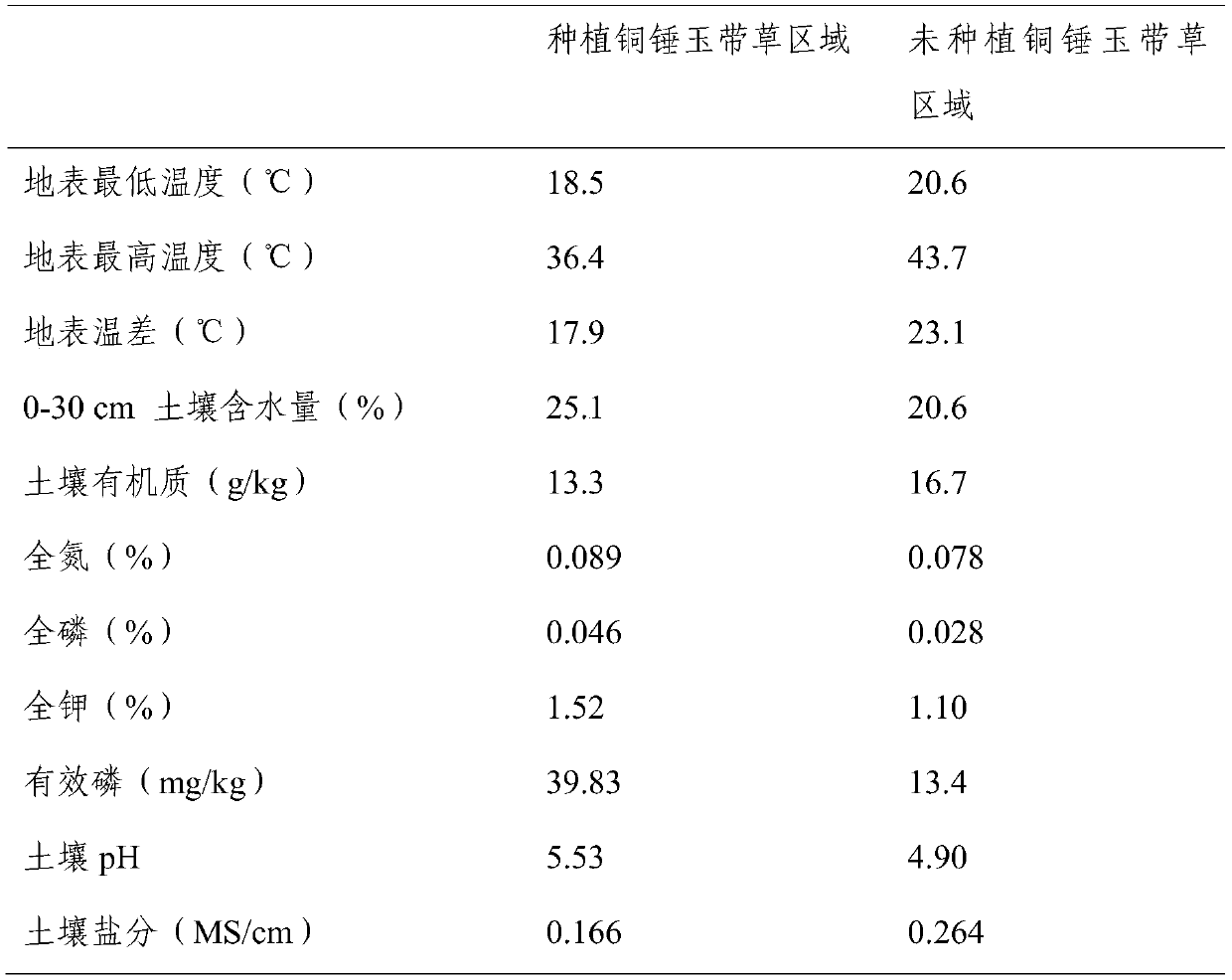
Figure 3
Abstract
Description
technical field
[0001] The invention belongs to the technical field of ecological control, and in particular relates to the application of copper hammer jade belt grass in the ecological control of orchards. Background technique
[0002] There are many kinds of weeds in orchards, and there are generally more than 700 kinds of weeds that harm orchards, of which 38 are vicious weeds. Orchard weeds will consume soil nutrients, breed diseases and insect pests, deteriorate the ecological environment of orchards, directly or indirectly harm the growth and development of fruit trees, and affect the field operations of orchards. The prevention and control of weeds in orchards has always been a major problem in agricultural production. Manual weeding is not only difficult to completely remove weeds, but also time-consuming and laborious. Although chemical herbicides can effectively control weed damage, long-term use of chemical herbicides, especially long-term use of a single herbic...
Examples
Embodiment 1
[0043] Implementation location: Citrus Garden in Qingshen County, Sichuan.
[0044] From the end of March to the beginning of April, we collected Jade scallops in the field, cut the stems of C. japonica into segments with a length of 5-10 cm, and made each stem segment have 1-2 nodes.
[0045] From the beginning of April to the end of April, the weeds in the orchard are first manually removed, and then the copper hammer jade belt grass is planted.
[0046] The planting method is cuttage, the cutting depth is 1-3cm, the distance between cuttings is 5-10cm, to ensure that the nodes of each stem segment are in contact with the soil, and the vertical shadow from the fruit trees on both sides is used as the boundary, and the row spacing is 20-30cm; after the cutting is completed, Appropriate suppression. Water once and thoroughly, and there is no need to water the copper hammer jade ribbon grass in the future, only the normal watering of the fruit trees is enough. There is no nee...