
Synthetic method for increasing yield of 5-chloro-1-indanone
A synthesis method and technology of indanone, which is applied in the field of synthesis to improve the yield of 5-chloro-1-indanone, can solve the problems of poor selectivity, many side reactions, and low yield, and achieve improved viscosity, increased selectivity, Reduce the effect of side effects
Patent Information
- Authority / Receiving Office
- CN · China
- Current Assignee / Owner
- Publication Date
- 2020-05-29
- Estimated Expiration
- Not applicable · inactive patent
Smart Images
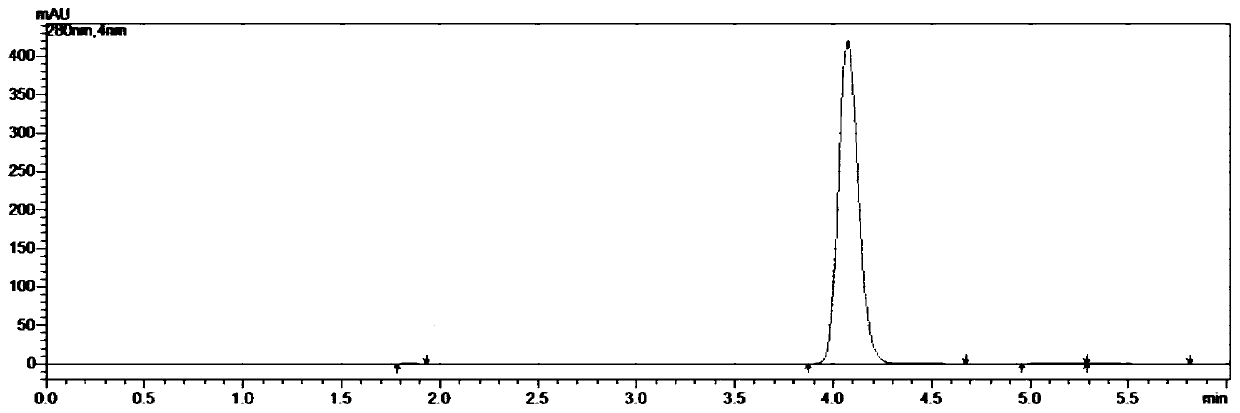
Figure 1 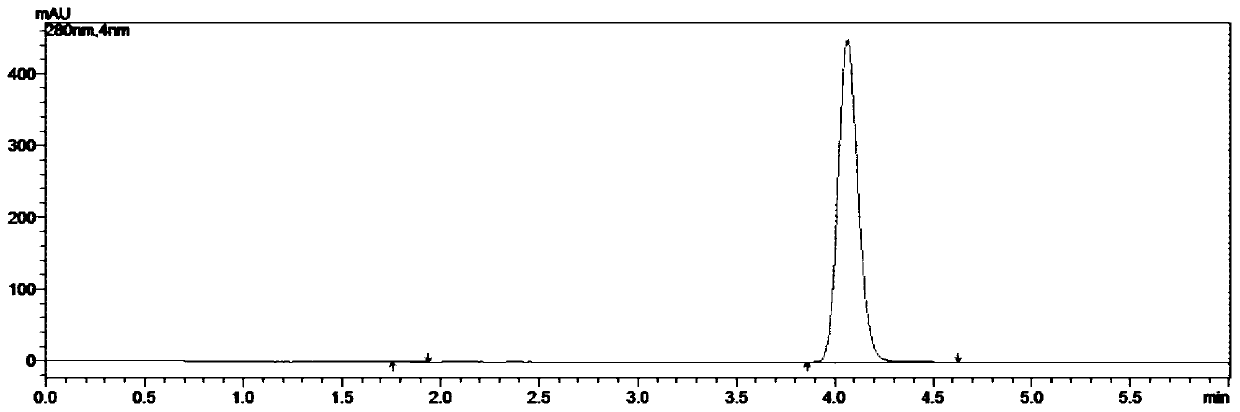
Figure 2 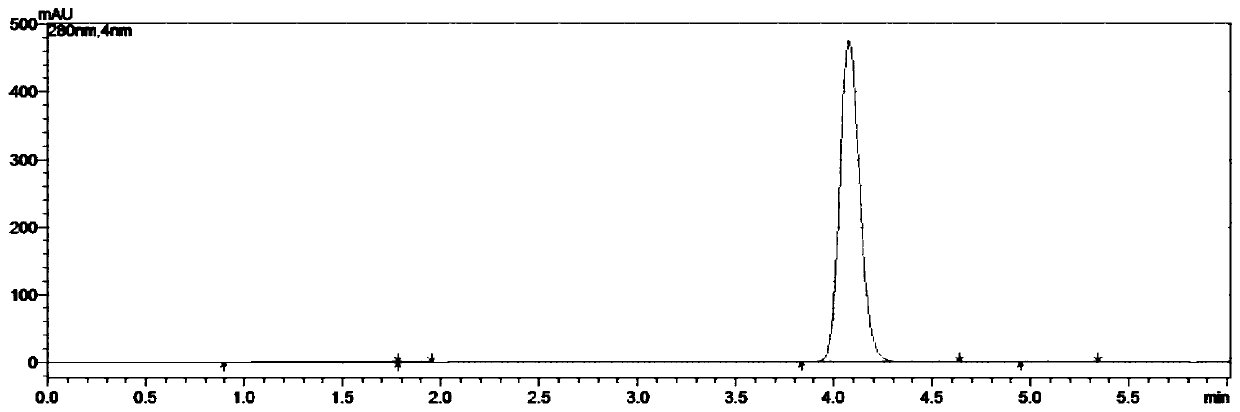
Figure 3
Abstract
Description
technical field
[0001] The invention belongs to the technical field of organic synthesis, and in particular relates to a synthesis method for improving the yield of 5-chloro-1-indanone. Background technique
[0002] 5-Chloro-1-indanone is an important organic chemical intermediate, which is widely used in the synthesis of pesticides, pharmaceuticals and other chemicals. Indoxacard and other new insecticides produced from 5-chloro-1-indanone have the characteristics of high efficiency and low residue. They are projects encouraged by the national industrial policy and have very broad application prospects. According to literature reports, the main synthetic route of this compound has following three kinds:
[0003] Route 1: m-chlorobenzaldehyde method
[0004]
[0005] Route 1 uses m-chlorobenzaldehyde as the main raw material, undergoes condensation, catalytic hydrogenation, Friedel-Crafts alkylation and other reactions, and the synthesis steps are relatively cumbersome....
Examples
Embodiment 1
[0049] A kind of synthetic method of 5-chloro-1-indanone, concrete steps are as follows:
[0050] (1) Weigh 211.0g of 3,4'-dichloropropiophenone and 400.5g of aluminum trichloride into the reaction flask, connect the tail gas absorption device, start stirring, and slowly raise the temperature to 100°C, the system is in a molten state;
[0051] (2) When the system is in a molten state, take 21.1g tetrabutylammonium bromide, add it to the reaction flask, continue to heat up, and heat up to 160°C in 1h; after reaching the target temperature, keep it warm for 2h, and monitor the reaction with HPLC. When there is no 3,4'-dichloropropiophenone remaining, stop the reaction;
[0052] (3) Cool the reaction solution to 80°C, transfer it to water at 0-5°C, and stir for 1 hour;
[0053] (4) Suction filtration, the filter cake was rinsed with water until the pH of the filtrate=6~7, and suction filtration until no water drops fell to obtain 337.2g of crude product;
[0054](5) Place the c...
Embodiment 2
[0063] A kind of synthetic method of 5-chloro-1-indanone, concrete steps are as follows:
[0064] (1) Weigh 211.0g of 3,4'-dichloropropiophenone and 400.5g of aluminum trichloride into the reaction flask, connect the tail gas absorption device, start stirring, and slowly raise the temperature to 100°C, the system is in a molten state;
[0065] (2) When the system is in a molten state, take 1.06g of tetrabutylammonium bromide, add it to the reaction flask, continue to heat up, and heat up to 160°C in 1h; after reaching the target temperature, keep it warm for 4.5h, and monitor the reaction with HPLC. At this time, there is no 3,4'-dichloropropiophenone remaining, and the reaction is stopped;
[0066] (3) Cool the reaction solution to 80°C, transfer it to water at 0-5°C, and stir for 1 hour;
[0067] (4) Suction filtration, the filter cake was rinsed with water until the pH of the filtrate=6~7, and suction filtration until no water drops fell to obtain 311.8g of crude product; ...
Embodiment 3
[0073] A kind of synthetic method of 5-chloro-1-indanone, concrete steps are as follows:
[0074] (1) Weigh 211.0g of 3,4'-dichloropropiophenone and 400.5g of aluminum trichloride into the reaction flask, connect the tail gas absorption device, start stirring, and slowly raise the temperature to 100°C, the system is in a molten state;
[0075] (2) When the system is in a molten state, take 21.1g of tetrabutylammonium chloride, add it to the reaction flask, continue to heat up, and heat up to 160°C in 1h; after reaching the target temperature, keep it warm for 4h, and monitor the reaction with HPLC. When there is no 3,4'-dichloropropiophenone remaining, stop the reaction;
[0076] (3) Cool the reaction solution to 80°C, transfer it to water at 0-5°C, and stir for 1 hour;
[0077] (4) Suction filtration, the filter cake was rinsed with water until the pH of the filtrate=6~7, and suction filtration until no water drops fell to obtain 317.6g of crude product;
[0078] (5) Place ...