

Low-carbon-number light-color sulfur-free chlorine-free ash-free polymerization inhibitor and application thereof
A technology of polymerization inhibitor and carbon number, which is applied in the field of low-carbon number, light-colored, sulfur-free, chlorine-free, ash-free polymerization inhibitors, can solve the problem of few reports, and achieve the effect of reducing scaling and coking substances
Patent Information
- Authority / Receiving Office
- CN · China
- Patent Type
- Applications(China)
- Current Assignee / Owner
- Publication Date
- 2020-10-27
Smart Images
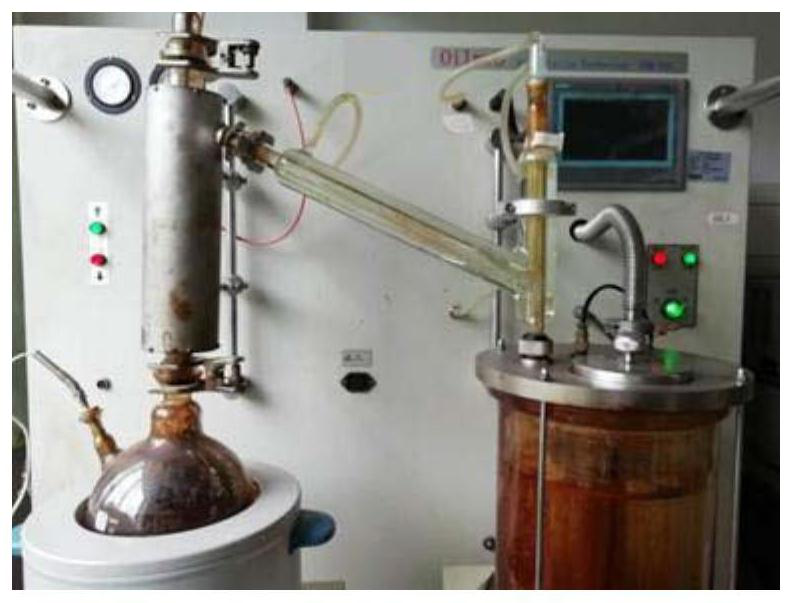
Figure 1 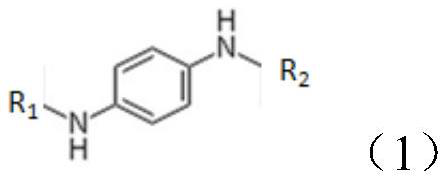
Figure 2 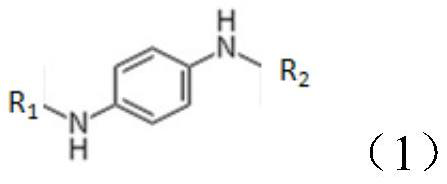
Figure 3
Abstract
Description
technical field
[0001] The invention relates to a medium material required in the petrochemical production process, more specifically, the invention relates to a light-colored sulfur-free, chlorine-free and ash-free polymerization inhibitor with low carbon number and application thereof. Background technique
[0002] At home and abroad, pipeline transportation technology has been widely used for the long-distance transportation of automotive gasoline and diesel products, but there are not many reports on the treatment technology of mixed oil in pipeline transportation technology. In summary, there are five main methods: direct back-blending method; distillation separation method; Metal oxide treatment; alkali treatment; filtration. Among them, the distillation separation method is used the most and is the most effective. However, in the distillation separation method, when the olefins in the oil are heated, they are easy to condense with the olefins in the oil, various addi...
Examples
preparation example Construction
[0058] The present invention does not specifically limit the preparation method of the polymerization inhibitor, which can be prepared by mixing.
[0059] The second aspect of the present invention provides an application of the low-carbon number, light-colored sulfur-free, chlorine-free and ash-free polymerization inhibitor mentioned above, which is used in the high-temperature distillation and separation process of light mixed oil.
[0060] The light mixed oil described in the present invention is a mixture of gasoline and diesel oil. The high-temperature distillation in the present invention refers to the distillation and separation of light miscellaneous oil under the conditions of normal pressure and ≤250°C.
Embodiment 1
[0064] This example provides a kind of polymerization inhibitor, and the preparation raw material of described polymerization inhibitor comprises 15 parts of diphenylamine derivatives, 30 parts of p-phenylenediamine derivatives, 15 parts of succinimide and 30 parts of carbon Nine aromatic hydrocarbons; the diphenylamine derivative is 4-hydroxyl diphenylamine, and the succinimide is N-methylsuccinimide;
[0065] The structural formula of the p-phenylenediamine derivative is shown in formula (1):
[0066]
[0067] R 1 , R 2 Both are sec-butyl.
[0068] The N-methylsuccinimide was purchased from Nanjing Kangmanlin Chemical Industry Co., Ltd.
[0069] This example also provides the preparation method of the above-mentioned polymerization inhibitor, comprising the following steps: mixing the preparation raw materials of the polymerization inhibitor to obtain the polymerization inhibitor.
Embodiment 2
[0071] This example provides a kind of polymerization inhibitor, and the preparation raw material of described polymerization inhibitor comprises 25 parts of diphenylamine derivatives, 40 parts of p-phenylenediamine derivatives, 20 parts of succinimide and 35 parts of carbon Nine aromatic hydrocarbons; the diphenylamine derivative is 4-hydroxyl diphenylamine, and the succinimide is N-ethylsuccinimide;
[0072] The structural formula of the p-phenylenediamine derivative is shown in formula (1):
[0073]
[0074] R 1 , R 2 Both are sec-butyl.
[0075] The N-ethylsuccinimide was purchased from Nanjing Kangmanlin Chemical Industry Co., Ltd.
[0076] This example also provides the preparation method of the above-mentioned polymerization inhibitor, comprising the following steps: mixing the preparation raw materials of the polymerization inhibitor to obtain the polymerization inhibitor.