
Finish machining method for aviation high-speed bearing retainer
A high-speed bearing and aviation technology, which is applied in the field of finishing of bearing cages, can solve the problems that the machining accuracy needs to be improved, and achieve the effect of improving accuracy and hardness
Patent Information
- Authority / Receiving Office
- CN · China
- Patent Type
- Applications(China)
- Current Assignee / Owner
- Publication Date
- 2020-11-10
Smart Images
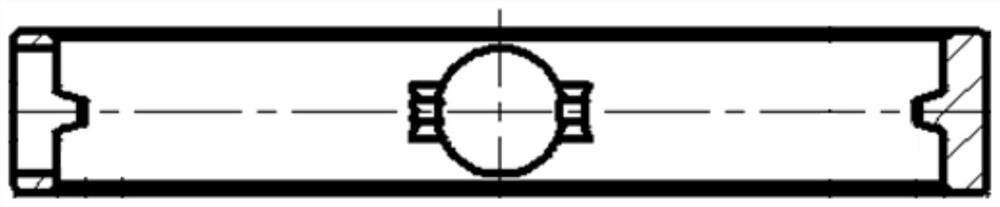
Figure 1 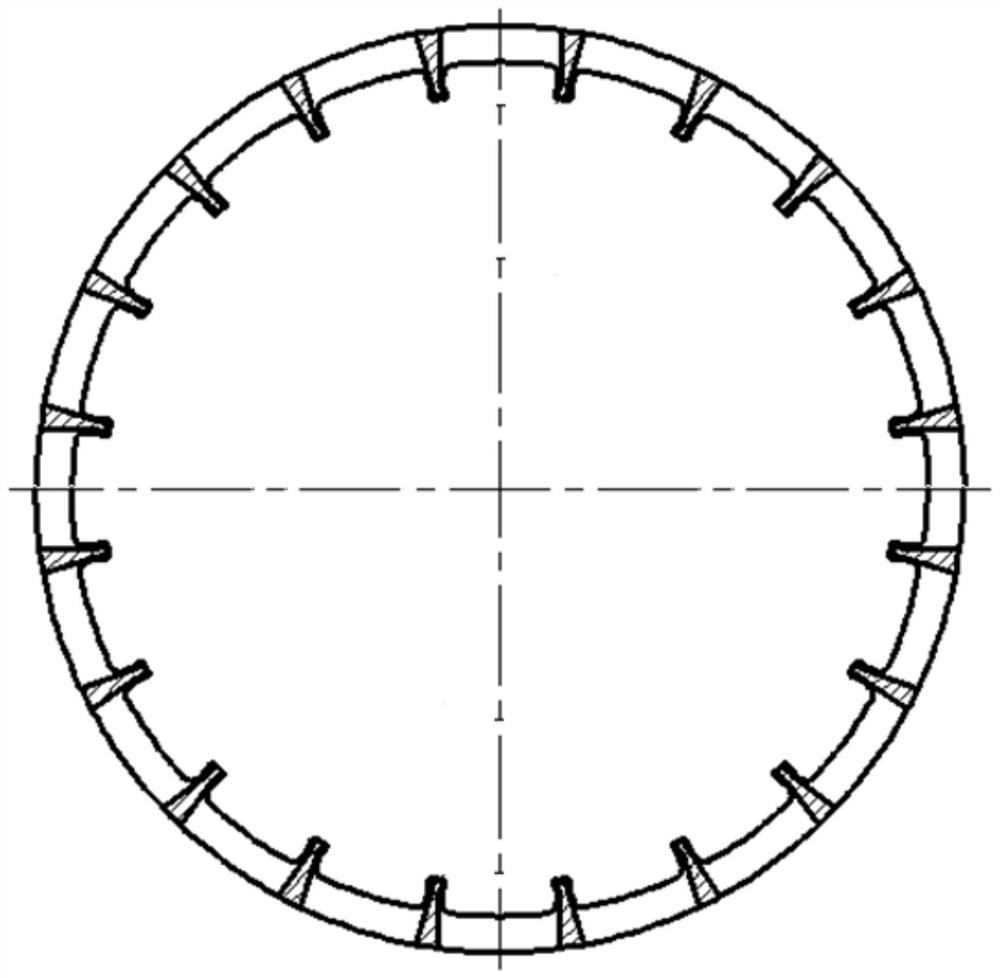
Figure 2 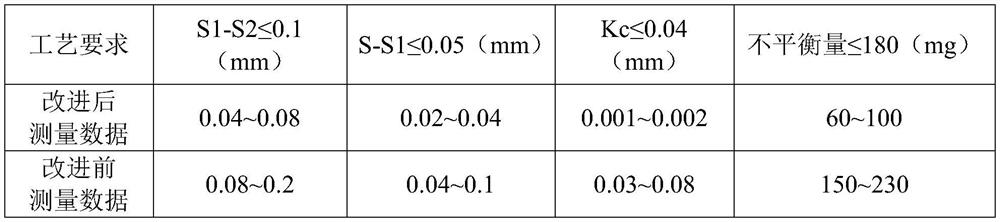
Figure 3
Abstract
Description
technical field
[0001] The invention relates to the field of finishing methods for bearing cages. Background technique
[0002] The main shaft bearing of an aero-engine is one of the key components of the engine. It works under high-speed, high-temperature and complex stress conditions, requiring a long service life and high reliability. In order to improve the strength of the cage and reduce the weight, 40CrNiMoA steel cages are mostly used in the main shaft bearings of aero-engines to adapt to the working environment of high temperature, high speed and heavy load, to meet the same service life of the main shaft of the engine and the engine, and to improve its reliability. The cage is made of 40CrNiMoA alloy quenched and tempered steel material. This material has high strength, high toughness, good hardenability, and good comprehensive mechanical properties. It is often used to manufacture important parts that withstand impact and cyclic loads. The machining accuracy of th...
Examples
specific Embodiment approach 1
[0036] Specific implementation mode 1: A method for finishing the cage of an aviation high-speed bearing, specifically according to the following steps:
[0037] 1. Rough turning of the rough billet to obtain the workpiece;
[0038] 2. Carry out quenching and tempering treatment to the workpiece obtained in step 1;
[0039] 3. The workpiece processed in step 2 is finely turned into shape;
[0040] 4. The workpiece processed in step 3 is subjected to equal grinding and two-plane processing;
[0041] 5. Grind the outer diameter of the workpiece processed in step 4, and control the reserved final grinding outer diameter grinding amount of 0.05-0.07mm;
[0042] 6. Grinding the inner diameter of the workpiece processed in step 5;
[0043] 7. Perform surface nitriding treatment on the workpiece after step 6, and control the nitriding depth to 0.18-0.3mm;
[0044] 8. The workpiece processed in step 7 is subjected to the final equal grinding and two-plane treatment;
[0045] 9. P...
specific Embodiment approach 2
[0053] Embodiment 2: This embodiment differs from Embodiment 1 in that: in step 1, the rough billet is made of 40CrNiMoA alloy quenched and tempered steel. Others are the same as in the first embodiment.
specific Embodiment approach 3
[0054]Specific embodiment 3: The difference between this embodiment and specific embodiment 1 or 2 is that: in step 2, the quenching and tempering treatment process is first quenching treatment: control the preheating temperature to 585-595 °C, and the preheating time to 45-51 minutes , the final heating temperature is 830-840°C, and the preheating time is 45-51min; then tempering treatment: the control temperature is 605-610°C°, the processing time is 120-130min, and the hardness of the workpiece after treatment reaches 29-34HRC. Others are the same as in the first or second embodiment.