
Imidazoline corrosion inhibitor with asymmetric end groups, preparation method and application thereof
An imidazoline corrosion inhibitor and imidazoline-based technology, applied in the direction of organic chemistry, can solve the problems of lack of corrosion inhibition and high imidazoline corrosion inhibitor, and achieve corrosion prevention, simple synthesis process and good corrosion inhibition effect. Effect
Patent Information
- Authority / Receiving Office
- CN · China
- Current Assignee / Owner
- Publication Date
- 2021-02-02
Smart Images
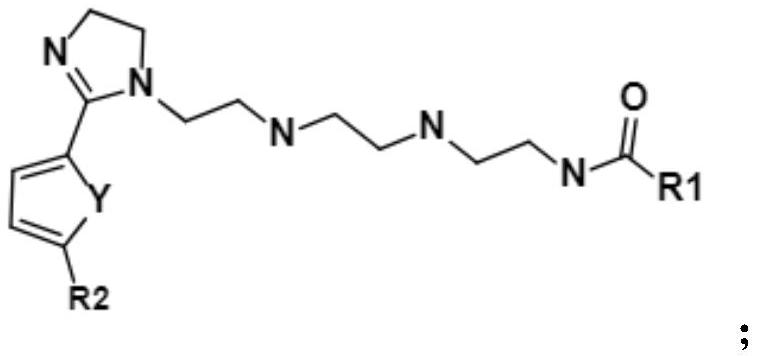
Figure 1 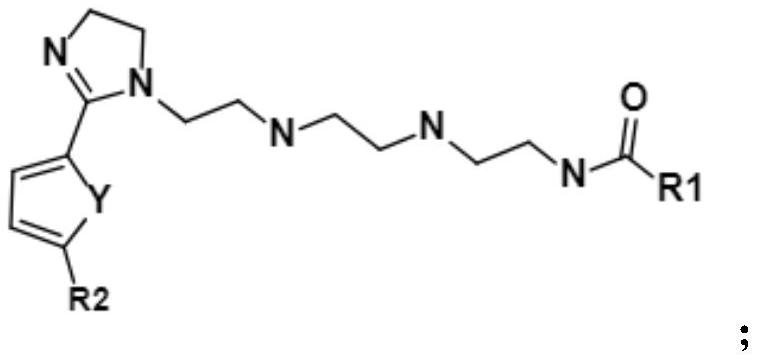
Figure 2 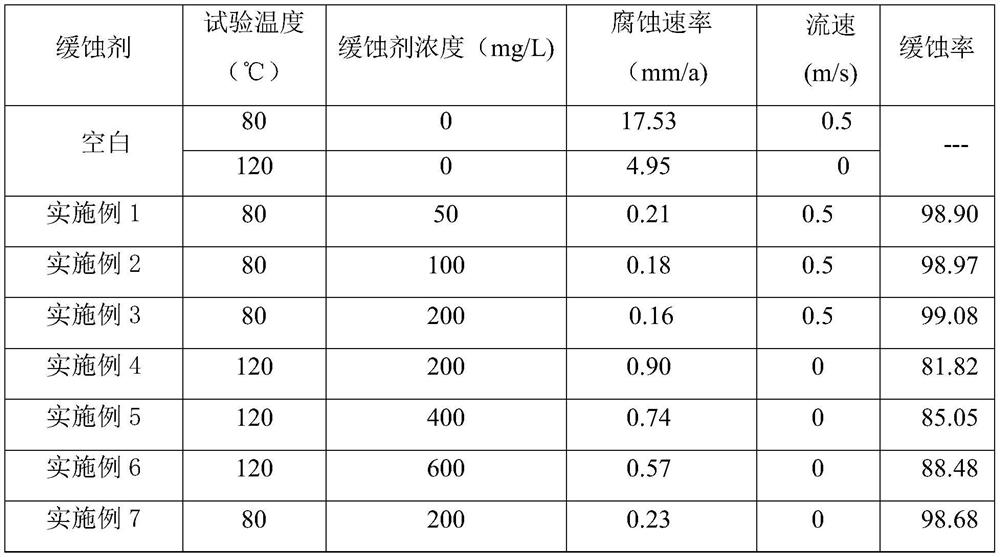
Figure 3
Abstract
Description
technical field
[0001] The invention belongs to the field of corrosion and protection of metal materials, and in particular relates to an imidazoline corrosion inhibitor with asymmetric terminal groups and its preparation method and application. Background technique
[0002] Due to the increase of oil well exploitation depth in my country's oil and gas fields and the promotion of various thermal recovery techniques, the temperature of oil and gas wells has gradually increased, and many oil and gas are associated with CO 2 gas, CO 2 Dissolving in water will cause serious corrosion to the metal equipment in the well, and it is usually necessary to add a corrosion inhibitor to delay the corrosion of the equipment. Imidazoline corrosion inhibitors have received widespread attention due to their low toxicity and excellent corrosion inhibition performance. However, as the mining environment of oil and gas fields becomes more harsh, the corrosion inhibition performance of long-cha...
Examples
Embodiment 1
[0026] (1) Add solid 2-furoic acid and tetraethylenepentamine in a three-necked flask, add xylene water-carrying agent and the water generated by the reaction system to form an azeotrope, and carry the water out of the reaction, add zeolite, at 120 Amidation at ℃ for 3 hours, and then further heating to 220 ℃ for dehydration and cyclization for 2 hours, the reaction ratio of 2-furancarboxylic acid and tetraethylenepentamine is 1:1.05;
[0027] (2) After cooling the reaction system to 120° C., an equal proportion of oleic acid was added to continue the reaction for two hours. After the reaction was completed, water and xylene were removed by rotary evaporation.
Embodiment 2
[0029] (1) Add solid 2-thiophenecarboxylic acid and tetraethylenepentamine in a three-necked flask, add xylene water-carrying agent and the water generated by the reaction system to form an azeotrope, and carry the water to distill out the reaction, add zeolite, at 120 Amidation at ℃ for 3 hours, and then further heating to 220 ℃ for dehydration and cyclization for 2 hours, the reaction ratio of 2-furancarboxylic acid and tetraethylenepentamine is 1:1.05;
[0030] (2) After cooling the reaction system to 120° C., an equal amount of oleic acid was added to react for two hours. After the reaction was completed, the water and xylene in the system were removed by rotary evaporation.
Embodiment 3
[0032] (1) Add 2-pyrrole carboxylic acid and tetraethylenepentamine into a three-necked flask, add xylene water-carrying agent and water generated by the reaction system to form an azeotrope, and carry the water out of the reaction, add zeolite, and heat at 120°C Amidation under low temperature for 3 hours, and then further heating to 220°C for dehydration and cyclization for 2 hours, the reaction ratio of the 2-pyrrole carboxylic acid and tetraethylenepentamine is 1:1.05;
[0033] (2) After cooling the reaction system to 120° C., an equal amount of oleic acid was added to continue the reaction for 2 hours. After the reaction was completed, water and xylene were removed by cooling and rotary evaporation.