
Calcium oxide-based bimetallic composite material as well as preparation method and application thereof
A composite material, calcium oxide technology, applied in the field of preparation, calcium oxide-based bimetallic composite materials, can solve the problem of severe methanation by-products, achieve the effect of solving sintering failure, preventing sintering, and enhancing the dual functions of adsorption and catalysis
Patent Information
- Authority / Receiving Office
- CN · China
- Patent Type
- Applications(China)
- Current Assignee / Owner
- Publication Date
- 2021-03-30
Smart Images
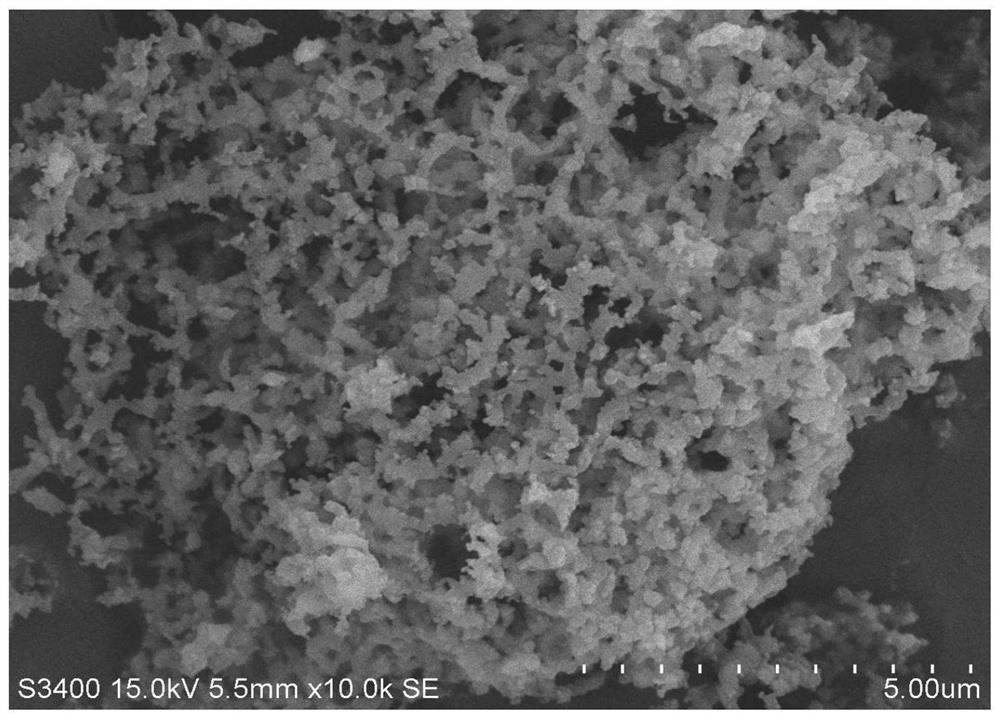
Figure 1 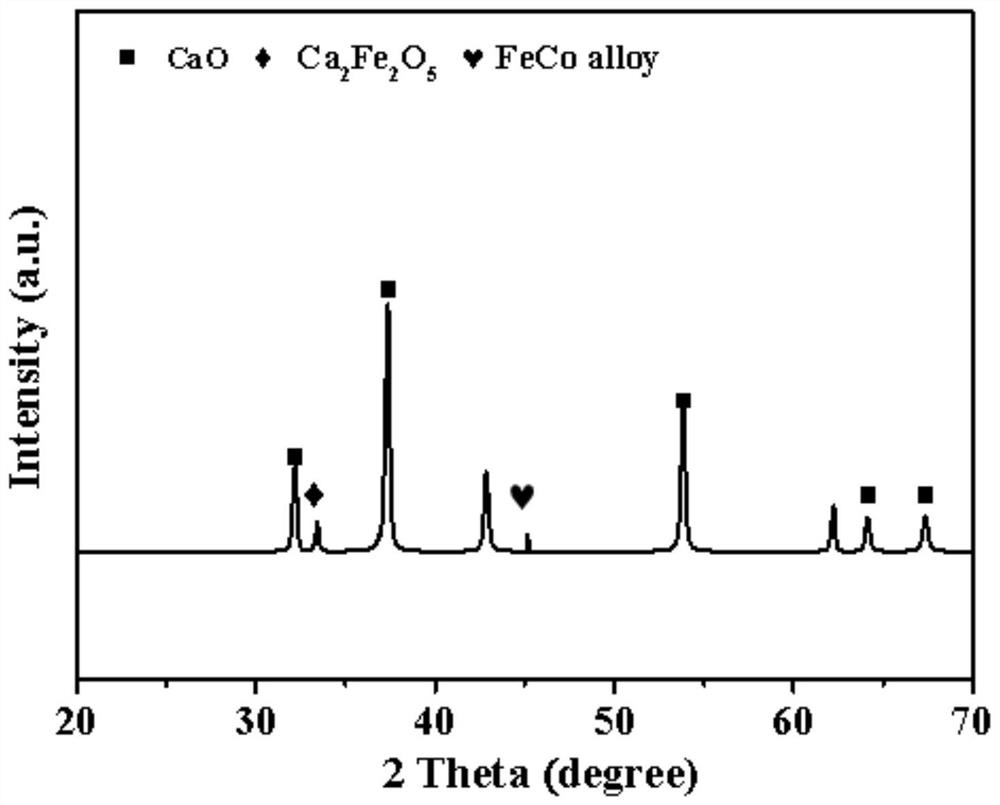
Figure 2 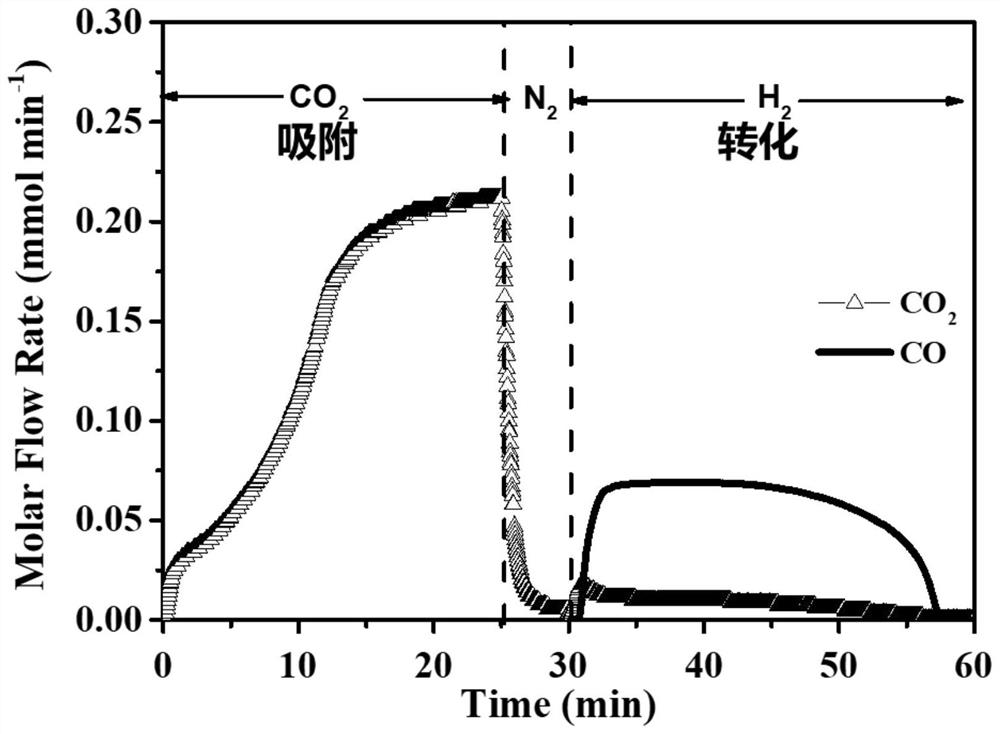
Figure 3
Abstract
Description
technical field
[0001] The invention belongs to CO 2 The technical field of materials for capture and in-situ conversion, specifically relates to a CO 2 A calcium oxide-based bimetallic composite material with dual functions of trapping and in-situ conversion, its preparation method and its application. Background technique
[0002] With the increasing demand for natural gas and various chemical fuels, CO 2 The ecological climate change caused by the greenhouse effect caused by excessive emissions threatens the survival of human beings. At this stage, the most promising one is CO 2 Capture and storage technology (CCS), CO capture and storage by chemical absorption or adsorption 2 Captured, then stored, transported by pipeline, and sealed up underground or on the seabed. However, this technology has been questioned due to its high cost and potential safety and environmental risks. Therefore, if carbon capture is closely linked to carbon resources, the captured CO 2 It ...
Examples
Embodiment 1
[0045] Weigh 8.433gCa(NO 3 ) 2 4H 2 O is dissolved in 40mL of deionized water to obtain a solution, after stirring evenly, add organic template agent 6.5gC 6 h 8 o 7 ·H 2 O and 1.0g cetyltrimethylammonium bromide, continue to stir until fully dissolved, continue to add 0.72gFe(NO 3 ) 2 9H 2 O and 0.49gCo(NO 3 ) 2 ·6H 2 O, stir evenly to obtain a mixed solution. Stir the mixed solution in a constant temperature water bath at 90°C for 5 hours to obtain a translucent gel, cool to room temperature, place the gel in an oven at 120°C, heat and dry for 12 hours to obtain a xerogel. Finally, the dry gel was calcined at 800°C for 4 hours, then ground, pressed into tablets, and crushed to obtain a composite material Fe with a particle size of 0.2-0.3 mm. 5 co 5 CaO, the mass ratio of CaO:FeCo metal oxide (calculated according to the metal salt precursor) in the composite material is 1:0.1, wherein Fe%:Co%=1:1.
[0046] The prepared adsorption-catalysis bifunctional composi...
Embodiment 2
[0051] Weigh 5.24gCaCl 2 2H 2 O was dissolved in 40mL of deionized water to obtain a solution. After stirring evenly, 10g of organic template agent P123 was added, and the stirring was continued until it was fully dissolved, and 0.97g of Fe(NO 3 ) 2 9H 2 O and 0.32gCo(NO 3 ) 2 ·6H 2 O, stir evenly to obtain a mixed solution. The mixed solution was stirred in a constant temperature water bath at 80°C for 5 hours to obtain a translucent gel, cooled to room temperature, placed in an oven at 120°C, heated and dried for 14 hours to obtain a xerogel. Finally, the dry gel was calcined at 800°C for 5 hours, then ground, pressed into tablets, and crushed to obtain a composite material Fe with a particle size of 0.2-0.3 mm. 10 co 5 CaO, the mass ratio of CaO:FeCo metal oxide in the composite material is 1:0.15, wherein Fe%:Co%=2:1.
[0052] Using the same analytical method as in Example 1, the results show that the prepared adsorption-catalysis dual-functional porous composite ...
Embodiment 3
[0054] Weigh 8.43gCa(NO 3 ) 2 4H 2 O was dissolved in 40mL of deionized water to obtain a solution. After stirring evenly, 5g of organic templating agent hexadecyltrimethylammonium bromide and 10g of ammonium oxalate were added, and stirring was continued until fully dissolved, and 0.47g of Fe(NO 3 ) 2 9H 2 O and 0.22gCo(NO 3 ) 2 ·6H 2 O, stir evenly to obtain a mixed solution. Stir the mixed solution in a constant temperature water bath at 100°C for 6 hours to obtain a translucent gel, cool to room temperature, put the gel in an oven at 130°C, heat and dry for 16 hours to obtain a xerogel. Finally, the dry gel was calcined at 900°C for 4 hours, then ground, pressed into tablets, and crushed to obtain a composite material Fe with a particle size of 0.2-0.3 mm. 3 co 2 CaO, the mass ratio of CaO:FeCo metal oxide in the composite material is 1:0.05, wherein Fe%:Co%=3:2.
[0055] Using the same analytical method as in Example 1, the results show that the prepared adsorpt...