
Bidirectional forwarding detection method and system in SRv6 network
A two-way forwarding detection and network technology, applied in the field of communication, can solve problems such as long service packet loss time, active-standby protection switching failure, etc.
Patent Information
- Authority / Receiving Office
- CN · China
- Patent Type
- Applications(China)
- Current Assignee / Owner
- Publication Date
- 2021-09-10
Smart Images
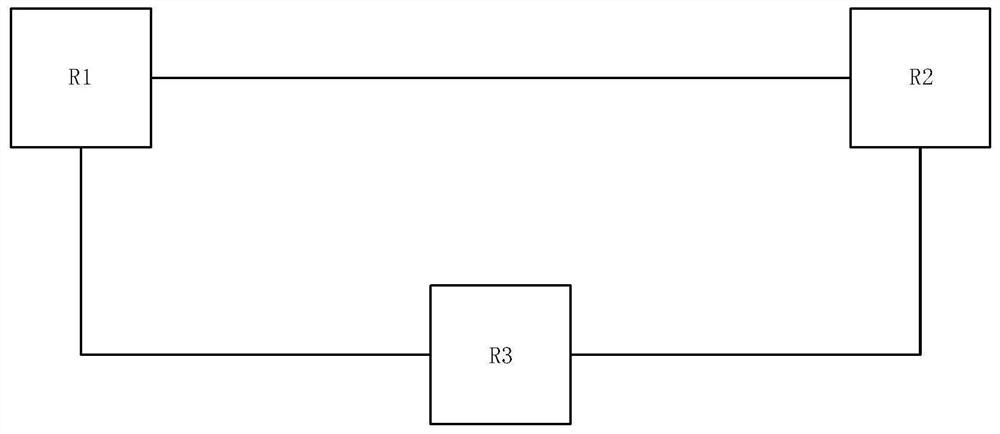
Figure 1 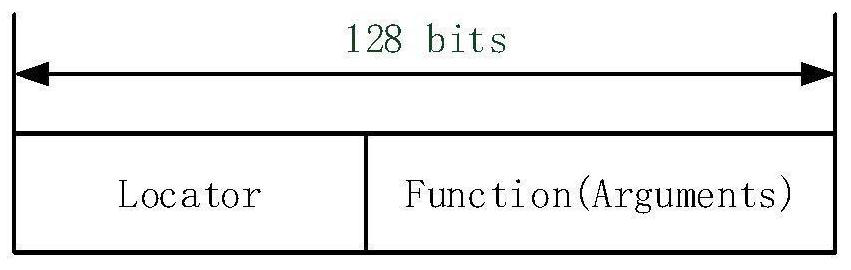
Figure 2 
Figure 3
Abstract
Description
technical field
[0001] The invention belongs to the technical field of communication, and more specifically relates to a method and system for bidirectional forwarding detection in an SRv6 network. Background technique
[0002] As described in [RFC 5884]: If you want to use BFD (Bidirectional Forwarding Detection, bidirectional forwarding detection) on MPLS (Multiprotocol Label Switching, multi-protocol label switching), LSP (Label Switched Path, label switching path) for fault detection, you must The MPLS LSP establishes a BFD session. The BFD control message must be sent along the same data path as the LSP being verified, and be processed by the BFD processing module of the egress LSR (Label Switching Router, label switching router). BFD control packets sent from the egress LSR to the ingress LSR may be routed according to the destination IP address according to the procedure in [RFC5883].
[0003] As mentioned above, the BFD control packets are forwarded (forwarded alon...
Examples
Embodiment Construction
[0047] In order to make the object, technical solution and advantages of the present invention clearer, the present invention will be further described in detail below in conjunction with the accompanying drawings and embodiments. It should be understood that the specific embodiments described here are only used to explain the present invention, not to limit the present invention. In addition, the technical features involved in the various embodiments of the present invention described below can be combined with each other as long as they do not constitute a conflict with each other.
[0048] The forward path of dynamic BFD and S-BFD is the same as the service path, and the service path usually has a constraint path, such as SRv6 Policy. If the reverse path is IP forwarding, the BFD reverse path of multiple services with different forward paths may be the same. If the reverse path of dynamic BFD / S-BFD is consistent with the forward path, this problem can be solved.
[0049] ...