
Virtual synchronous motor control method and device based on virtual impedance self-adaption
A technology of virtual synchronous motor and virtual impedance, which is applied in the direction of motor generator control, electromechanical transmission control, electronic commutation motor control, etc., can solve the problems of complex power oscillation, oscillation reduction, not the best solution, etc., and achieve system Effects of improving reliability, suppressing power oscillation, and improving frequency dynamic performance
Patent Information
- Authority / Receiving Office
- CN · China
- Patent Type
- Applications(China)
- Current Assignee / Owner
- Publication Date
- 2022-03-04
Smart Images
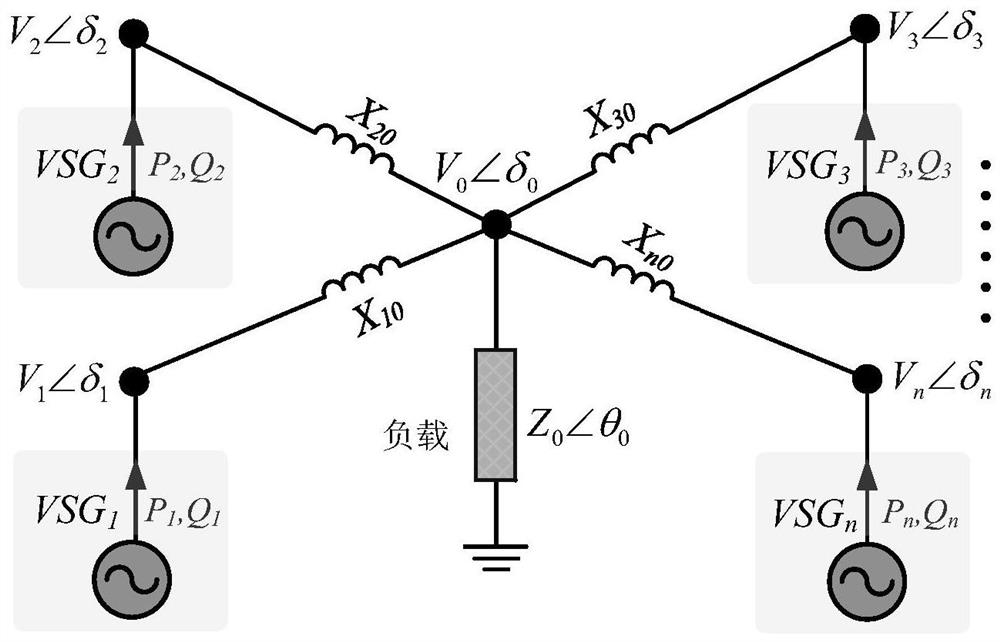
Figure 1 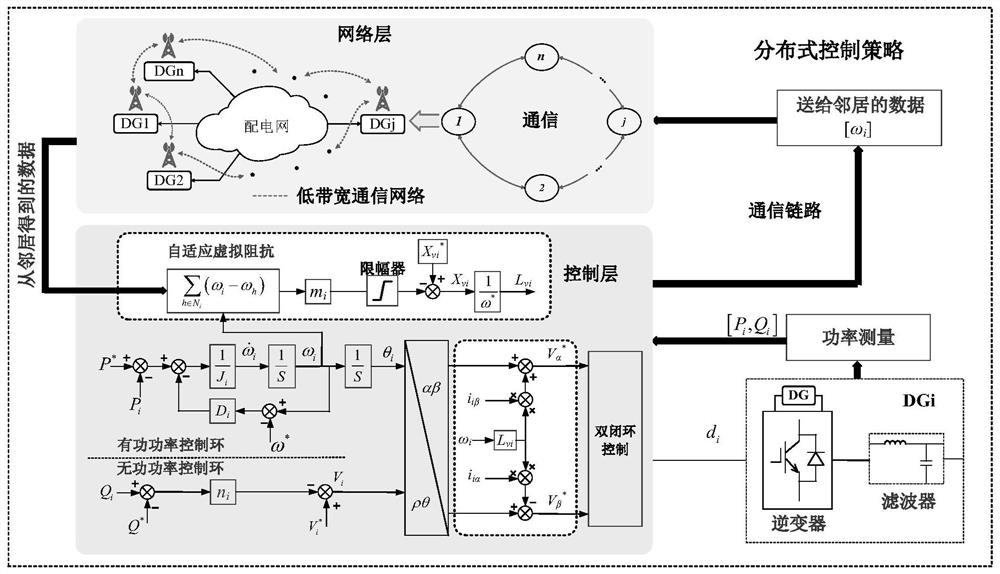
Figure 2 
Figure 3
Abstract
Description
technical field
[0001] The invention belongs to the field of microgrid control, and more particularly relates to a method and device for controlling a virtual synchronous motor based on virtual impedance self-adaptation. Background technique
[0002] The penetration rate of distributed generation (DGs) in the power system has increased significantly, leading to great changes in modern power systems, especially the continuous reduction of power system inertia provided by synchronous generators. Since most distributed energy sources, such as photovoltaics, wind energy, fuel cells, microturbines, and energy storage systems, are connected to the grid through power electronic converters, and power electronic converters have the characteristics of fast response and small inertia, which is not conducive to grid dynamic frequency stability.
[0003] However, high inertia is usually desired in power systems, as it can effectively avoid undesired shedding or large-scale blackouts. T...
Examples
Embodiment Construction
[0032] The implementation of the present invention will be described in detail below in conjunction with the accompanying drawings and examples, so as to fully understand and implement the process of how to apply technical means to solve technical problems and achieve technical effects in the present invention.
[0033] Also, in the following description, for purposes of explanation, numerous specific details are set forth in order to provide a thorough understanding of embodiments of the invention. It will be apparent, however, to one skilled in the art that the present invention may be practiced without the specific details or in the particular manner described.
[0034] A multi-machine system composed of multiple virtual synchronous motors such as figure 1 As shown, the main idea of the virtual synchronous motor is to use the micro-power inverter to simulate the operating characteristics of the synchronous generator, so as to provide the system with moment of inertia and ...