
Preparation method of low-density refractory high-entropy alloy cladding layer for laser cladding
A high-entropy alloy and laser cladding technology, which is applied in the coating process and coating of metal materials, can solve the problems that titanium alloys cannot be endowed with long-term service conditions, cannot meet high-strength applications, and have poor microstructure compactness. Achieve excellent binding properties, good macroscopic morphology, and good mechanical properties
Patent Information
- Authority / Receiving Office
- CN · China
- Patent Type
- Applications(China)
- Current Assignee / Owner
- Publication Date
- 2022-03-11
Smart Images
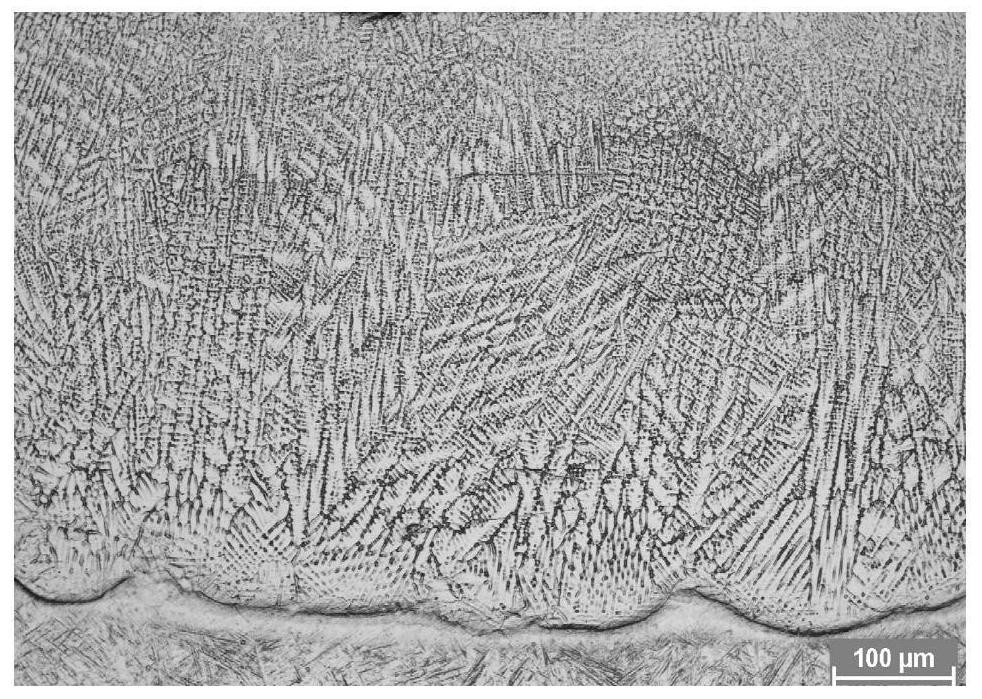
Figure 1 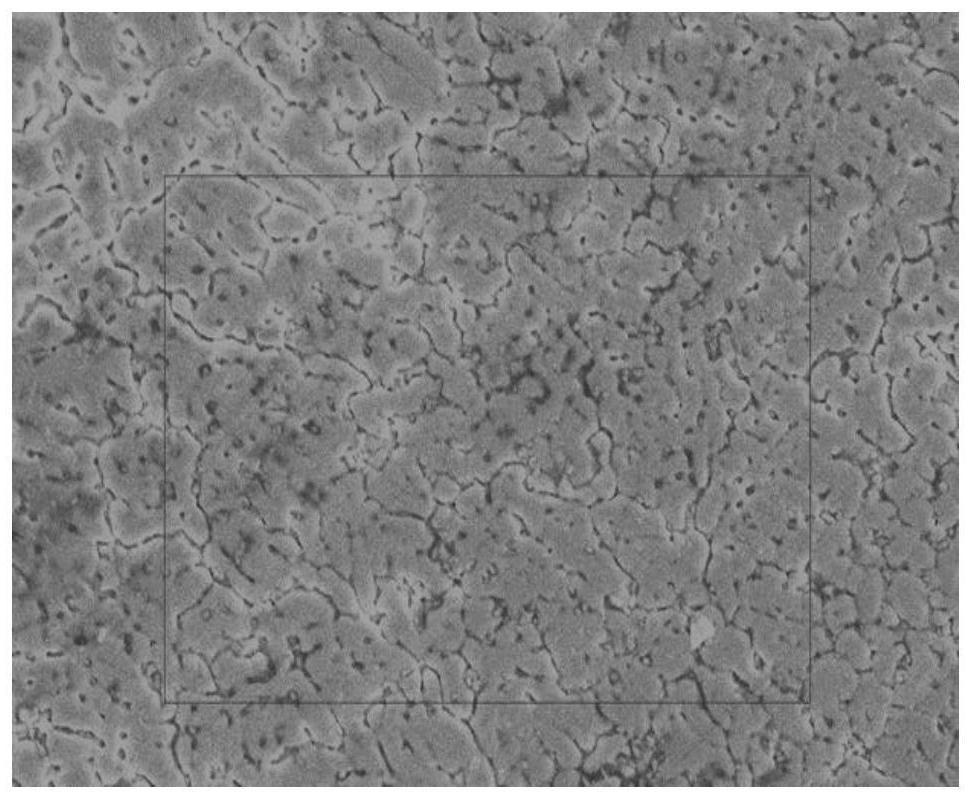
Figure 2 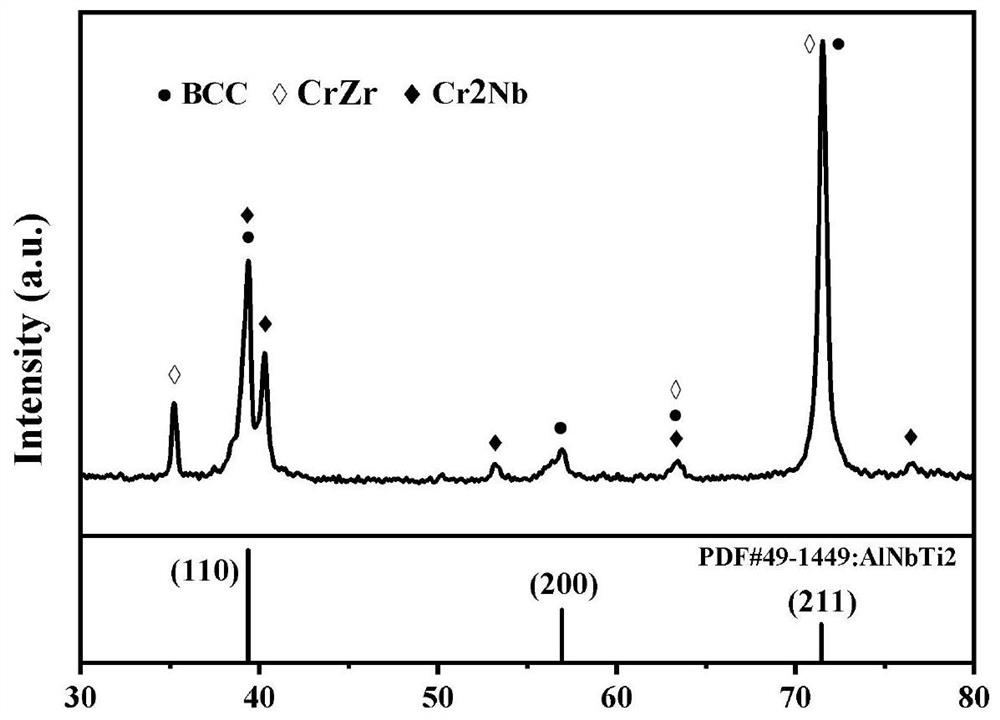
Figure 3
Abstract
Description
technical field
[0001] The invention belongs to the technical field of titanium alloy surface modification, and in particular relates to a method for preparing a low-density refractory high-entropy alloy cladding layer for laser cladding. Background technique
[0002] Traditional alloy design methods are based on one element, and then add other elements to improve the performance of the alloy, such as iron-based, nickel-based and titanium-based alloys. In 2004, a Taiwan scholar proposed the design concept of high-entropy alloy for the first time. The alloy is composed of 5 or more elements, and the atomic percentage of each element is 5%-35%. High-entropy alloys do not form complex multi-phase alloy compounds in the crystal structure, but simple solid solutions of BCC and FCC structures, and even easily produce nanophase and disordered amorphous phases, and have good thermal stability, extremely High hardness, room temperature strength and good plastic deformation ability, ...
Examples
Embodiment 1
[0029] S1: The high-entropy alloy material described in this example is composed of six metal element powders of Ti, Al, Mo, Nb, Cr and Zr, and the molar ratio of each component is 1:1:1:1:1:1; After each powder is weighed and mixed in proportion, it is vacuum ball milled for 3 hours to obtain an alloy powder with a particle size of 200-325 mesh;
[0030] S2: TC4 (Ti6-Al4-V) is selected as the base material, polished with 200-400 mesh sandpaper to remove surface oxides, oil stains are removed with acetone, and cleaned with ultrasonic alcohol;
[0031] S3: Press the alloy powder obtained in S1 evenly on the surface of the substrate treated in S2 to form a prefabricated layer with a thickness of 1.2mm, put it in an 80°C drying oven, dry it for 10 hours, and then obtain it by laser cladding For the cladding layer, the process parameters during laser cladding are: laser power 3700W, scanning speed 300mm / min, spot diameter 3.5mm, defocusing distance 20mm, protective gas Ar, gas flo...
Embodiment 2
[0033] S1: The high-entropy alloy material described in this example is composed of six metal element powders of Ti, Al, Mo, Nb, Cr and Zr, and the molar ratio of each component is =1:1:1:1:1:1, After weighing and mixing each powder in proportion, vacuum ball milling was carried out for 3 hours to obtain alloy powder with a particle size of 200-325 mesh;
[0034] S2: TC4 (Ti6-Al4-V) is selected as the base material, polished with 200-400 mesh sandpaper to remove surface oxides, oil stains are removed with acetone, and cleaned with ultrasonic alcohol;
[0035] S3: Press the alloy powder obtained in S1 evenly on the surface of the substrate treated in S2 to form a prefabricated layer with a thickness of 1.2mm, put it in an 80°C drying oven, dry it for 10 hours, and then obtain it by laser cladding For the cladding layer, the process parameters during laser cladding are: laser power 4200W, scanning speed 350mm / min, spot diameter 3.5mm, defocusing distance 20mm, protective gas Ar,...