
Fan blade image splicing method and device
A fan blade and image stitching technology, applied in the field of image processing, can solve the problems of low registration rate, few feature points, pixel repetition, etc., and achieve the effect of improving image stitching accuracy, high local similarity, and improving detection accuracy
Patent Information
- Authority / Receiving Office
- CN · China
- Patent Type
- Applications(China)
- Current Assignee / Owner
- Publication Date
- 2022-04-01
Smart Images
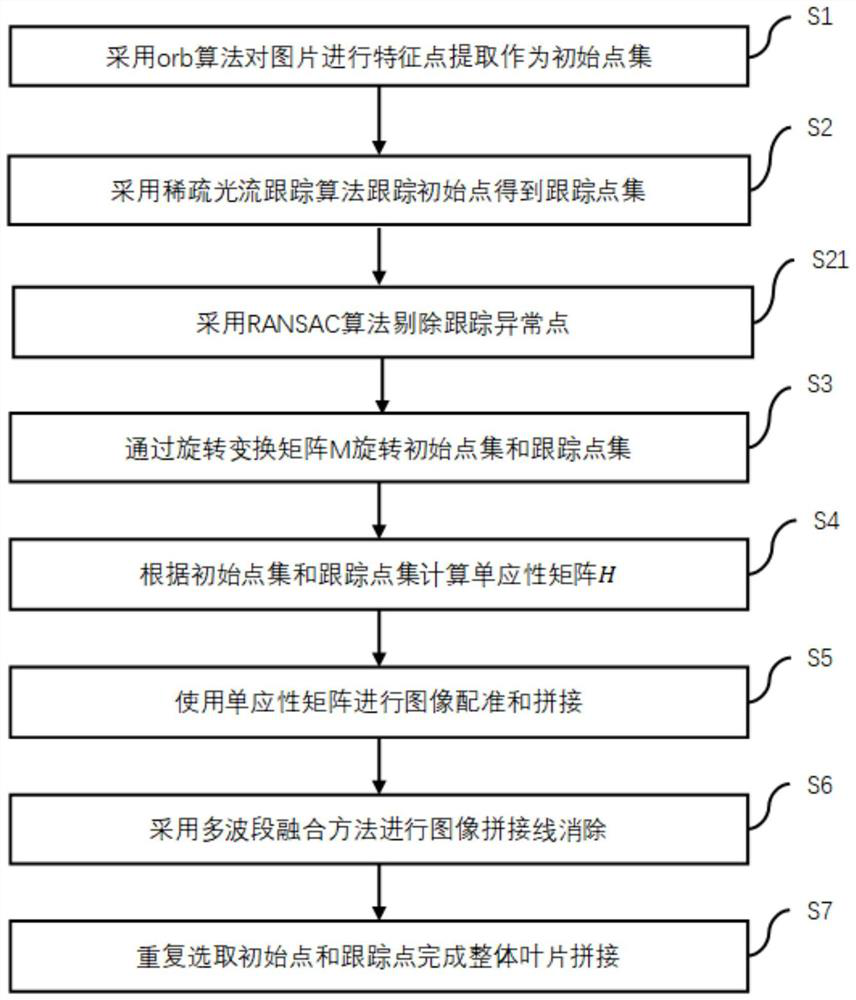
Figure 1 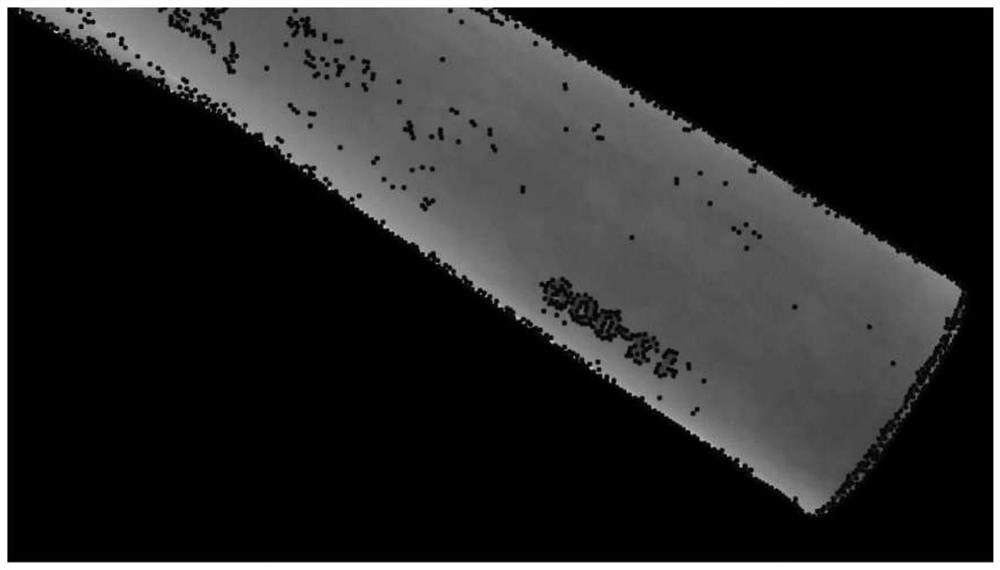
Figure 2 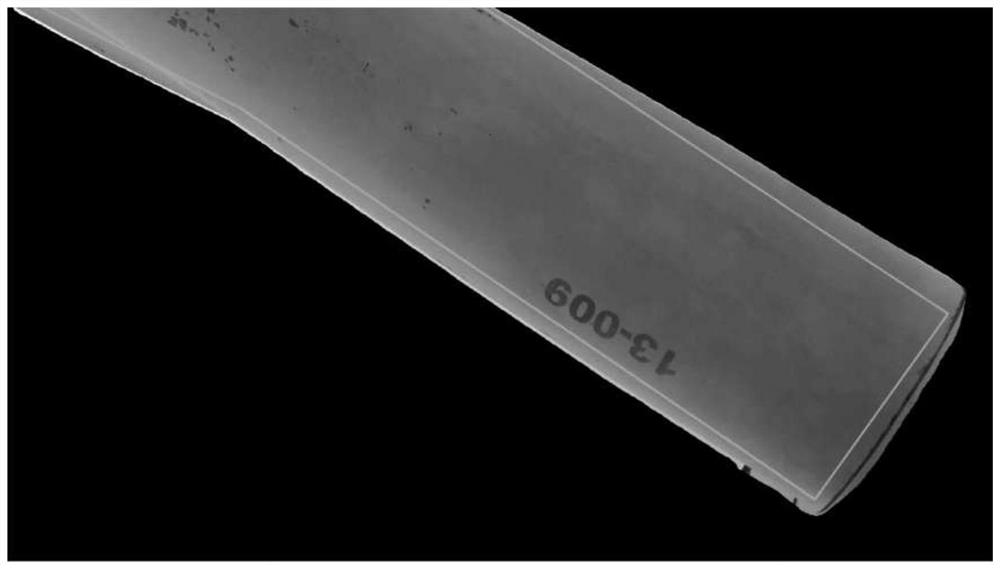
Figure 3
Abstract
Description
technical field
[0001] The invention relates to the field of image processing, in particular to a method and device for mosaicing images of fan blades. Background technique
[0002] As my country's wind power industry becomes more and more mature, the research on UAV intelligent inspection of wind field fans is also gradually in-depth. The pictures collected by UAV are partial images of fan blades. In order to accurately analyze and judge the status of blades and defect locations, it is necessary to obtain Therefore, it is necessary to perform image segmentation and leaf stitching on UAV-collected videos. Splicing of fan blades is the primary condition for intelligent inspection, and the result of blade splicing directly determines the result of fan defect detection.
[0003] The following problems exist in the application of existing image stitching algorithms to leaf stitching: (1) The image registration stitching method based on scale-invariant feature transformation (sif...
Examples
Embodiment Construction
[0045] The present invention will be described in further detail below in conjunction with the accompanying drawings.
[0046] see figure 1 , a fan blade image mosaic method, the method comprises the steps of:
[0047] S1. Use the orb algorithm to extract feature points from the fan blade image in the initial frame, and use the extracted feature points as the initial point set P.
[0048] figure 2 In order to use the orb algorithm to extract the feature points of the initial frame image, a total of 922 feature points are extracted. Then use image erosion and boundary extraction to obtain the polygonal outline of the blade (such as image 3 shown), and according to the display of the feature points after the polygon frame is removed, a total of 330 points are obtained after removing the edge points, as shown in Figure 4 shown.
[0049] S2. Use the sparse optical flow tracking algorithm to track the initial point set P to obtain the tracking point set Q of the next frame ...