
Composite material of containing granule stuffing and polymer of thermotropic liquid crystal preparation method and application
A composite material and particle filler technology, applied in liquid crystal materials, chemical instruments and methods, etc., can solve problems such as poor melt fluidity, and achieve the effects of improving processing performance, reducing viscosity, excellent flow performance and dimensional stability
Patent Information
- Authority / Receiving Office
- CN · China
- Current Assignee / Owner
- Publication Date
- 2005-03-30
- Estimated Expiration
- Not applicable · inactive patent
Smart Images
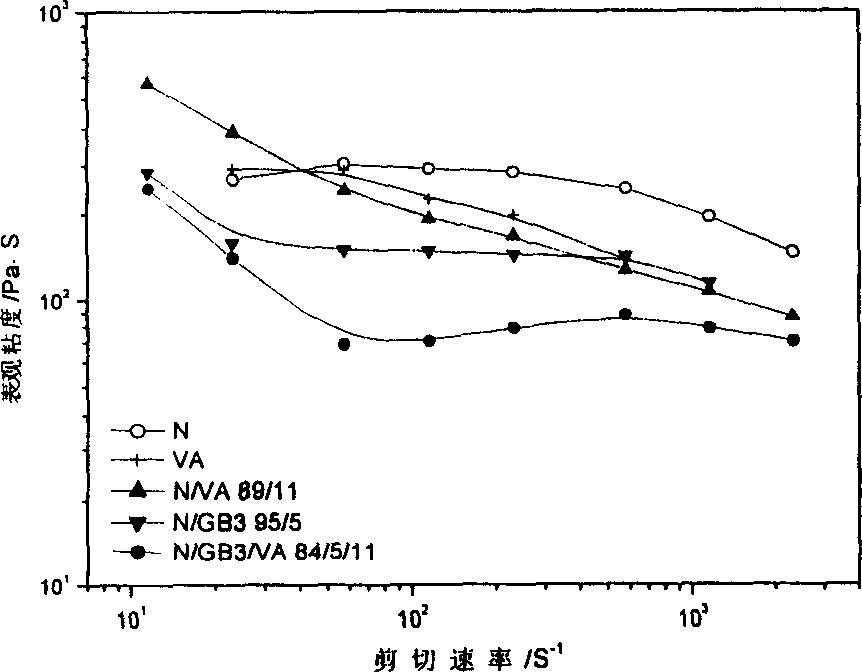
Figure 1 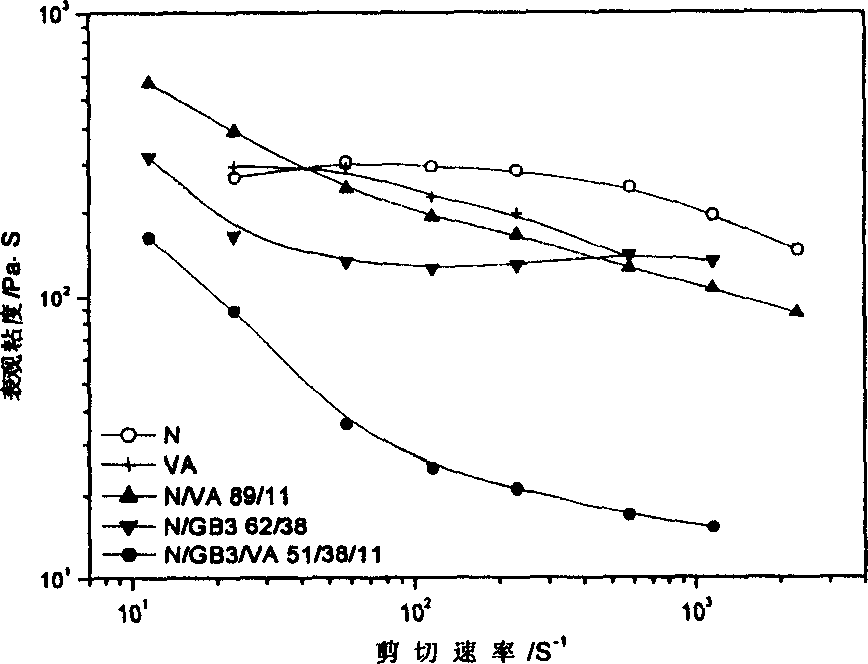
Figure 2 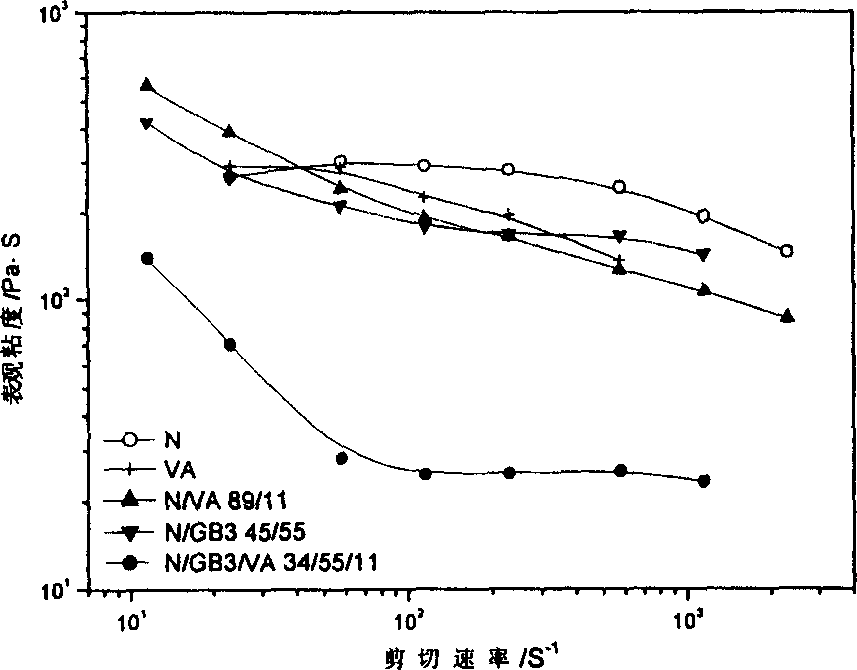
Figure 3
Abstract
Description
Technical field
[0001] The invention relates to a hybrid composite material of particle fillers, in particular to a hybrid composite material containing spherical rigid particle filler and thermotropic liquid crystal polymer.
[0002] The present invention also relates to a method for preparing the above-mentioned materials.
[0003] The invention also relates to the use of the aforementioned materials. Background technique
[0004] The composite material is a multi-phase composite system, which can be heterogeneous and heterogeneous or homogeneous and heterogeneous. Therefore, by combining different qualitative compositions, different phase structures, different contents and different ways of compounding, it is possible to manufacture composite materials that meet different purposes. Adding thermotropic liquid crystal polymer (TLCP) to the polymer can reduce the melt viscosity of the composite material and increase the strength and modulus of the material.
[0005] In the past, ...
Examples
Embodiment 1
[0031] The raw materials are nylon 6 (relative viscosity 3.2), hollow glass beads with a diameter of 3 μm and thermotropic liquid crystal polymer (PHB / HNA 73 / 27, Vectra A950, Ticona Celanese Company, USA) in a weight ratio of 84:5:11 Melt blending on a Haake RC-90 twin-screw extruder, the temperature from the feeding port to the die is set to 260-280-280-280. The extruded bar was cooled and pelletized, and the resulting pellets were tested for rheological properties on a Goettfert Rheograph 2001 capillary rheometer. The inner diameter of the capillary used is 1mm, and the ratio of length to diameter is 30. The experiment temperature is 280°C, and the material is preheated for 4 minutes.
Embodiment 2
[0037] The weight ratio of nylon 6, glass beads and thermotropic liquid crystal polymer is 51 / 38 / 11, and other conditions are the same as in Example 1.
Embodiment 3
[0043] The weight ratio of nylon 6, glass microspheres and thermotropic liquid crystal polymer is 34:55:11, the specifications of hollow glass microspheres and thermotropic liquid crystal polymer are the same as in Example 1, and the preparation and testing methods are the same as in Example 1.