
Deflectable catheter bodies with corrugated tubular structures
a catheter body and tubular structure technology, applied in the direction of catheters, other domestic objects, surgery, etc., can solve the problems of not being able to systematically and synergistically consider axial curvatures, and achieve different degrees of rigidity, flexibility or hardness, and different melting or softening temperatures
Patent Information
- Authority / Receiving Office
- US · United States
- Patent Type
- Patents(United States)
- Current Assignee / Owner
- Publication Date
- 2020-04-07
Smart Images
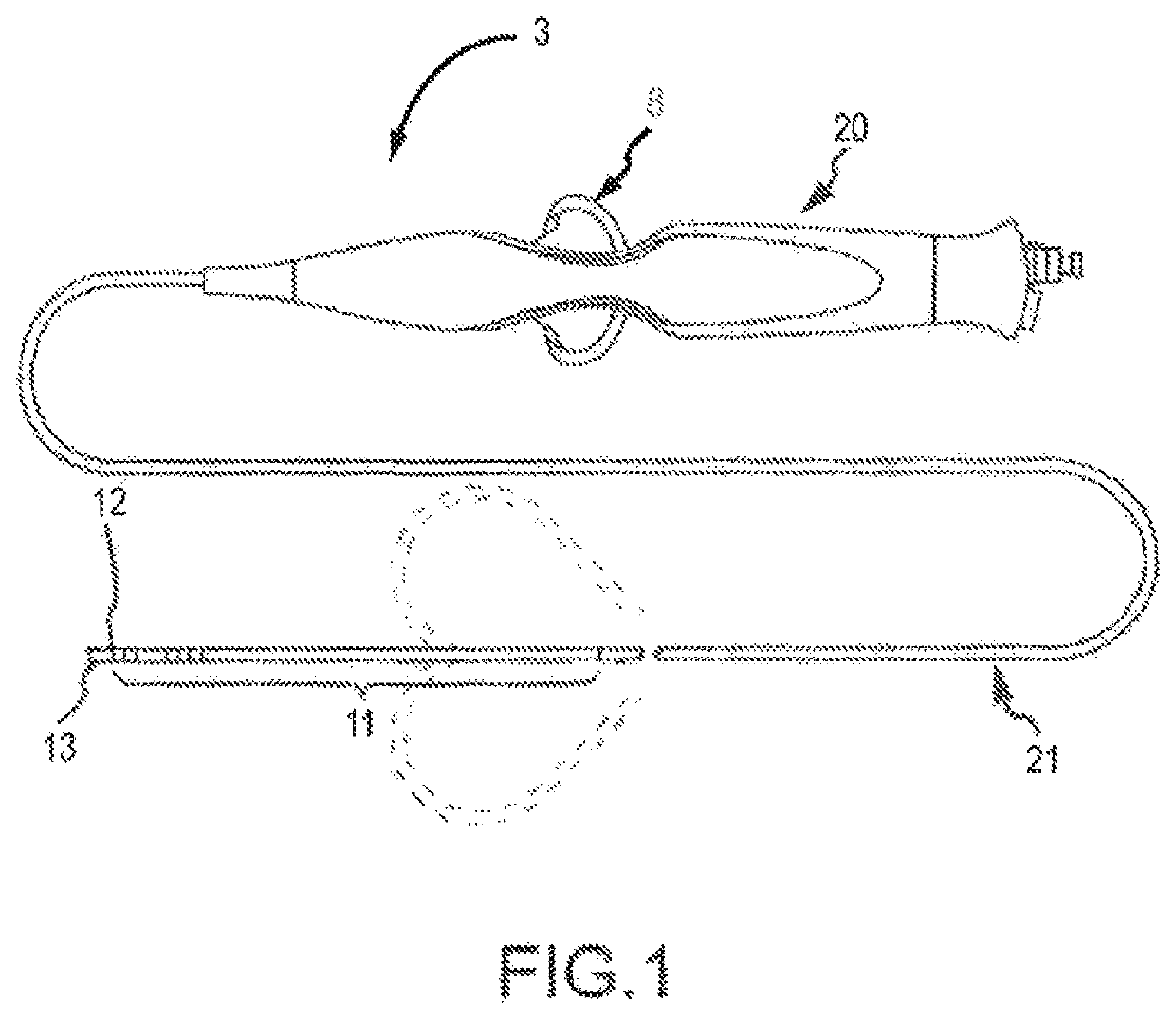
Figure 1 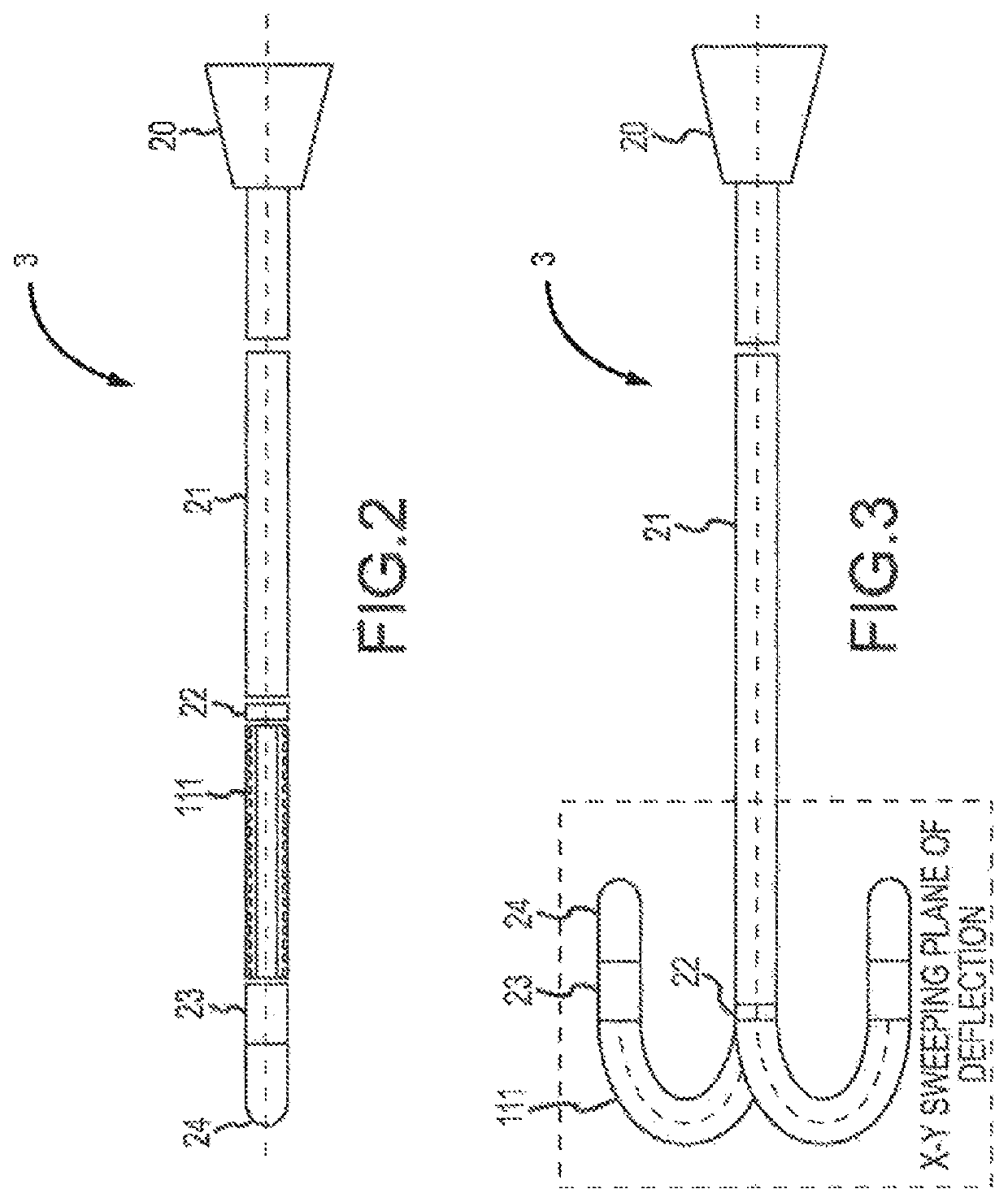
Figure 2 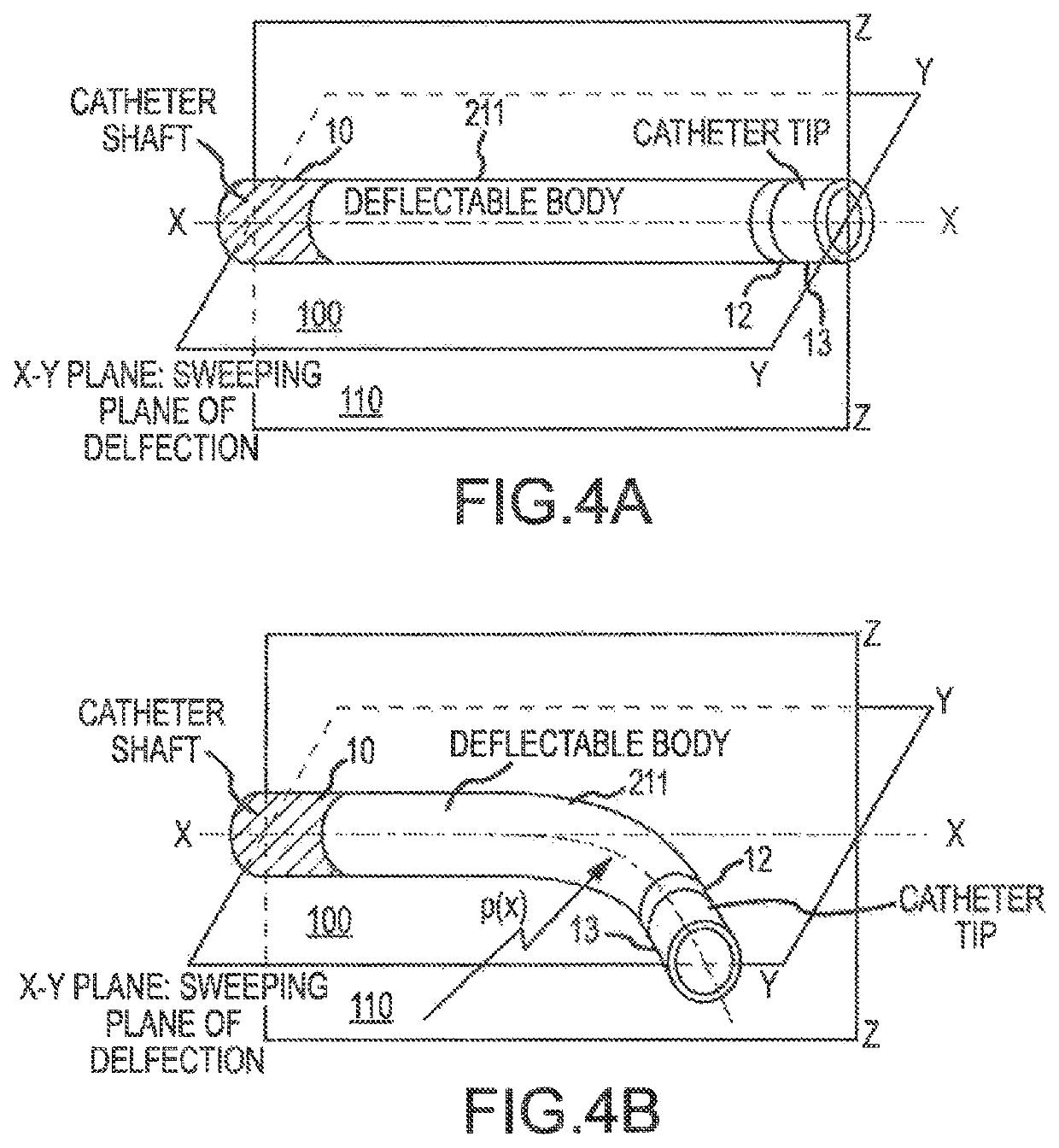
Figure 3
Abstract
Description
BACKGROUND
[0001] The instant disclosure relates to deflectable and steerable elongate devices, such as medical catheters. In particular, the instant disclosure relates to catheters having segments with anisotropic deflecting or bending stiffness that reduce or eliminate unintended out-of-plane movement of the catheter.
[0002] Deflectable and steerable elongate devices such as catheters are used for an ever-growing number of medical, industrial, and manufacturing procedures. For example, catheters are used for diagnostic, therapeutic, and ablative procedures. During these procedures, a catheter is typically inserted into a vessel near the surface of the body and is guided to a specific location within the body for examination, diagnosis, and treatment. A catheter typically carries one or more energy emitting elements (e.g., electrodes, hyperthermic ablation elements, cryogenic elements, etc.), which may be used for tissue ablation, diagnosis, or the like. Some catheters perform only pas...
Examples
Embodiment Construction
[0022]Various embodiments are described herein of various apparatuses, systems, and / or methods. Numerous specific details are set forth to provide a thorough understanding of the overall structure, function, manufacture, and use of the embodiments as described in the specification and illustrated in the accompanying drawings. It will be understood by those skilled in the art, however, that the embodiments may be practiced without such specific details. In other instances, well-known operations, components, and elements have not been described in detail so as not to obscure the embodiments described in the specification. Those of ordinary skill in the art will understand that the embodiments described and illustrated herein are non-limiting examples, and thus it can be appreciated that the specific structural and functional details disclosed herein may be representative and do not necessarily limit the scope of the embodiments, the scope of which is defined solely by the appended cla...