
Apparatus and methods of reducing bone compression fractures using wedges
a technology of compression fractures and wedges, applied in the field of bone structure treatment, can solve the problems of limited distance movement of wedge-shaped devices relative to other wedge-shaped devices, and achieve the effect of reducing bone fractures and reducing compression fractures within the bone structur
Patent Information
- Authority / Receiving Office
- US · United States
- Current Assignee / Owner
- Publication Date
- 2005-02-17
Smart Images
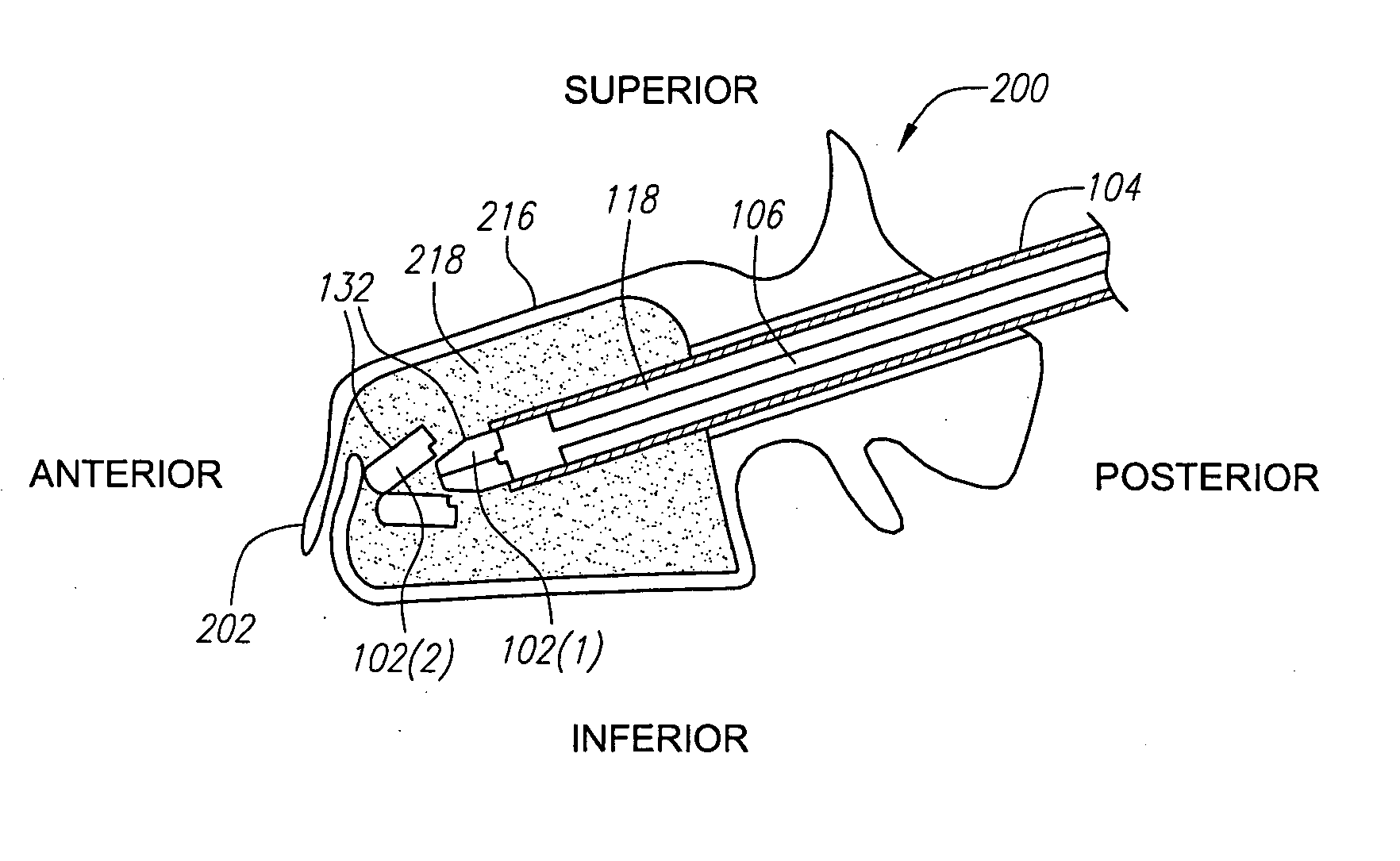
Figure 1 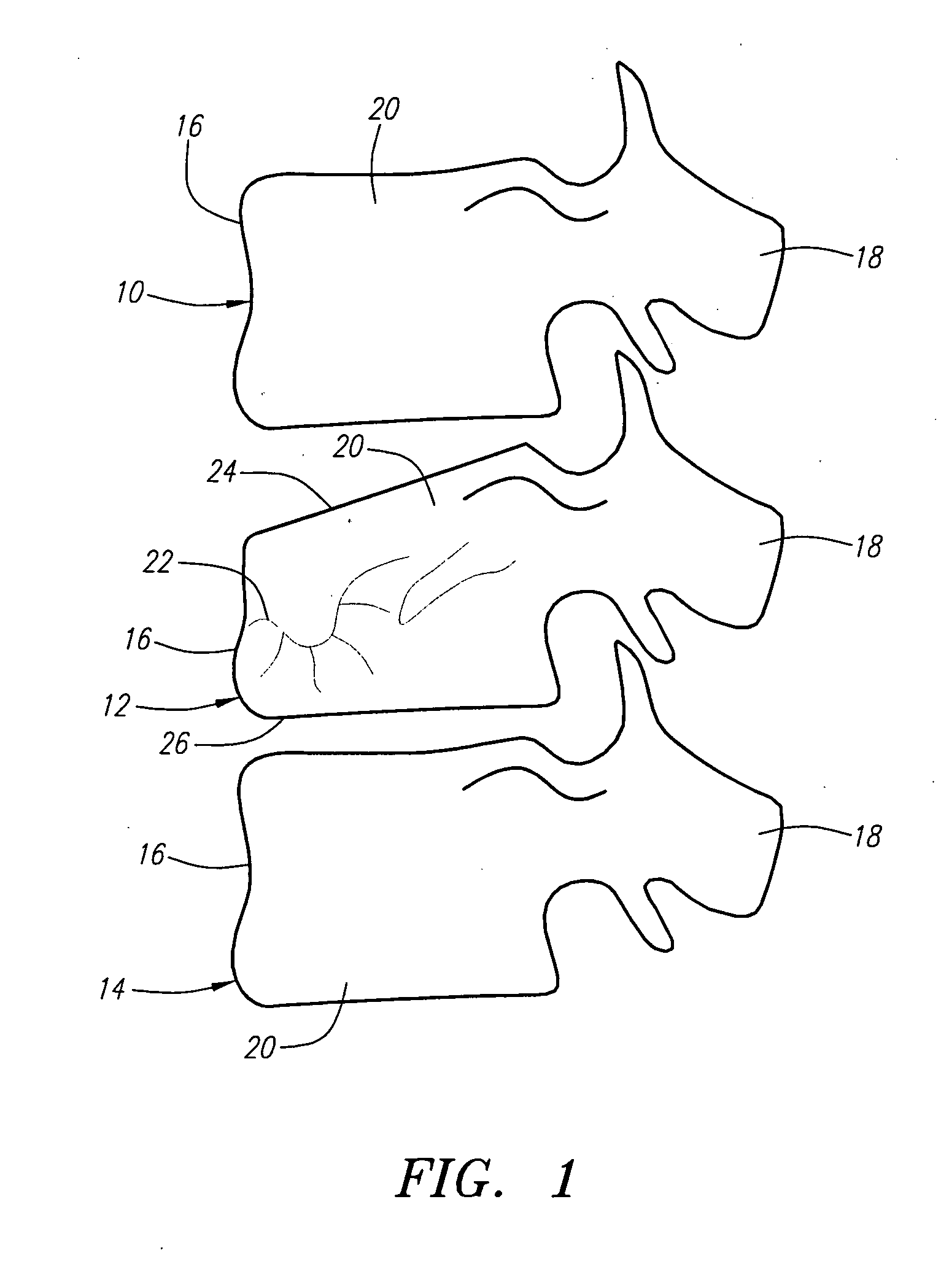
Figure 2 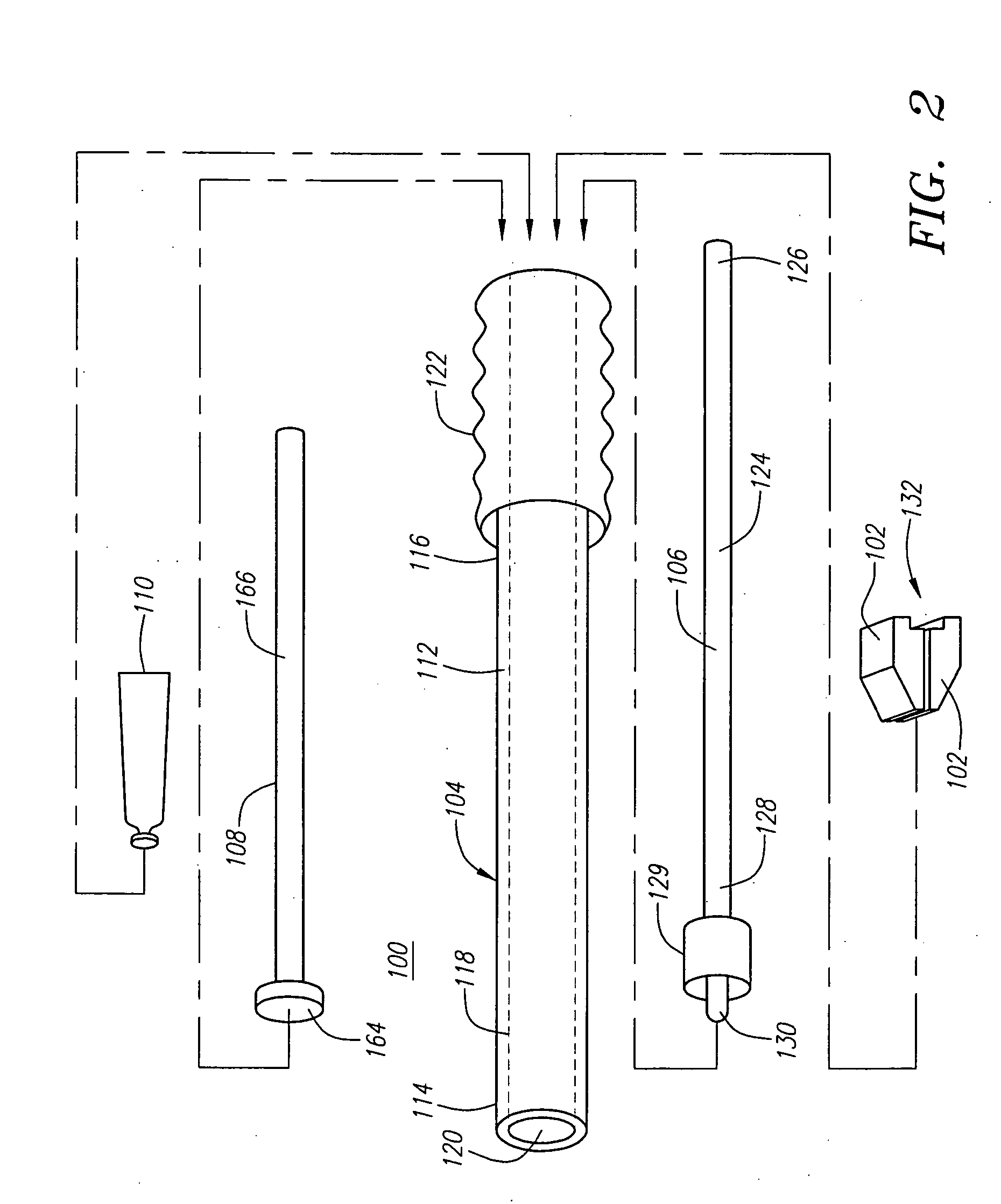
Figure 3
Abstract
Description
FIELD OF THE INVENTION
[0001] The invention relates to the treatment of bone structures, such as vertebrae, and in particular, to the reduction and stabilization of bone compression fractures. BACKGROUND OF THE INVENTION
[0002] Spinal injuries, bone diseases, such as osteoporosis, vertebral hemangiomas, multiple myeloma, necrotic lesions (Kummel's Disease, Avascular Necrosis), and metastatic disease, or other conditions can cause painful collapse of vertebral bodies. Osteoporosis is a systemic, progressive and chronic disease that is usually characterized by low bone mineral density, deterioration of bony architecture, and reduced overall bone strength. Vertebral compression fractures (VCF) are common in patients who suffer from these medical conditions, often resulting in pain, compromises to activities of daily living, and even prolonged disability.
[0003] FIG. 1 illustrates three vertebrae 10, 12, and 14, each with an anterior side 16, a posterior side 18, and lateral sides 20 (on...
Examples
Embodiment Construction
[0039] Referring to FIG. 2, a bone fracture treatment kit 100 constructed in accordance with one preferred embodiment of the present inventions is illustrated. The kit 100 can be used for treating a bone compression fracture, and specifically, a compression fracture 202 within a vertebra 200 (shown in FIGS. 13-18). The kit 100 generally comprises a plurality of fracture reducing wedges 102 (shown in FIG. 2 as a pair of wedges 102), a delivery member, and specifically a cannula 104, for delivery of therapeutic agents (e.g., the wedges 102 and a therapeutic medium) into the vertebra 200, a wedge driver 106 for pushing the wedges 102 through the cannula 104 into the vertebra 200 in order to reduce the compression fracture 202, and an optional plunger assembly 108 for forcing a therapeutic medium 110 through the cannula 104 and into the vertebra 200 in order to stabilize and set the vertebra 200.
[0040] Referring still to FIG. 2, the cannula 104 comprises a shaft 112 having a distal end...