
Method and system for testing an application framework and associated components
Patent Information
- Authority / Receiving Office
- US · United States
- Current Assignee / Owner
- Publication Date
- 2005-06-30
- Estimated Expiration
- Not applicable · inactive patent
Smart Images
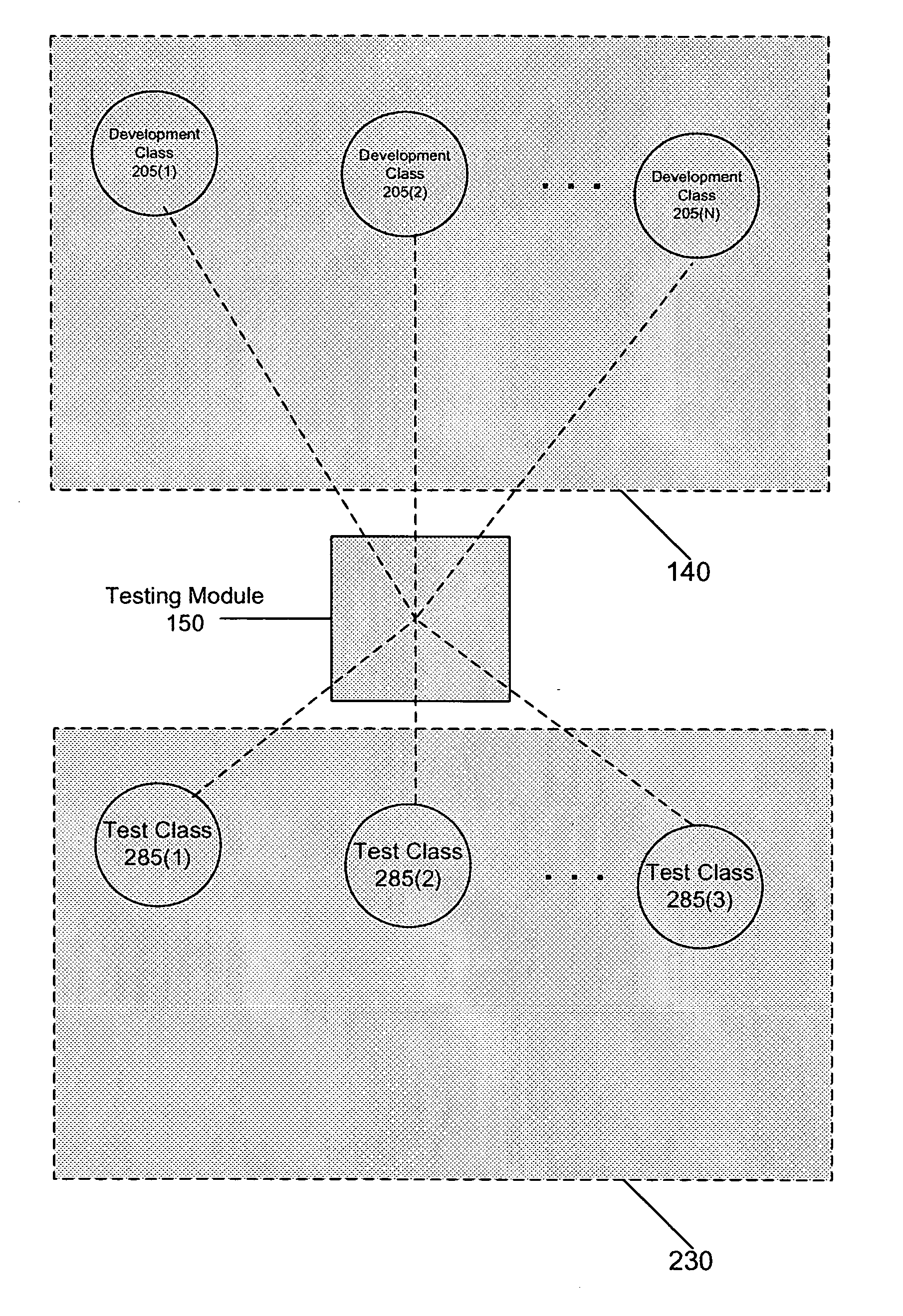
Figure 1 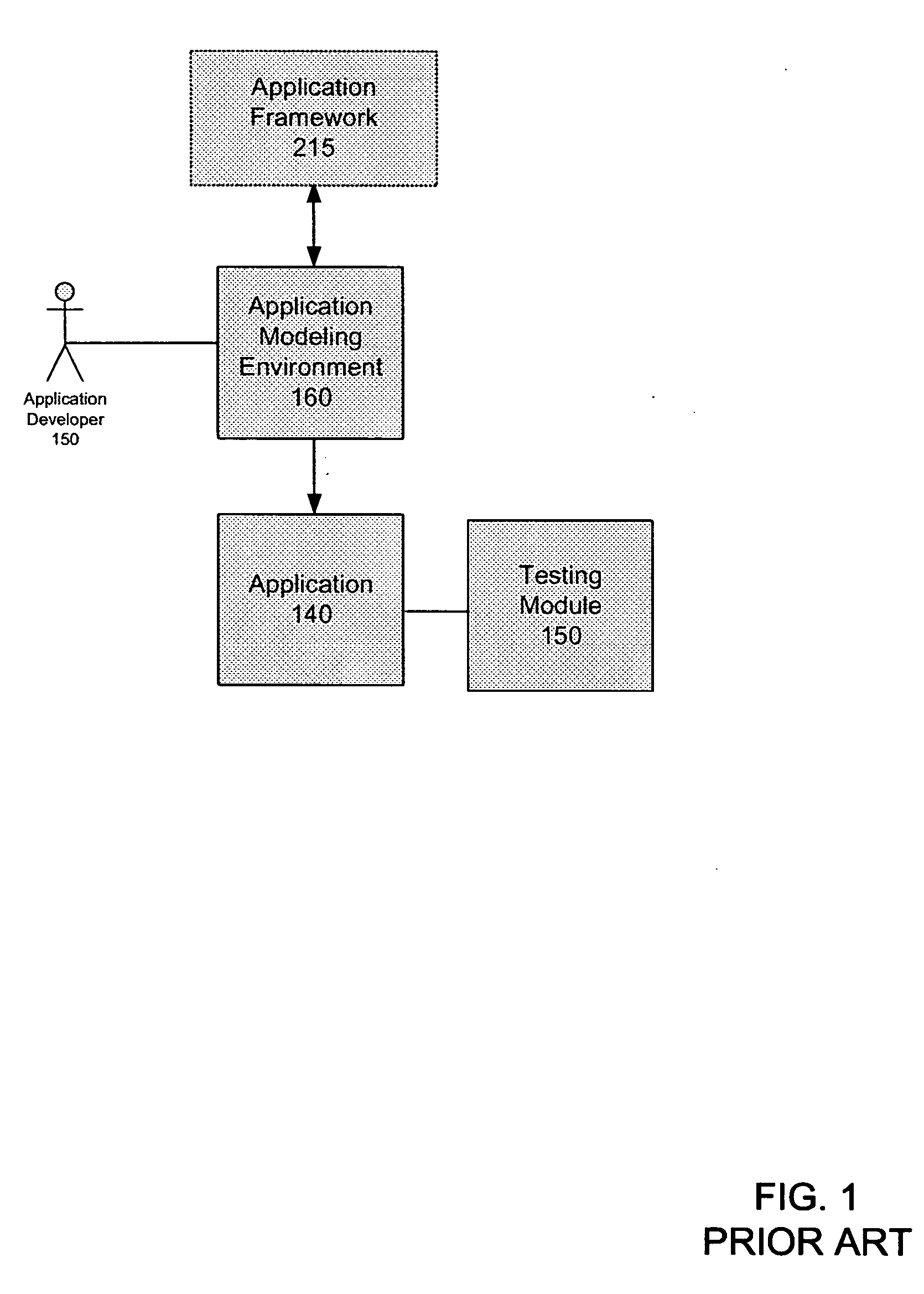
Figure 2 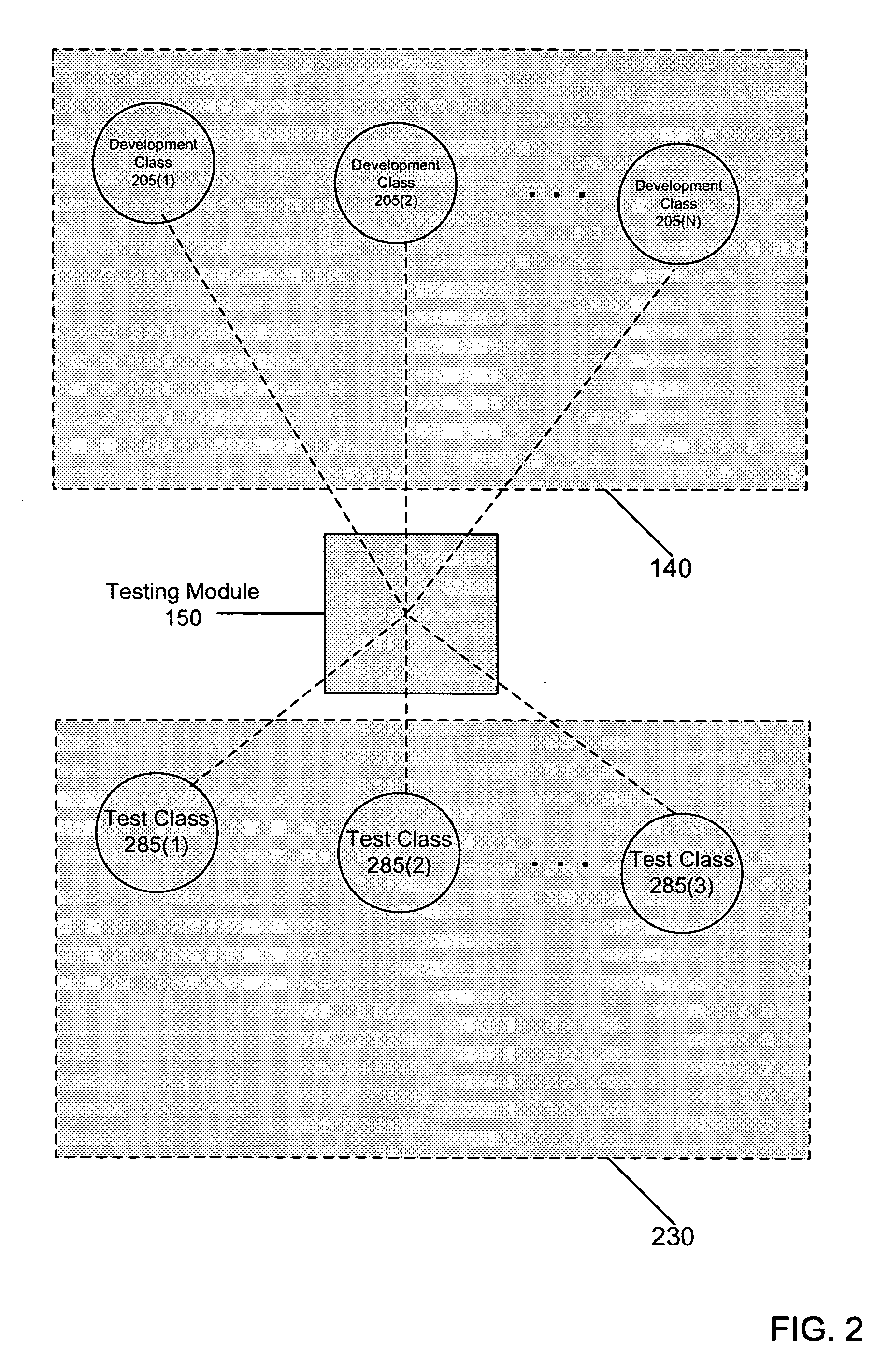
Figure 3
Abstract
Description
FIELD OF THE INVENTION
[0001] The present invention relates to the areas of software engineering and development. In particular, the present invention provides a method and system for testing software frameworks, components and architectures. BACKGROUND INFORMATION
[0002] The complexity of modem software architectures present significant challenges for the testing and debugging of developed software applications. A testing system should also allow verification of independent functionalities of a software component. In addition, the architecture should allow for testing multiple combinations of these functionalities. To test a component completely it is imperative to test as many combinations (if semantically valid) as possible. Thus, upon defining functional dimensions and providing functionality that can be exhibited in each dimension, combinations of these functional dimensions must be realized. However, as software structures continue to grow in complexity, testing these function...
Examples
Embodiment Construction
[0039] The present invention provides a testing framework that operates at the level of operations rather than the unit level. In order to achieve this, according to one embodiment, a test case class is defined for each operation. Thus, by definition, the test case corresponds to an operation that may involve the collaboration of many classes. The test case classes may be hierarchically organized to reflect a scenario, which needs to be tested. Such a hierarchy is referred to herein as a test suite. The hierarchy can be validated to be semantically correct with respect to the framework semantics, i.e., arbitrary nesting is eliminated in favor of only accepting semantically valid nestings. In order to achieve this semantic validation, two embodiments are provided. According to a first embodiment, the test case framework defines states for each of the test case classes to define the valid start states and the probable end states. Based on this information, the hierarchy of test cases ...