
Method for screening for compounds as potential sedatives or anxiolytics
a potential sedative and anxiolytic technology, applied in the field of screening for potential sedatives or anxiolytics, can solve the problems of difficult to determine whether their lack of action is specific or linked, and the need for a method of activating the system in the brain relevant for the action of subtype specificity is badly needed
Patent Information
- Authority / Receiving Office
- US · United States
- Patent Type
- Applications(United States)
- Current Assignee / Owner
- Publication Date
- 2006-01-19
- Estimated Expiration
- Not applicable · inactive patent
Smart Images
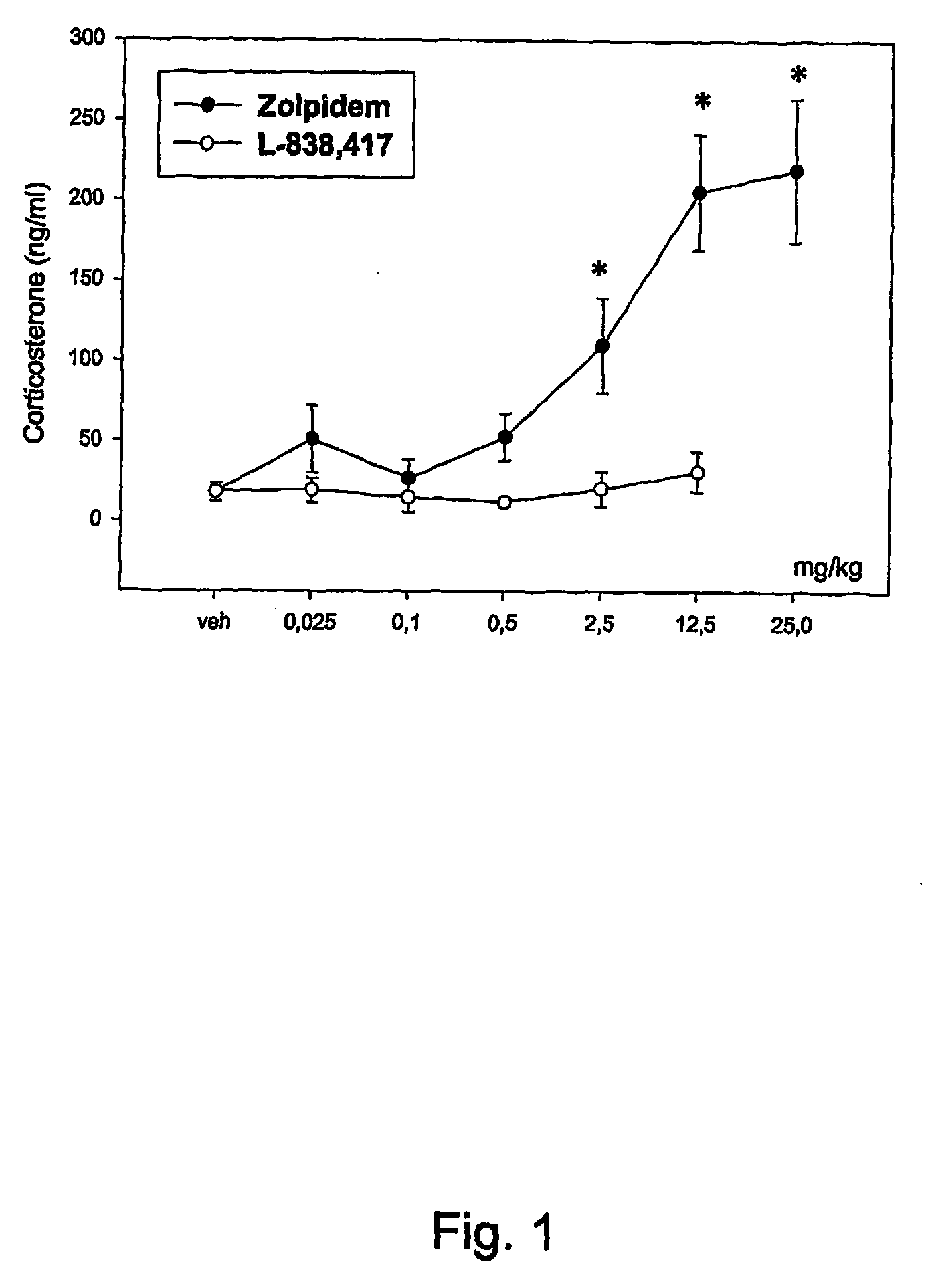
Figure 1 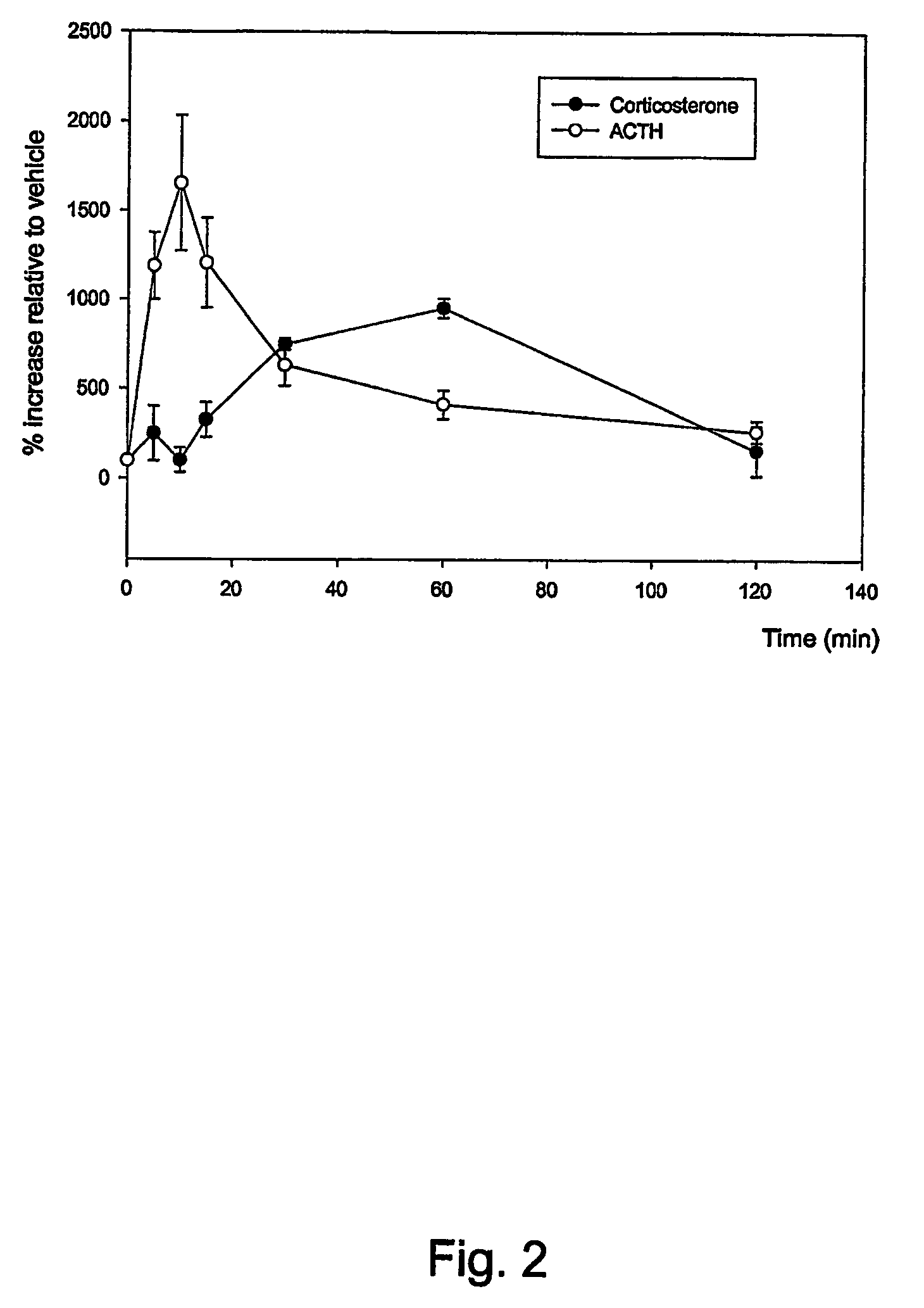
Figure 2
Abstract
Description
[0001] The present invention relates to a method for screening a chemical compound for its potential as a sedative or anxiolytica. The invention also relates to a drug development method and to the use of a compound as identified by the screening method for the treatment, prevention or alleviation of anxiety, for inducing anaesthesia, pre-anaesthesia, muscle relaxation, or sedation, or for treatment, prevention or alleviation of fever cramps or status epilepticus in a subject. BACKGROUND ART
[0002] GABA is the major inhibitory neurotransmitter in the mammalian brain and the GABAA receptor is the site of action of benzodiazepines. Multiple isoforms of GABAA receptor exist; each receptor comprises a pentameric complex formed by co-assembly of subunits selected from 16 genes (α1-6, β1-3, γ1-3, δ, ε, π, and θ) creating a chloride ion-channel.
[0003] The most abundant GABAA receptor in the mammalian brain comprises α, β, and γ subunits, and the classical anxiolytic benzodiazepines bind t...
Examples
example 1
Measuring the Affect on the HPA Axis of Zolpidem in Mice
[0039] Adult male NMRI mice (23-27 g.) were purchased from Mollegaarden (Denmark). The animals were received at the animal facility, and housed 5 per cage under 12:12 light: dark cycle, humidity and temperature controlled room for at least 7 days before the experiment. Food and water were available ad libitum. All procedures were conducted in accordance with the Danish National Guide for Care and Use of Laboratory animals. Zolpidem was purchased from Tocris Ltd (Bristol, UK) and L-838,417 synthesised according to WO 98 / 04559 and was injected in a volume of 10 ml / kg and dissolved in 5% Chremophor.
[0040] The two drugs were administered (i.p.) at doses 0,025, 1,25, 2.5, 12.5 and 25 mg / kg. The mice were returned to their home cages and sacrificed by decapitation 60 minutes after drug administration and trunk blood was collected in centrifuge tubes containing 2 mg EDTA. Plasma aliquots were stored at −20° C. until hormone levels ...