
Diversity system with identification and evaluation of antenna properties
a technology of diversity system and antenna, applied in the field of diversity system with identification and evaluation of antenna properties, can solve the problems of time-varying multi-path fading, fading dip in signal power, and destructive addition of signals
Patent Information
- Authority / Receiving Office
- US · United States
- Patent Type
- Applications(United States)
- Current Assignee / Owner
- Publication Date
- 2006-02-02
Smart Images
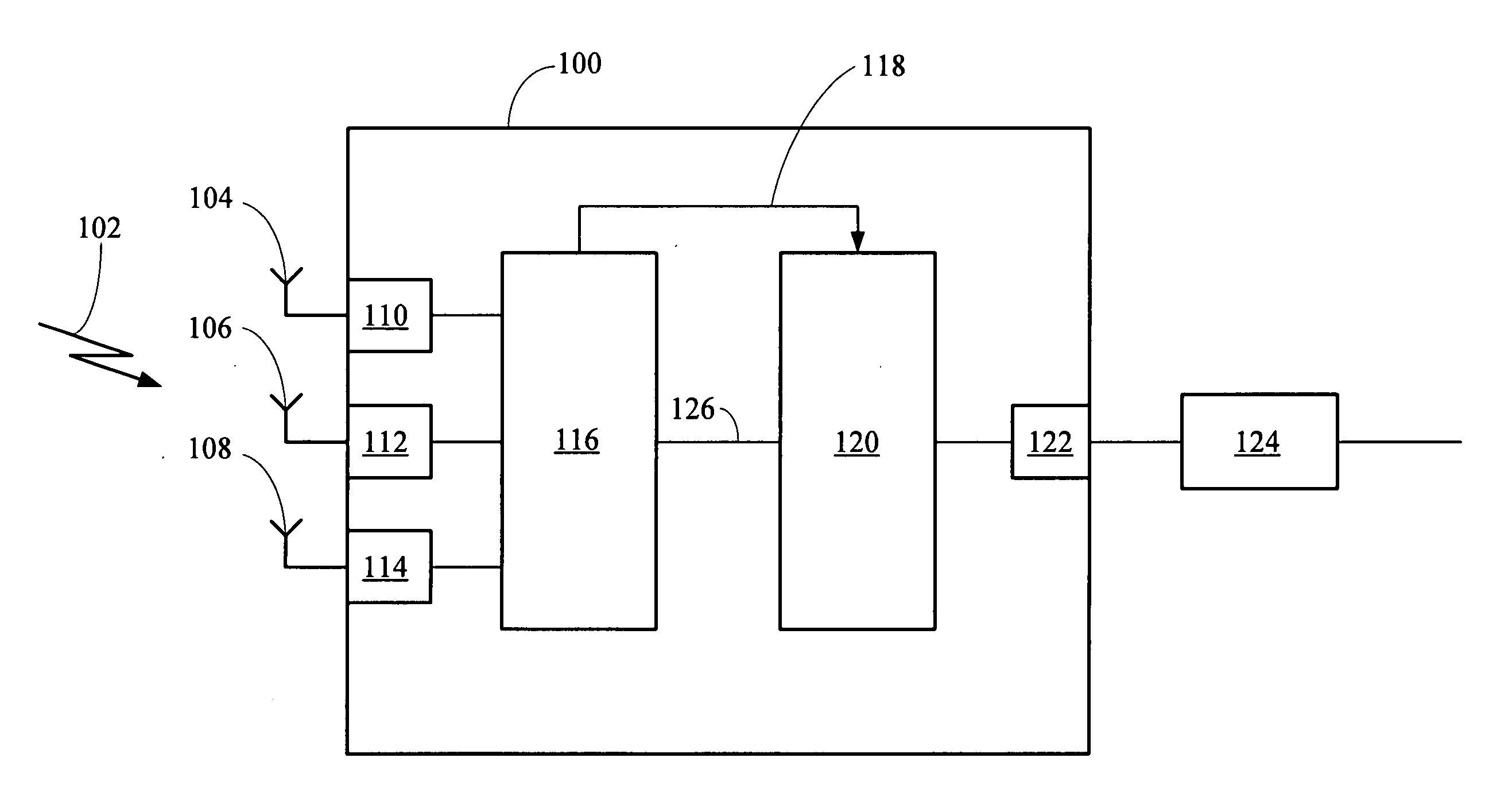
Figure 1 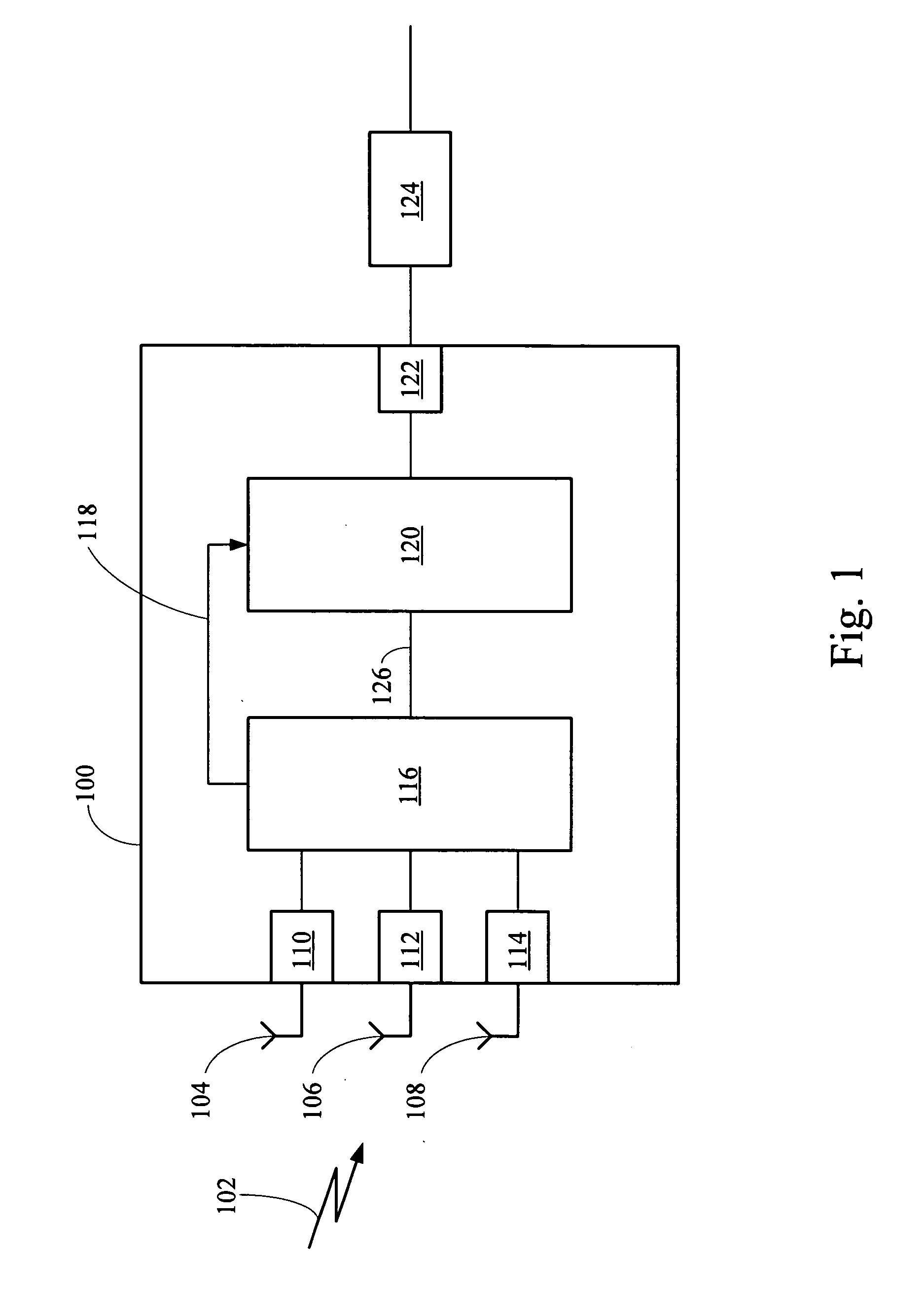
Figure 2 
Figure 3
Abstract
Description
PRIORITY CLAIM
[0001] This application claims the benefit of European Patent Application No. 04014262.2, filed Jun. 17, 2004. The disclosure of the above application is incorporated in its entirely herein by reference. BACKGROUND OF THE INVENTION
[0002] 1. Technical Field
[0003] This application is directed to a diversity system with identification and evaluation of antenna properties. In particular, this application is directed to a mobile broadcast reception system to be used for the reception of broadcast signals in a vehicle.
[0004] 2. Related Art
[0005] Modem vehicles are being equipped with more broadcast reception equipment than merely FM radio. Thus, it is becoming increasingly important to ensure quality reception as well as flexibility of use of equipment mounted in or attached to a vehicle. For example, such equipment may include terrestrial broadcast televisions, including analog, digital, DAB receivers and the like. Because the frequency band and signals for various rec...
Examples
Embodiment Construction
[0027]FIG. 1 shows an example of a diversity system, which may also be referred to as a mobile broadcast receiver system (MBRS), 100 with identification and evaluation of antenna properties. A broadcast signal 102 may be received by at least one of the external diversity antennas 104, 106, and 108. While a particular arrangement and number of antennas 104, 106 and 108 is shown, different arrangements and quantities of antennas are possible. The antennas 104, 106 and 108 may be frequency selective antennas for a specific frequency. For example, the antennas may be FM, VHF, UHF, DAB, DVB, or broadband antennas, or any combination of those frequency bands or even covering the whole frequency range for broadcast reception. Moreover, for example, antennas 104 and 106 may cover the same frequency band and provide spatial diversity for the MBRS 100. For this purpose, the antennas 104 and 106 may be spaced at multiples of the wavelength.
[0028] The antennas 104, 106 and 108 may be cross-pol...