
Modified venom and venom components as anti-retroviral agents
a technology of venom and components, applied in the field of proteins, can solve problems such as interfering with the activity of the other, and achieve the effect of high antiviral activity
Patent Information
- Authority / Receiving Office
- US · United States
- Current Assignee / Owner
- Publication Date
- 2006-04-27
- Estimated Expiration
- Not applicable · inactive patent
Smart Images
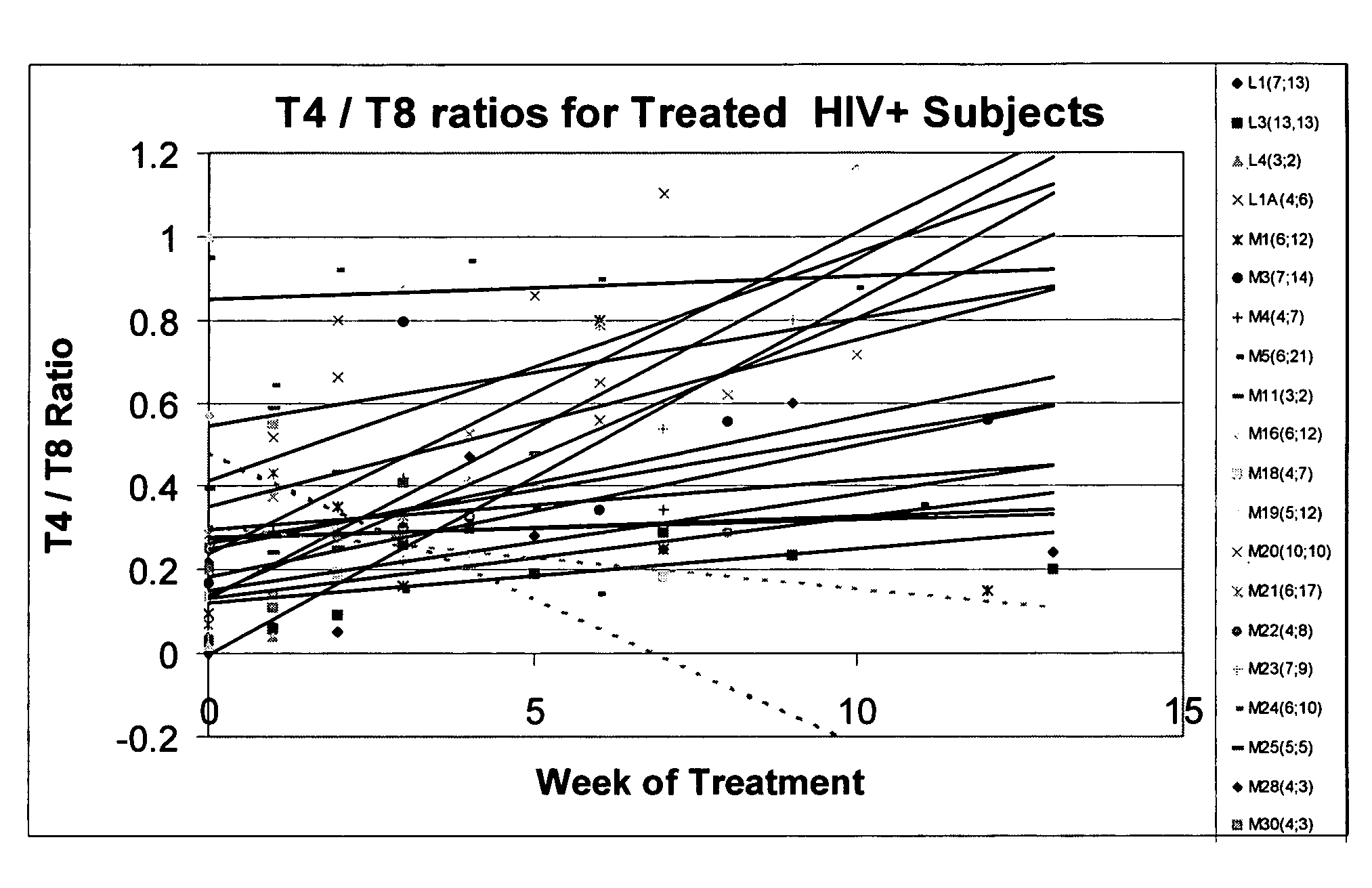
Figure 1 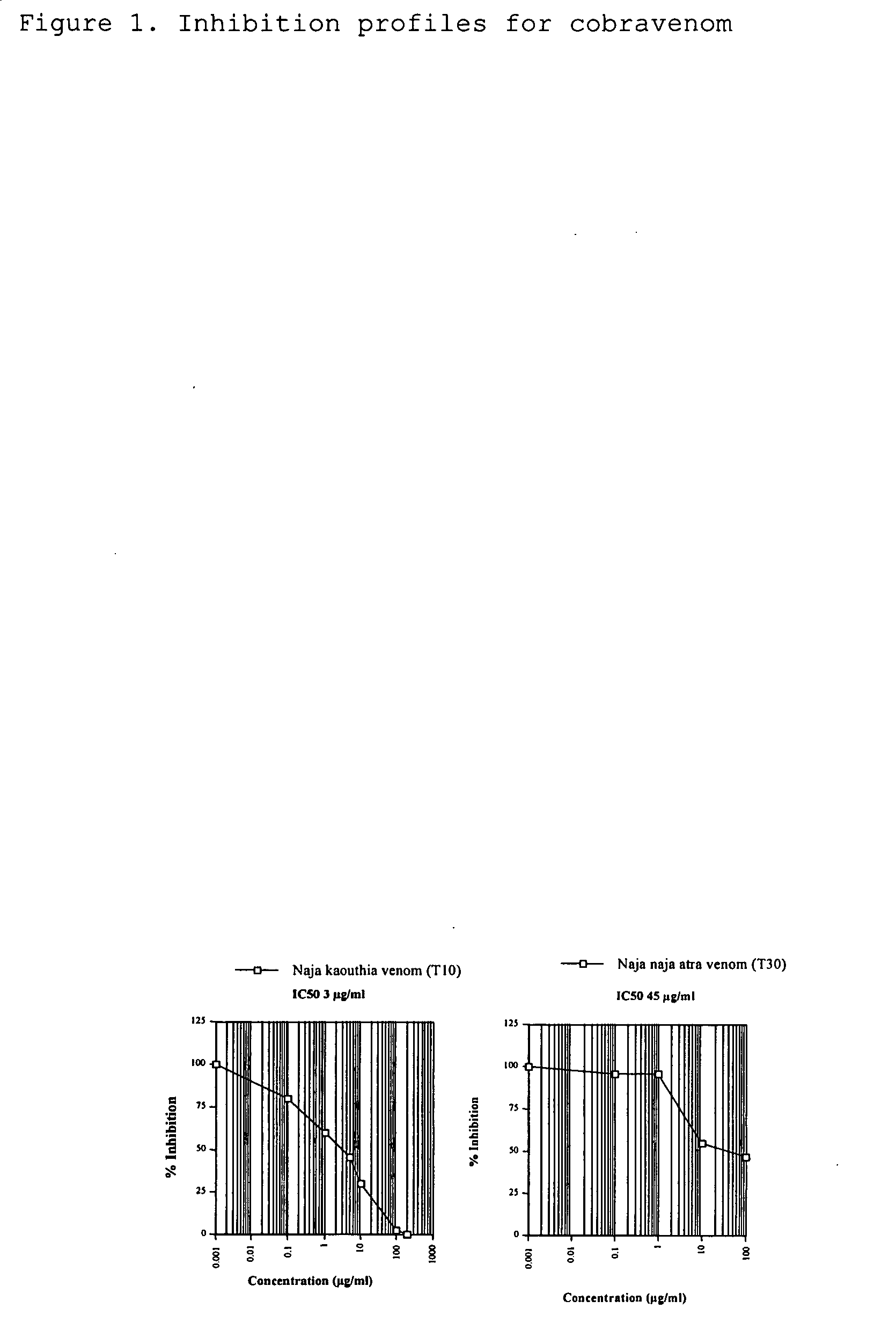
Figure 2 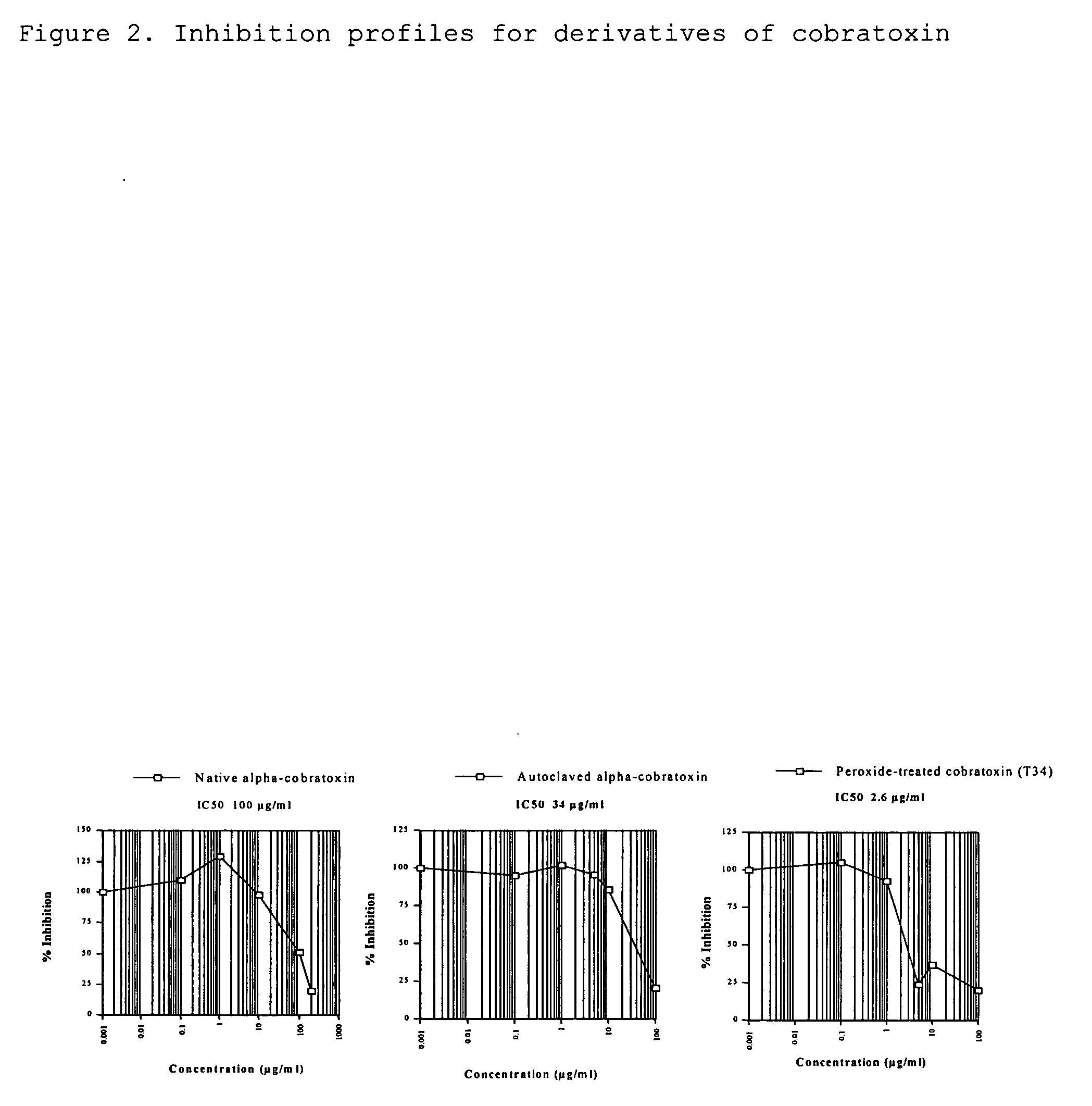
Figure 3
Abstract
Description
BACKGROUND OF THE INVENTION
[0001] 1. Field of the Invention
[0002] The present invention relates to a class of proteins, a process of production thereof, and a method for treatment of neurological and viral diseases and especially to the treatment of heretofore intractable diseases such as retro-viral infections, including specifically HIV infections.
[0003] 2. Description of Prior Art
[0004] Sanders, et al. had commenced investigating the application of modified venoms to the treatment of ALS in 1953 having employed poliomyelitis infection in monkeys as a model. Others antiviral studies had reported inhibition of pseudorabies (a herpesvirus) and Semliki Forest virus (alpha-virus). See Sanders' U.S. Pat. Nos. 3,888,977, 4,126,676, and 4,162,303. Sanders justified the pursuit of this line of research through reference to the studies of Lamb and Hunter (1904) though it is believed that the original idea was postulated by Haast. See Haast U.S. Pat. Nos. 4,341,762 and 4,741,902. See al...
Examples
example 1
[0039] Venom Modification
[0040] Venom from the Thailand cobra (Naja naja kaouthia) was purchased from Biotoxins (Florida) or Kentucky Reptile Zoo (Kentucky) Employing the procedure described by Sanders (Pat. No. 3,888,977) and Miller, et al. (1977) the reactive molecule, hydrogen peroxide, the precursor protein is modified through the addition of oxygen molecules.
[0041] Other venoms detoxified in this manner include venoms from Naja naja atra and Bungarus multicintus.
example 2
[0042] Neurotoxin Modification
[0043] Cobratoxin (CTX) has a molecular weight of 7821 and is composed of 71 amino acids. Alpha-cobratoxin from the Thailand cobra (Naja naja kaouthia) was purchased from Biotoxins, Kississimi, Fla. Employing the procedure described by Sanders (U.S. Pat. No. 3,888,977) and Miller, et al. (1977) the reactive molecule, hydrogen peroxide, the precursor protein is modified through the addition of oxygen molecules.
[0044] A modified neurotoxin (MCTX) solution has an acidic pH and a pI of approximately 4.5. Cobratoxin solutions are basic having pH of 10.4. In solution, the drug migrates through molecular sieving gels as monomers, dimers and tetramers. Cobratoxin migrates under these conditions as a monomer. Upon analysis on NuPAGE (Stratagene) SDS polyacrylamide gel electrophoresis (PAGE) the cobratoxin migrates as a 14 Kd and 8 Kd protein with a reference to comparable proteins under unreduced and reduced conditions respectively. MCTX migrates under reduced...
example 3
[0047] The endpoint of the above reactions are most easily determined by assessing the toxicity of the preparation in mice. Mice are sensitive to the actions of many venoms particularly to that of snakes. The proven LD50 of pure alpha-cobratoxin in mice is 1.2 mcg with death observable within hours when injected subcutaneously or intra-peritoneally. If the animal survives overnight it is accepted that the material is not lethal and defines the endpoint of the assay. By administering the composition of the invention at set periods a reduction in the material's toxicity can be observed as an increase in time to death. When 5 mg of the protein solution can be administered without inducing death then the reaction process is complete. This represents more than a 4000 fold reduction in toxicity. It is at this point that the solution takes on its antiviral properties and native cobratoxin does not demonstrate antiviral activity in similar assays.