
Method of presentation for data records
Patent Information
- Authority / Receiving Office
- US · United States
- Current Assignee / Owner
- Publication Date
- 2006-08-10
- Estimated Expiration
- Not applicable · inactive patent
Smart Images
Figure 1 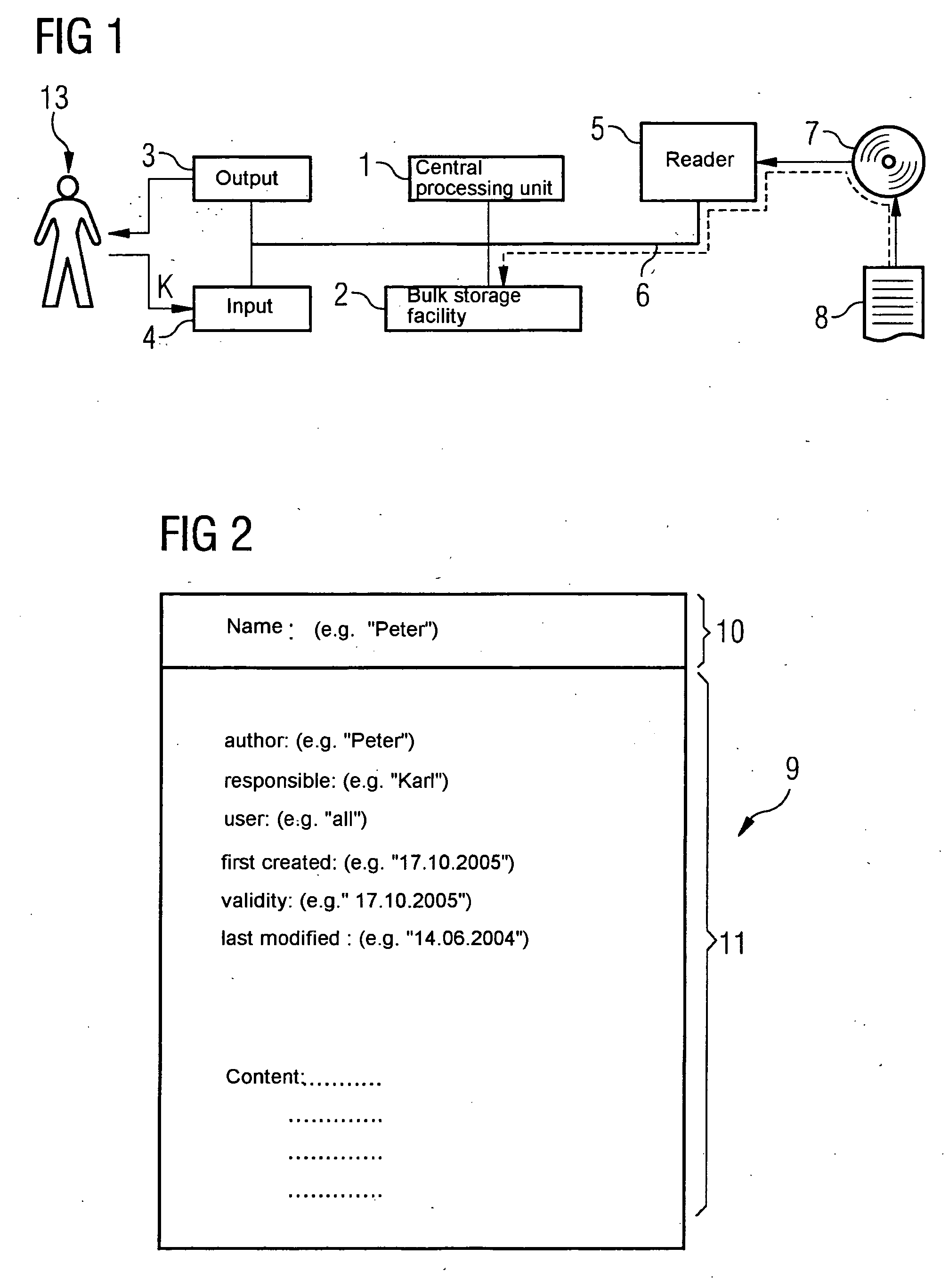
Figure 2 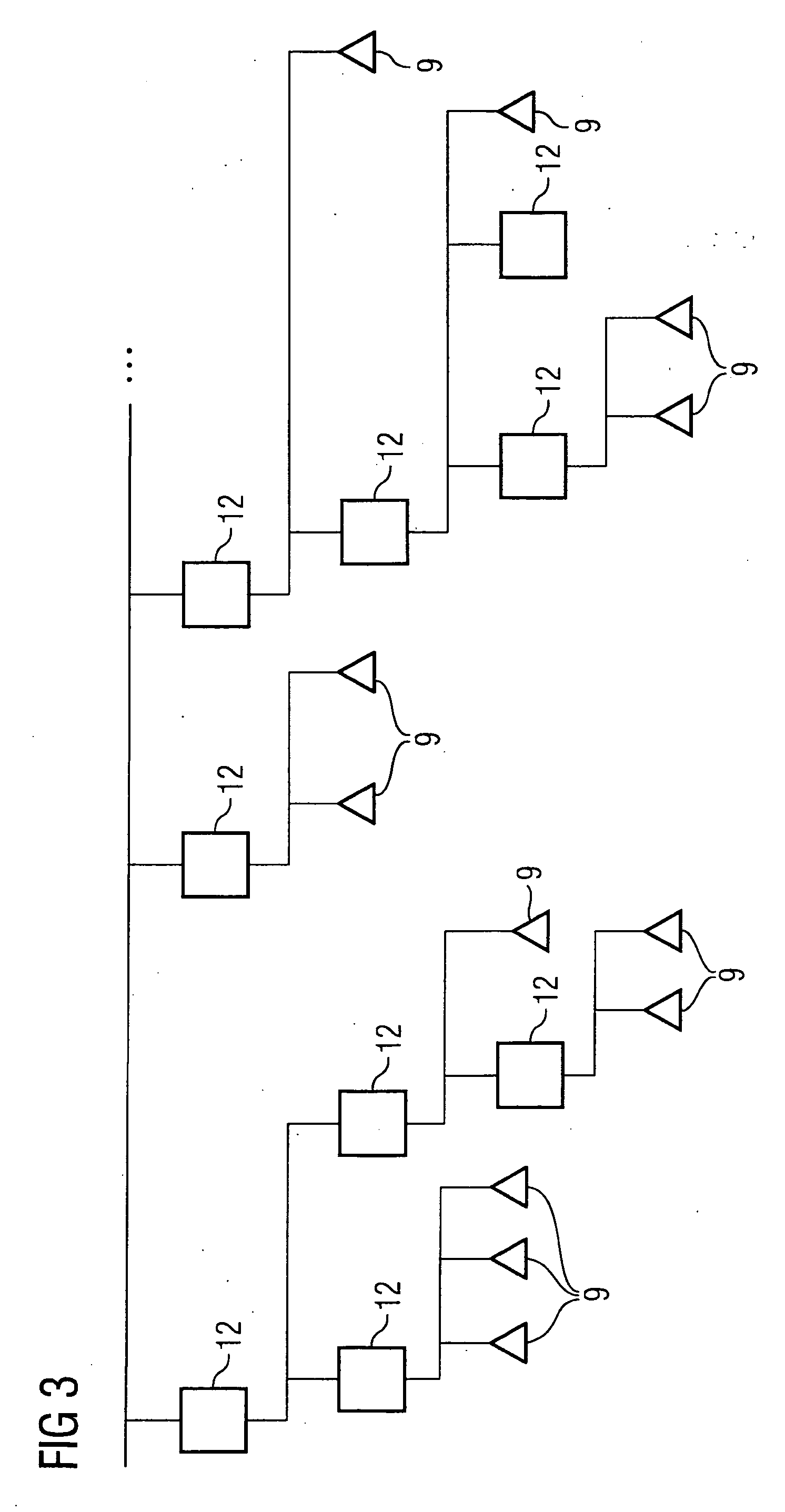
Figure 3
Abstract
Description
CROSS REFERENCE TO RELATED APPLICATIONS
[0001] This application claims priority to the German application No. 10 2005 004 446.8, filed Jan. 31, 2005 which is incorporated by reference herein in its entirety FIELD OF INVENTION
[0002] The present invention relates to a method of presentation for data records, with each data record containing identification data and user data and either being contained in a highest grouping level or being directly subordinate to precisely one data record group, with each data record group either being contained in the highest grouping level or being directly subordinate to precisely one data record group, so that each data record group is either empty or instead contains at least one directly subordinate element and each directly subordinate element is either a data record group or a data record.
[0003] The present invention further relates to a data carrier with a computer program, stored on the data carrier, for implementing a method of presentation ...
Examples
Embodiment Construction
[0041] According to FIG. 1, a computer comprises a central processing unit 1, a bulk storage facility 2, a display device 3, an input device 4 and a data carrier reader 5, which are connected to one another via a bus system 6. A computer program 8 is stored on a data carrier 7, a CD-ROM 7 for instance, in an exclusively machine-readable form. The data carrier 7 is inserted into the data carrier reader 5. The computer program 8 stored on the data carrier 7 is read out and is stored in the bulk storage facility 2 (typically a hard disk 2). When the computer program 8 is called up, the computer thus implements a method of presentation for data records 9, which is described in more detail below. The arrangement of the data records 9 and their structure is explained in more detail below in conjunction with FIGS. 2 and 3.
[0042] According to FIG. 2, each data record 9 contains identification data 10 (“a name”) and user data 11. At least the user data 11, preferably even the complete data ...