
Accommodating intraocular lens system having spherical aberration compensation and method
a technology of spherical aberration and compensating method, which is applied in the field of intraocular lenses, can solve the problems of preventing widespread commercialization of such devices, unable to accommodate, and typically already lost ability, so as to reduce the effect of refractive effects and optical aberrations, increasing the cross-sectional area of the haptic, and increasing the internal volume of the hapti
Patent Information
- Authority / Receiving Office
- US · United States
- Patent Type
- Applications(United States)
- Current Assignee / Owner
- Publication Date
- 2007-05-10
Smart Images
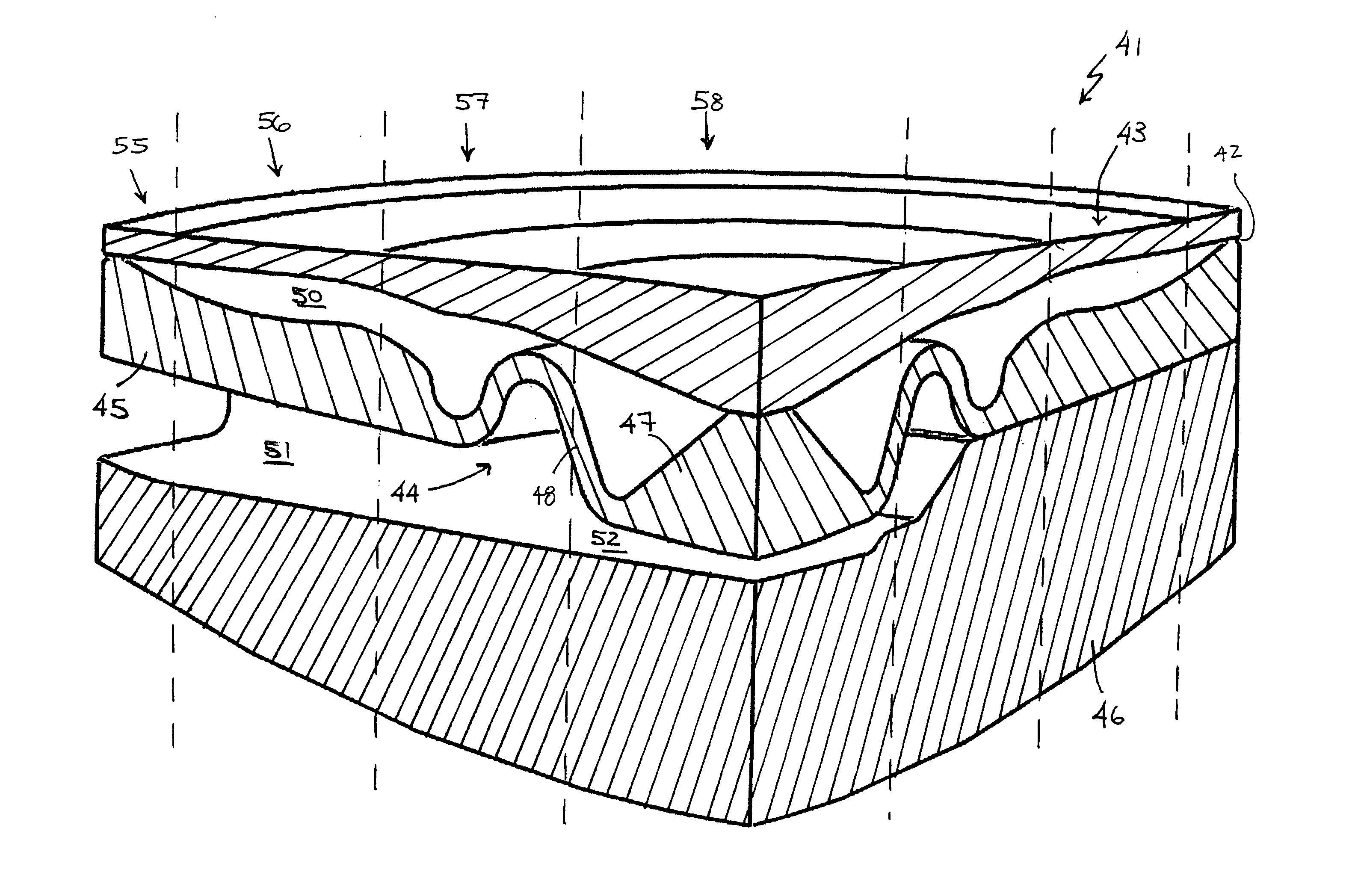
Figure 1 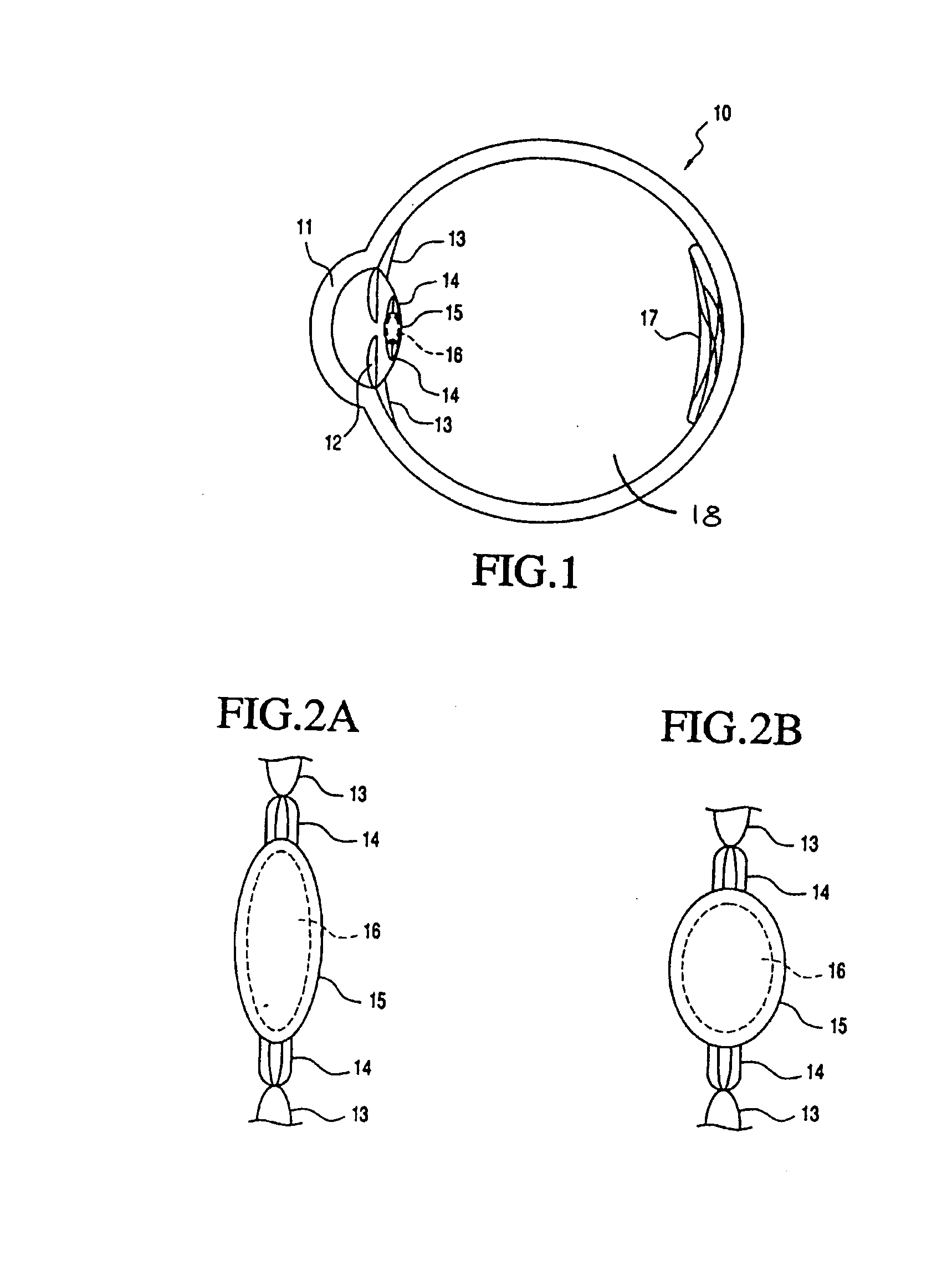
Figure 2 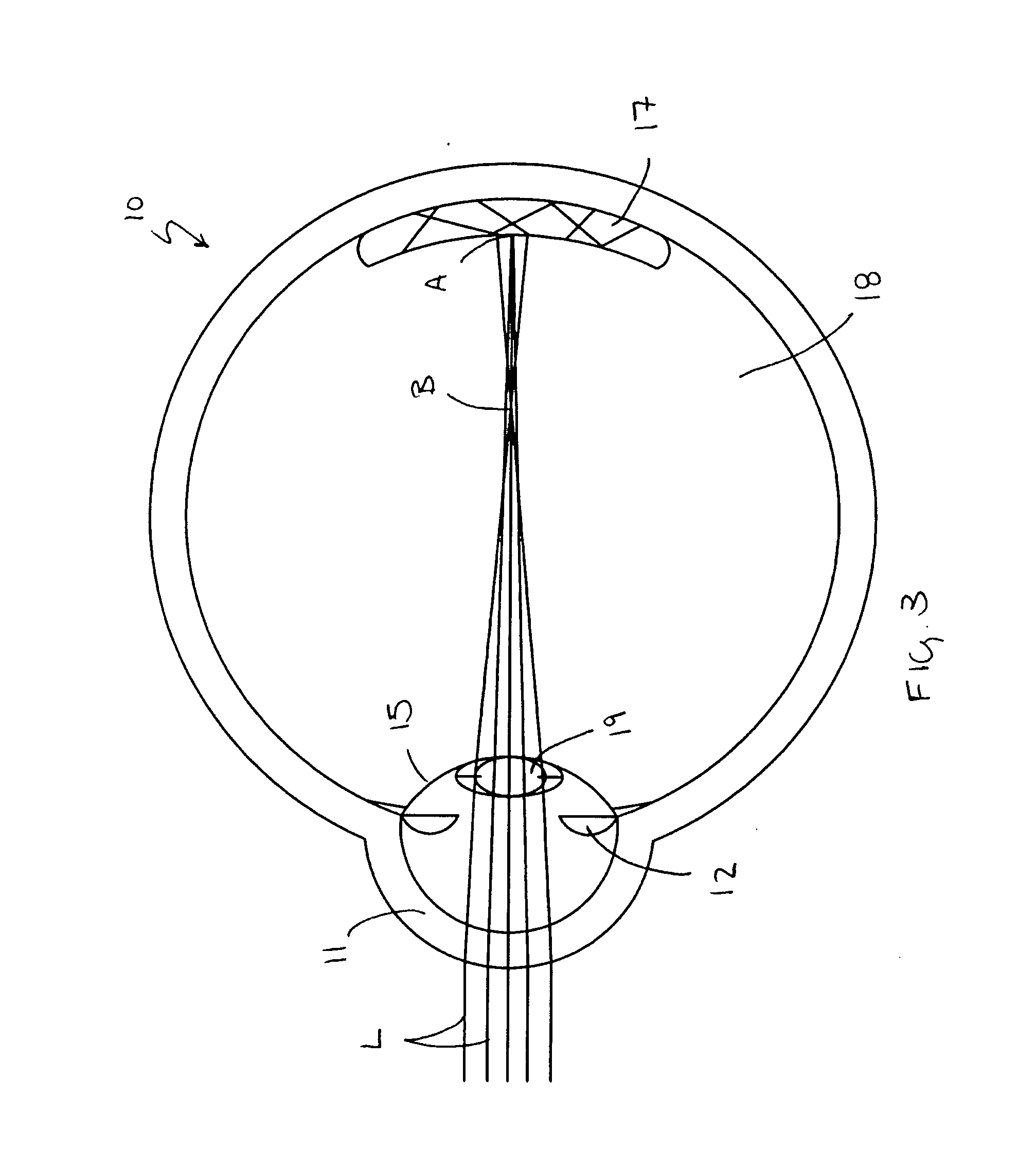
Figure 3
Abstract
Description
REFERENCE TO RELATED APPLICATIONS
[0001] This application is a continuation-in-part of U.S. patent application Ser. No. 10 / 971,598, filed Oct. 22, 2004, which is a continuation-in-part of U.S. patent application Ser. No. 10 / 734,514, filed Dec. 12, 2003, and claims the benefit of priority from U.S. provisional patent application Ser. No. 60 / 433,046, filed Dec. 12, 2002, the disclosures of which are hereby incorporated by reference in their entirety.FIELD OF THE INVENTION
[0002] The present invention relates to intraocular lenses (“IOLs”) having optical parameters that are changeable in-situ. More particularly, the invention has application in IOLs for in-capsule implantation for cataract patients or presbyopic patients, wherein movement of the lens capsule applies forces to a circumferentially supported haptic to more efficiently induce transfer of fluid media within the interior of the IOL to alter an optical power of the lens. BACKGROUND OF THE INVENTION
[0003] Cataracts are a majo...
Examples
Embodiment Construction
[0046] In accordance with the principles of the present invention, an intraocular lens is provided having a haptic portion and a light-transmissive optic portion. The optic portion contains one or more fluid-mediated actuators arranged to apply a deflecting force on a dynamic surface of the lens to provide accommodation. As used herein, the lens is fully “accommodated” when it assumes its most highly convex shape, and fully “unaccommodated” when it assumes its most flattened, least convex state. The lens of the present invention is capable of dynamically assuming any desired degree of accommodation between the fully accommodated state and fully unaccommodated state responsive to movement of the ciliary muscles and lens capsule.
[0047] Furthermore, in accordance with the principles of the present invention the optic portion contains one or more secondary deflection mechanism that alters the curvature of the lens. For example, the secondary deflection mechanism may be sealed fluid cav...