
Methods and systems for endovascularly clipping and repairing lumen and tissue defects
Patent Information
- Authority / Receiving Office
- US · United States
- Current Assignee / Owner
- Publication Date
- 2007-08-16
Smart Images
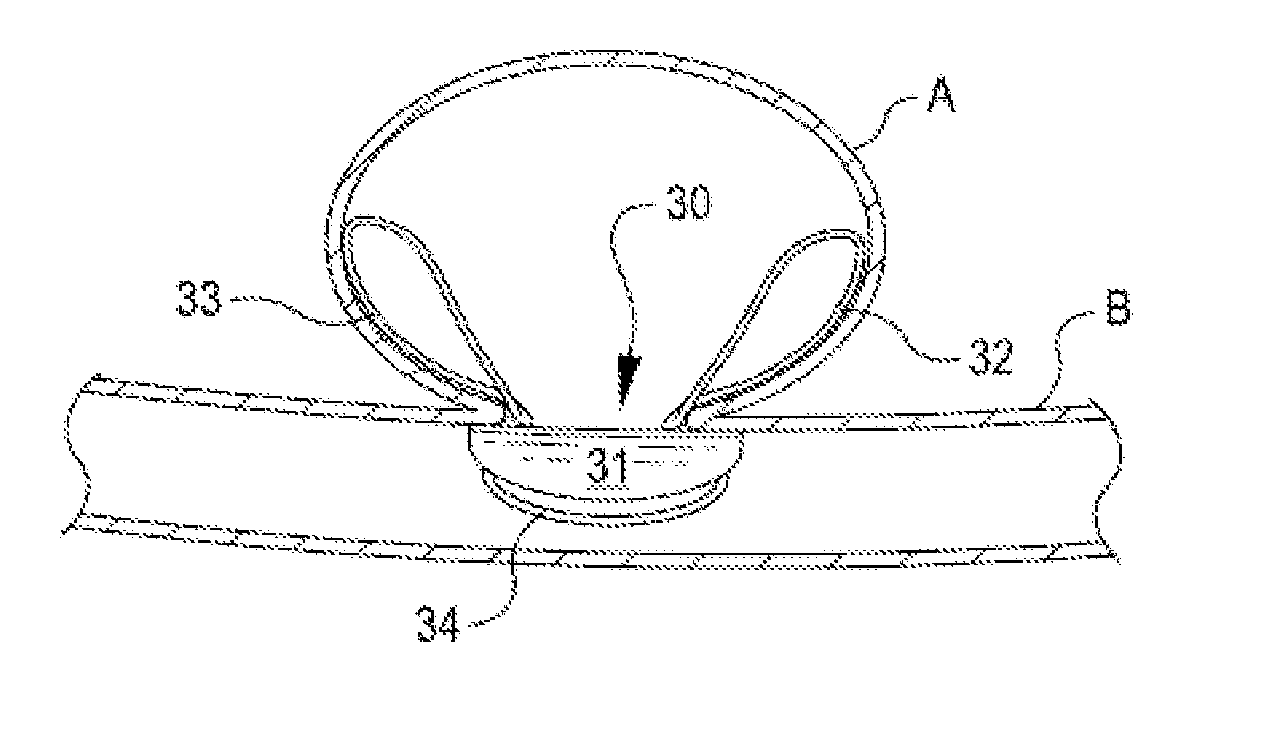
Figure 1 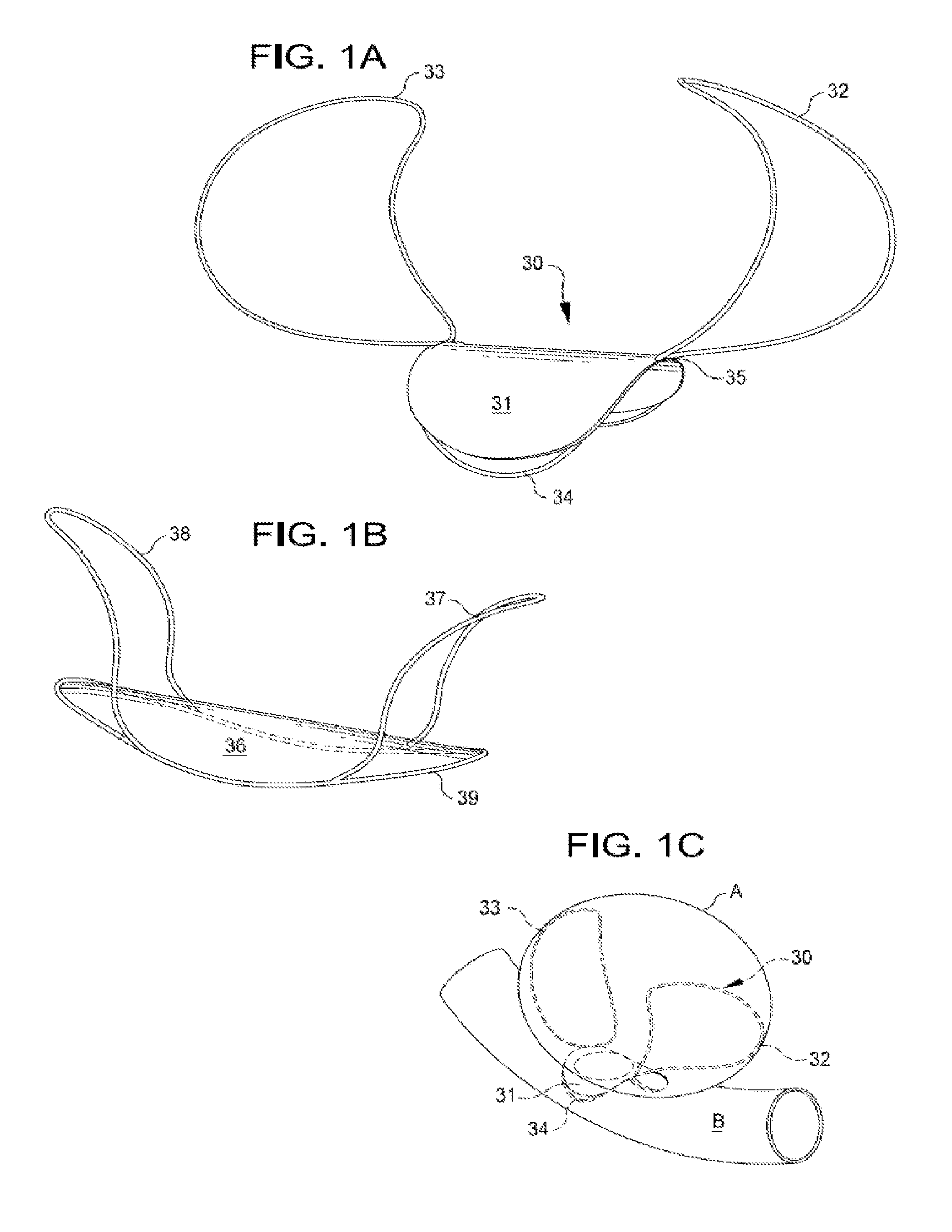
Figure 2 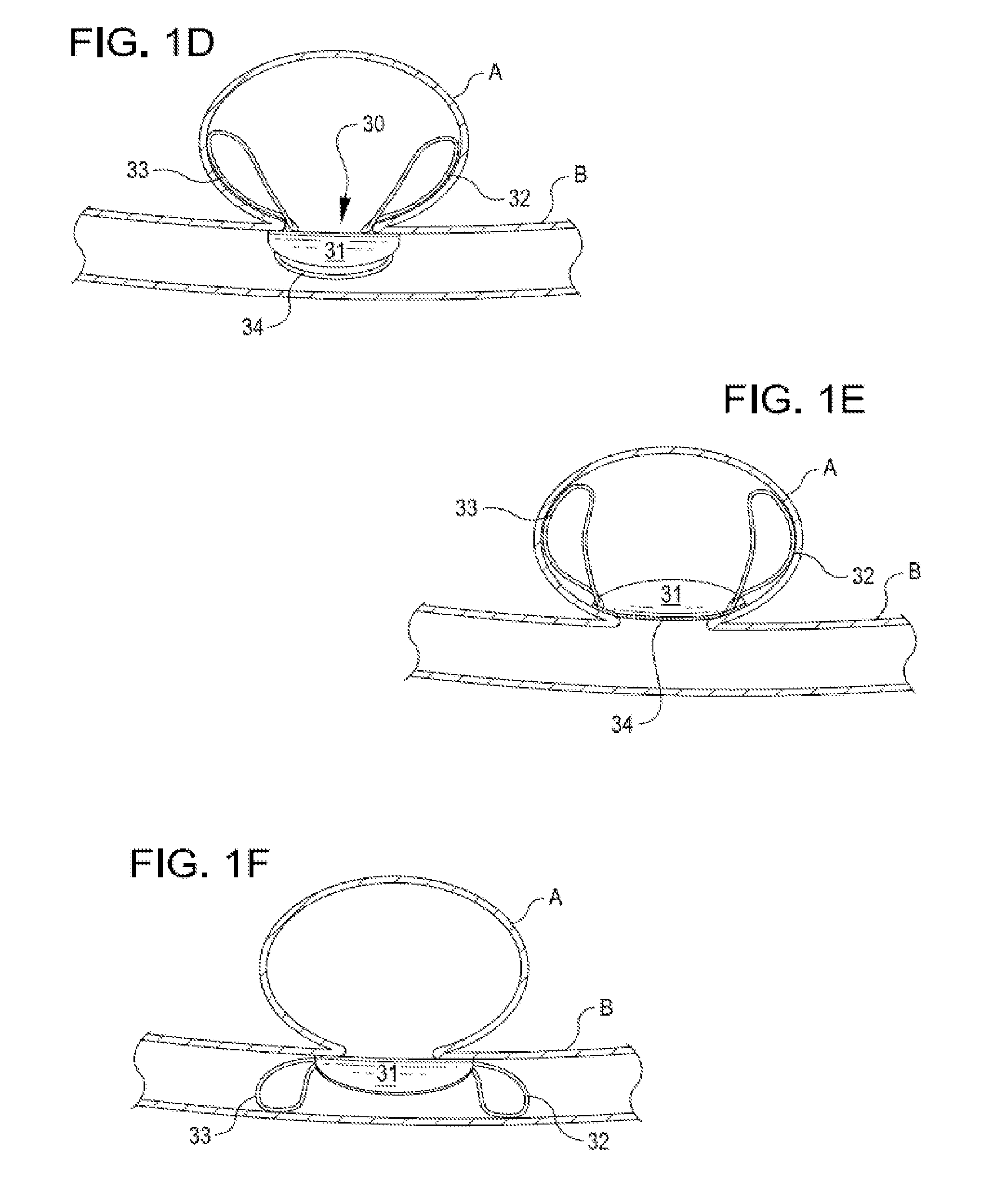
Figure 3
Abstract
Description
REFERENCE TO RELATED APPLICATIONS
[0001] This application claims priority to and is a continuation-in-part application of U.S. patent application Ser. No. 11 / 324,827, filed Jan. 3, 2006, and PCT International application no. PCT / US006 / 40907, filed Oct. 18, 2006, which claim priority to U.S. Patent Application No. 60 / 728,052, filed Oct. 19, 2005. This application also claims priority to U.S. Patent Application No. 60 / 823,730, filed Aug. 28, 2006; U.S. Patent Application No. 60 / 803,200, filed May 25, 2006; U.S. Patent Application No. 60 / 747,400, filed May 16, 2006. The disclosures of all of these applications are incorporated herein by reference in their entireties.TECHNICAL FIELD OF THE INVENTION
[0002] The present invention relates generally to systems and methods for repairing defects in physiological lumens, such as defects in blood vessels or gas passageways of a mammal, using minimally invasive techniques. More specifically, the invention relates to systems and methods for occlu...
Examples
Embodiment Construction
[0054] Implantable systems of the present invention are described and illustrated, in detail, with respect to their application as aneurysm closure devices. It will be appreciated, however, that these systems are not limited to this application and may be adapted and utilized in connection with the treatment and repair of other vessel, tissue or air passageway cavities, abnormalities, or the like. Similarly, it will be appreciated that applicants' methods for repairing defects and openings are not limited to the systems described herein.
[0055] Implantable closure devices of the present invention generally comprise a closure structure that is placed across a tissue or vessel defect and an anchoring structure that positions and holds the closure structure in place. Many alternative embodiments and structures are disclosed herein. The flexible patch(es) or membrane(s) employed in the closure structures disclosed herein are generally constructed from a flexible material that can be del...