
Protective bumper adapted for minimizing damage to materials carried by a materials handling vehicle
a technology for handling vehicles and protective bumpers, applied in bumpers, vehicular safety arrangements, transportation and packaging, etc., can solve the problems of large damage to materials by forklifts in industrial warehouses and home improvement stores, inability to sell the entire product, and relatively little experience or formal training for forklift operators in lifting trucks. to achieve the effect of reducing materials damage and costs
Patent Information
- Authority / Receiving Office
- US · United States
- Current Assignee / Owner
- Publication Date
- 2009-01-08
- Estimated Expiration
- Not applicable · inactive patent
Smart Images
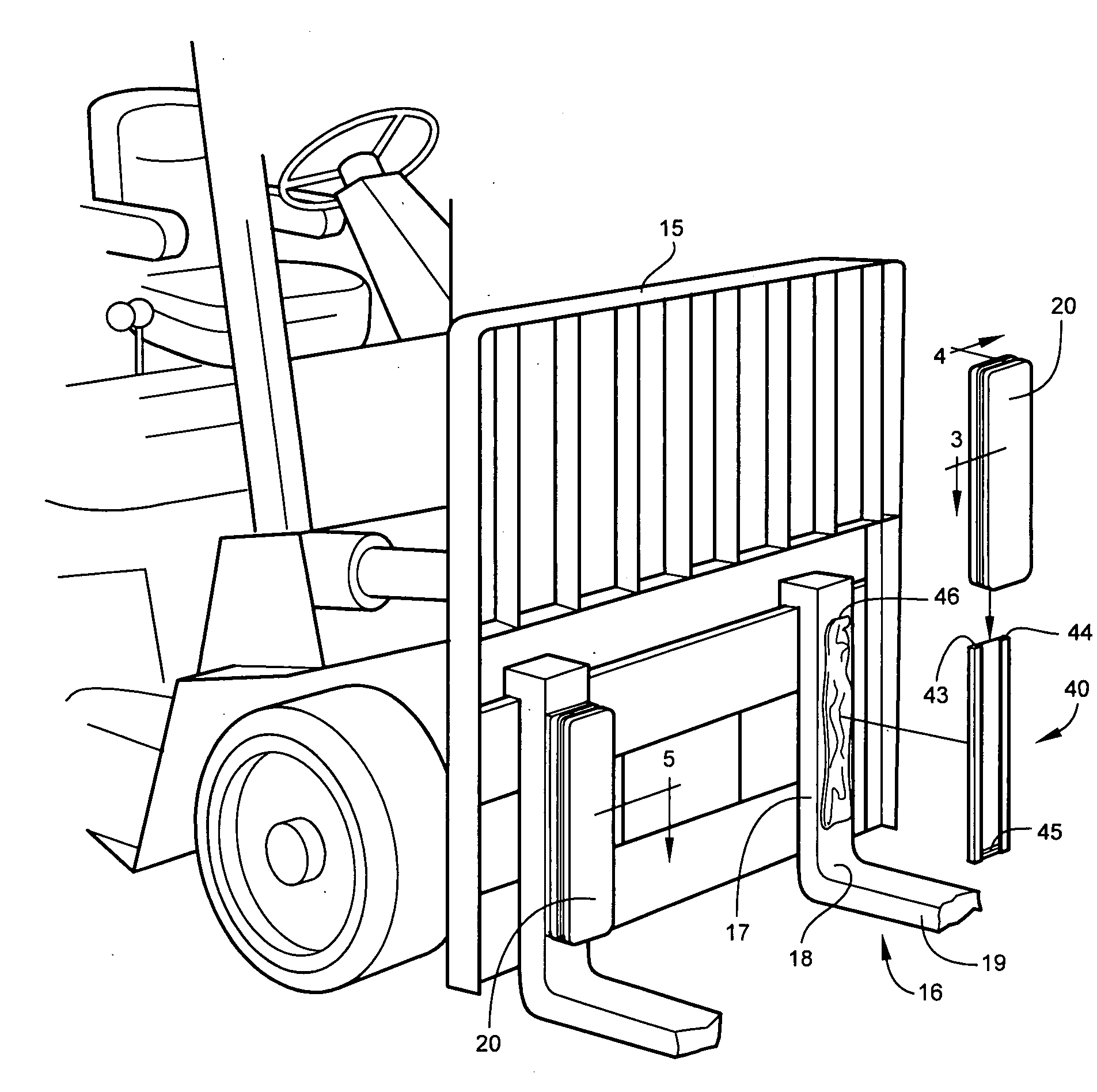
Figure 1 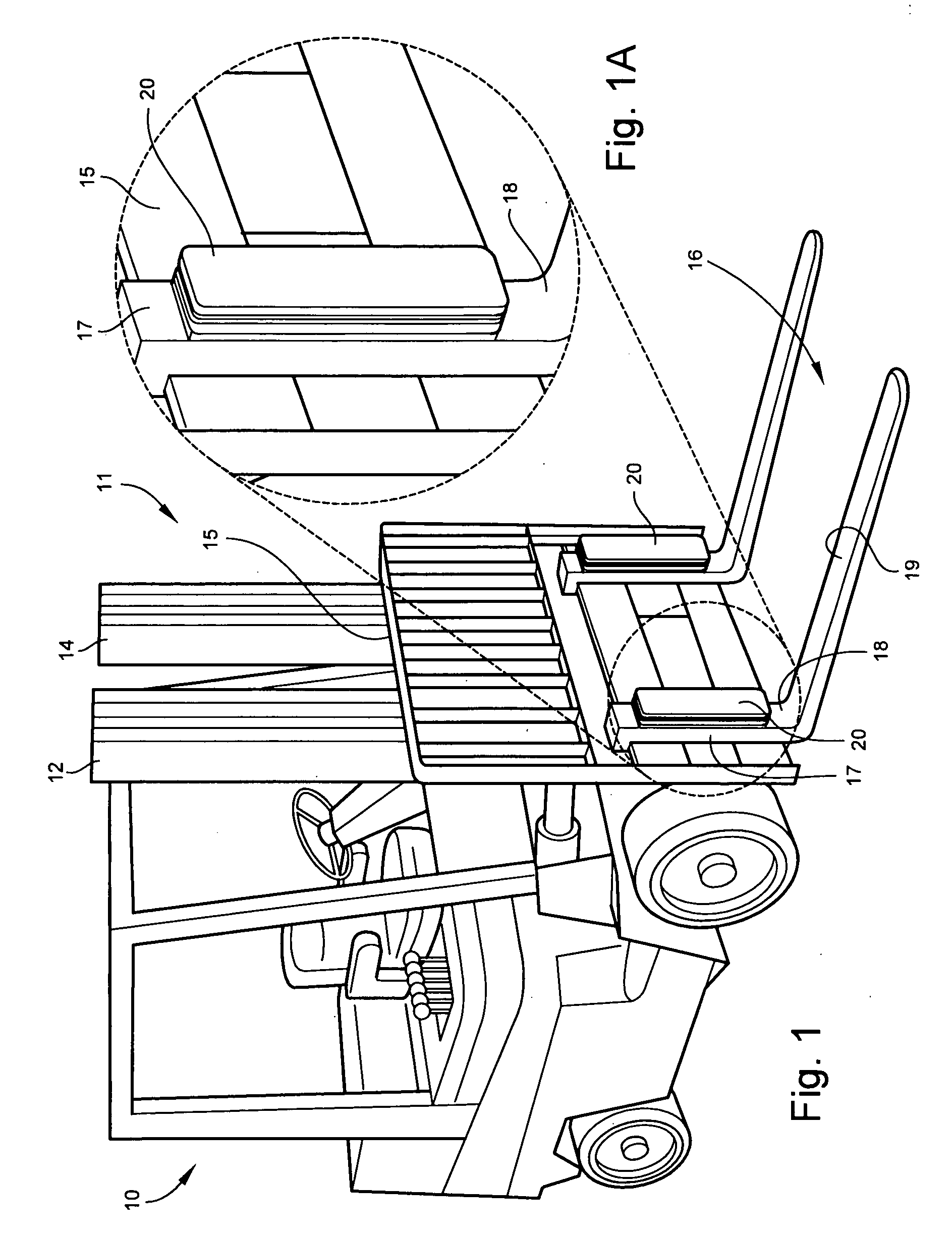
Figure 2 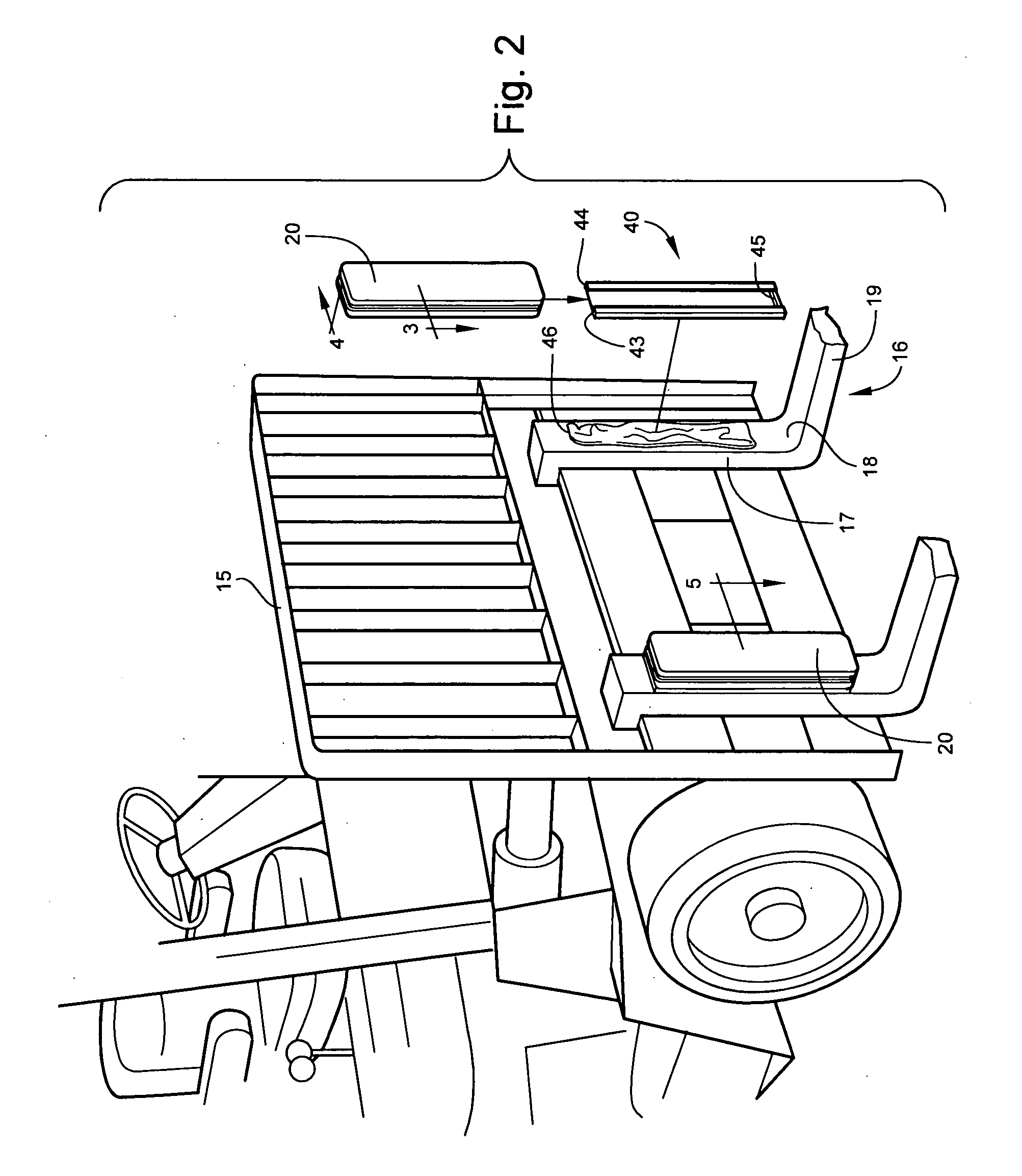
Figure 3
Abstract
Description
TECHNICAL FIELD AND BACKGROUND OF THE INVENTION
[0001] This application relates to a protective bumper adapted for engaging and protecting materials carried by a materials handling vehicle, such as those utilizing a mechanical forklift. The invention is designed to protect materials from damage resulting from impact against the fork backrest. In many cases, even slight to moderate damage to fragile edges may render the entire product commercially unsaleable.
[0002] Forklift damage to materials in industrial warehouses and home improvement stores is substantial—estimated to be in the millions of dollars each year. In most home improvement stores, forklift operators have relatively little experience or formal training in the operation and maneuvering of lift trucks. When approaching a loaded pallet for transport, an operator will typically move the truck forward until the forks have clearly and firmly impacted the materials. While this ensures full extension of the fork tines into the pal...
Examples
Embodiment Construction
[0034]Referring now specifically to the drawings, a materials handling vehicle according to the present invention is illustrated in FIG. 1, and shown generally at reference numeral 10. The vehicle 10 incorporates a conventional mechanical lift 11 comprising spaced vertical masts 12 and 14, a carriage 15 designed for upward and downward movement along the masts 12, 14, and a pair of forks 16. Each fork 16 has an integrally-formed vertical backrest 17, elbow 18, and an elongated horizontal tine 19. The backrest 17 is permanently affixed to the carriage 15, and has a thickness which protrudes slightly forward of the carriage back. The forks 16 are especially applicable for collecting building materials, such as sheet rock and wallboard, stacked in a unit load on a wood pallet or other standard support. In existing prior art vehicles, the protruding thickness of the vertical backrest 17 is a common source of damage to materials during loading and transport—particularly materials with re...