
Validating network security policy compliance
a network security and policy validation technology, applied in the field of computer network security, can solve the problems of difficult to predict the effect of adding or deleting additional rules, difficult for administrators to know whether the security policy is properly implemented in all enforcement points, and difficult to verify that a network security policy is functioning as desired
Patent Information
- Authority / Receiving Office
- US · United States
- Current Assignee / Owner
- Publication Date
- 2010-02-25
- Estimated Expiration
- Not applicable · inactive patent
Smart Images
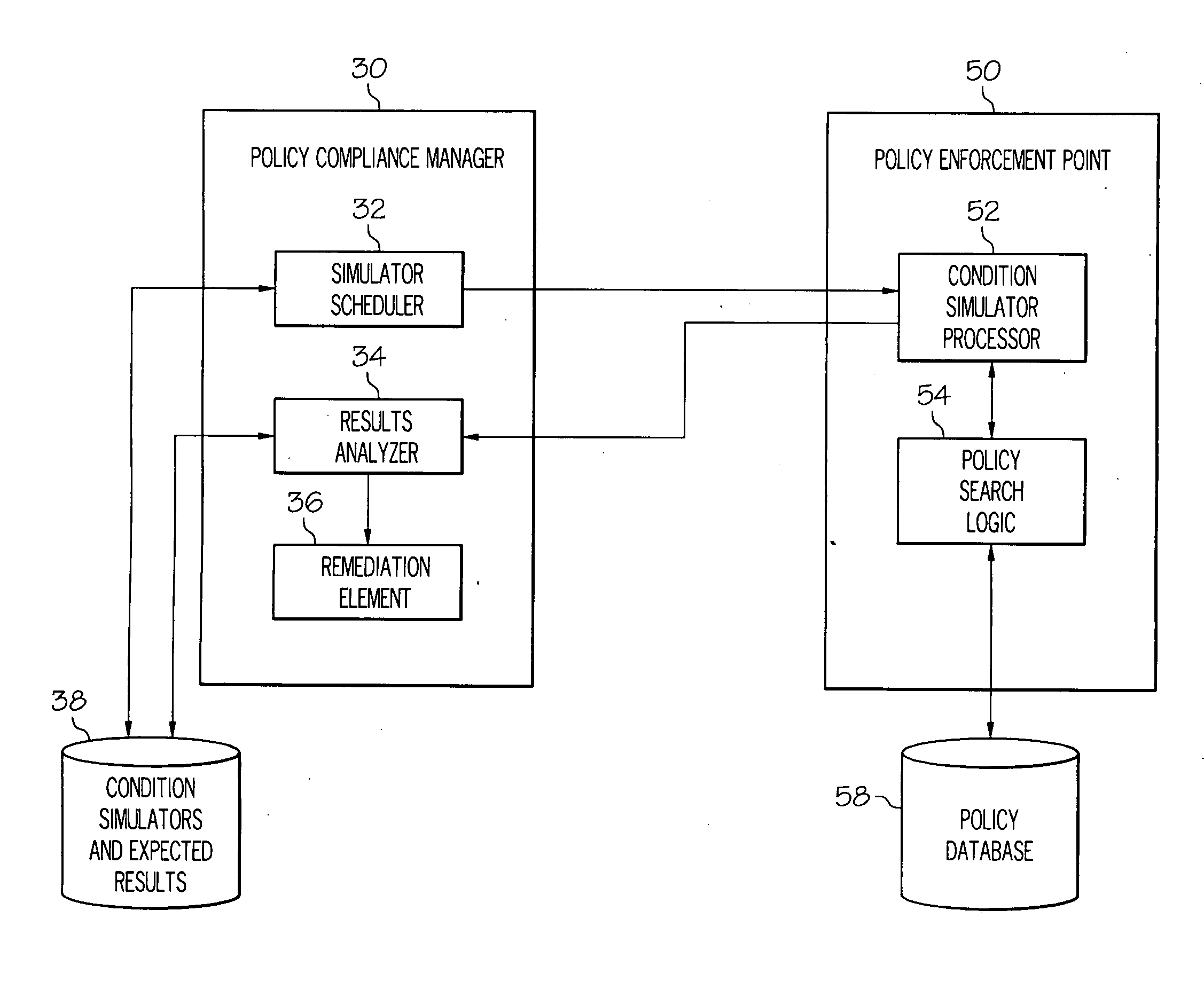
Figure 1 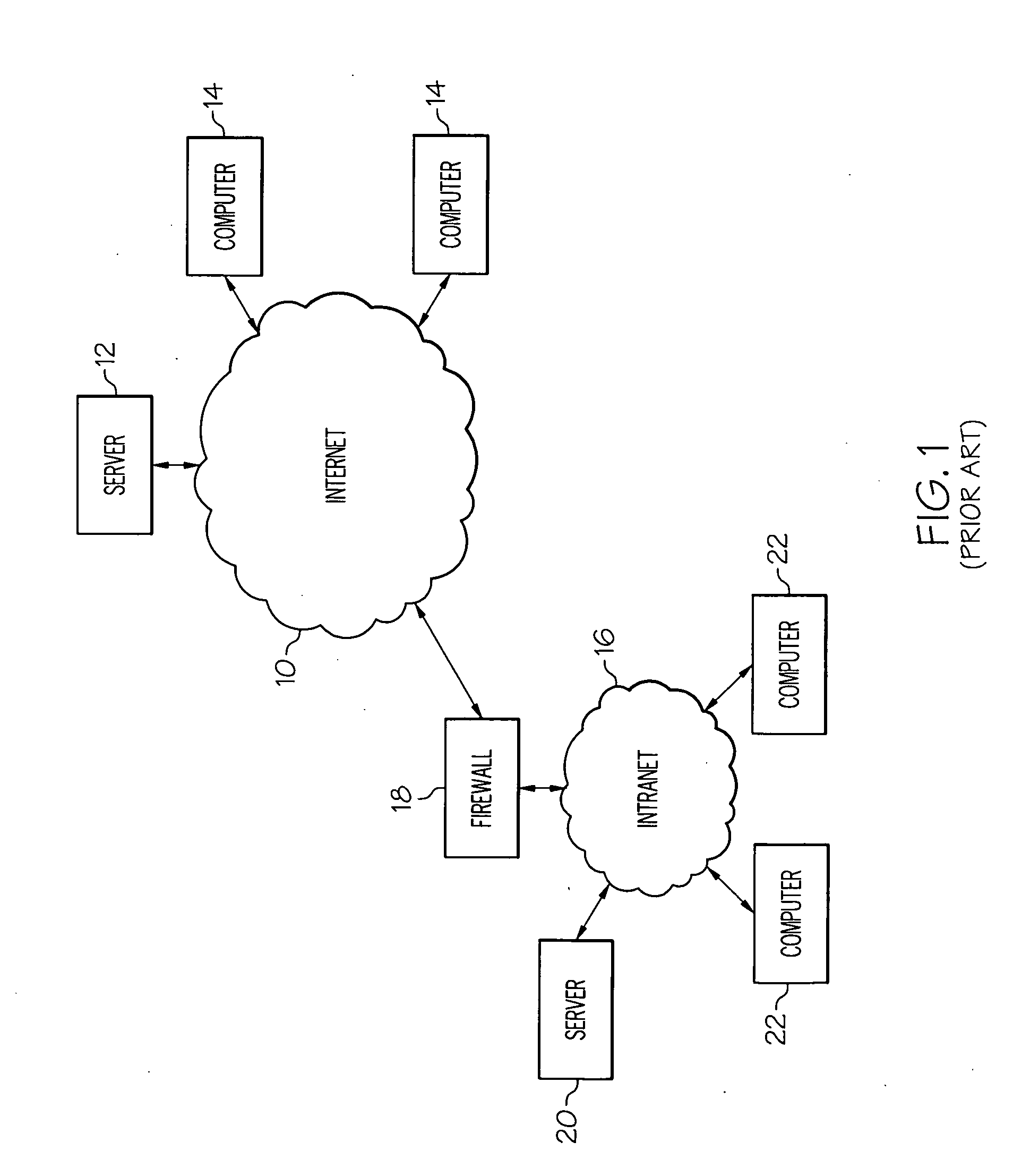
Figure 2 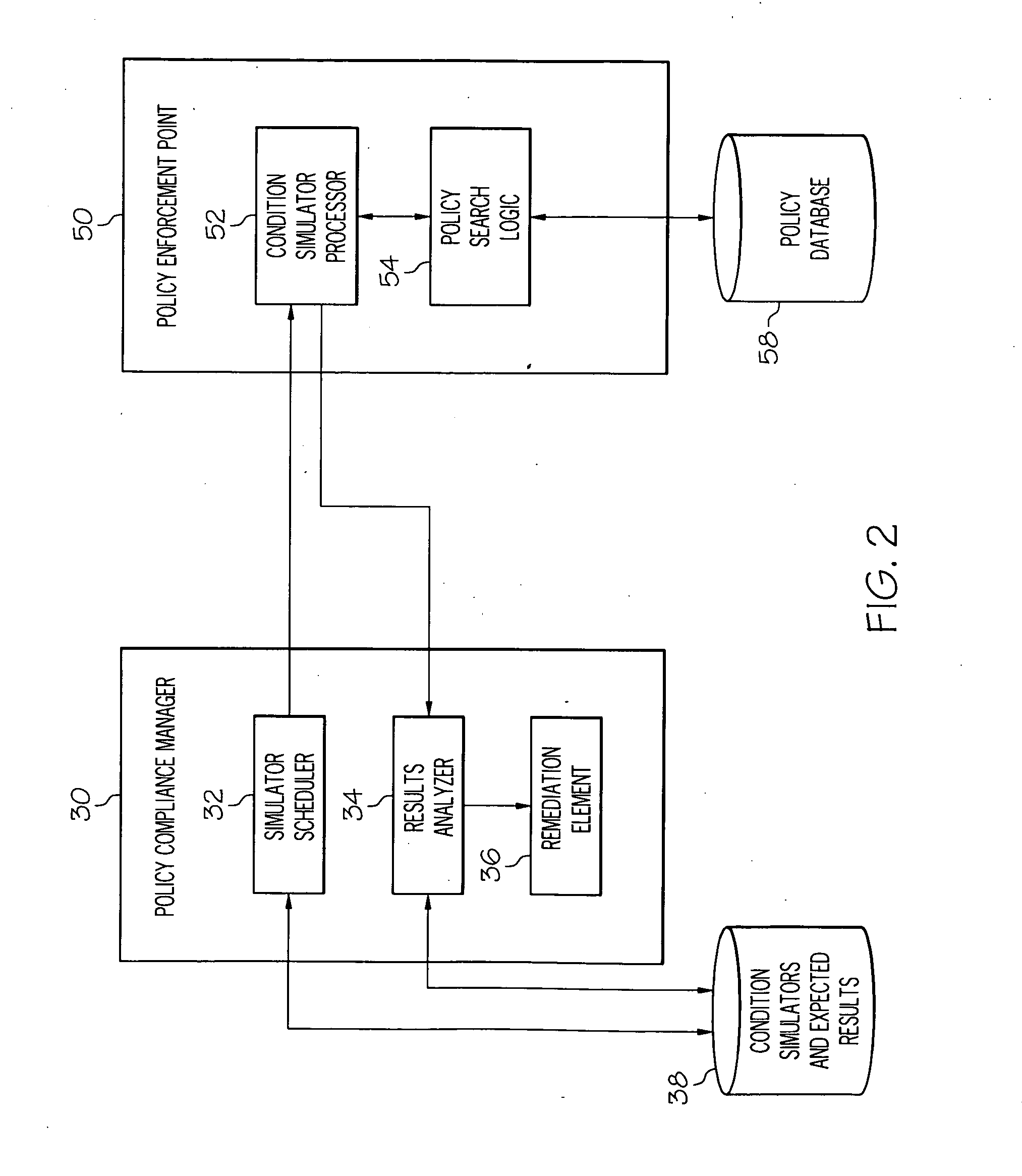
Figure 3
Abstract
Description
BACKGROUND
[0001] The present invention relates to computer network security.
[0002] A network security policy comprises a collection of policy rules. The policy rules comprise conditions and actions. The condition portion of the rule describes the conditions that must be present before a rule action is taken. Example conditions include information in a packet header (IP (Internet protocol) addresses, ports, protocols), direction of packet, user ID, application name, and time of day. Policy conditions for a rule can be configured to use any combination of allowed condition attributes. Actions describe the security actions to take under specified circumstances, such as deny or drop a packet, allow a packet, or require network encryption protocols (e.g., IP security (IPSec) or transport layer security (TLS)).
[0003] FIG. 1 is a schematic block diagram of a prior art computer network in which embodiments of the present invention may operate. Server 12 and computers 14 provide processing, sto...
Examples
Embodiment Construction
[0016]Referring now to FIG. 2, a schematic block diagram of a system for validating network security compliance is illustrated in accordance with one embodiment of the present invention. In the embodiment of FIG. 2, the system of validating network security compliance comprises a policy compliance manager 30 and special software code at the policy enforcement point 50. Policy compliance manager 30 may reside on a server or computer controlled by a network administrator. Policy enforcement point 50 may be, for example, a firewall controlling network traffic into and out of a network. In known network security methods, an incoming or outgoing packet is received by the enforcement point. The policy search logic 54 retrieves the appropriate filter rules from the policy database 58 and determines whether the packet should be allowed. Typically, the policy database 58 is cached in memory for more efficient policy processing. The policy search logic 54 is called for each packet that is to ...