
Ventilator for Rapid Response to Respiratory Disease Conditions
a technology for respiratory diseases and ventilators, applied in respirators, other medical devices, manufacturing tools, etc., can solve problems such as potential to spark another outbreak, become an emerging epidemic threat, and respiratory distress and sometimes death, and achieve the effect of confirming the operability of ventilators and increasing oxygen pressur
Patent Information
- Authority / Receiving Office
- US · United States
- Patent Type
- Applications(United States)
- Current Assignee / Owner
- Publication Date
- 2010-12-09
- Estimated Expiration
- Not applicable · inactive patent
Smart Images
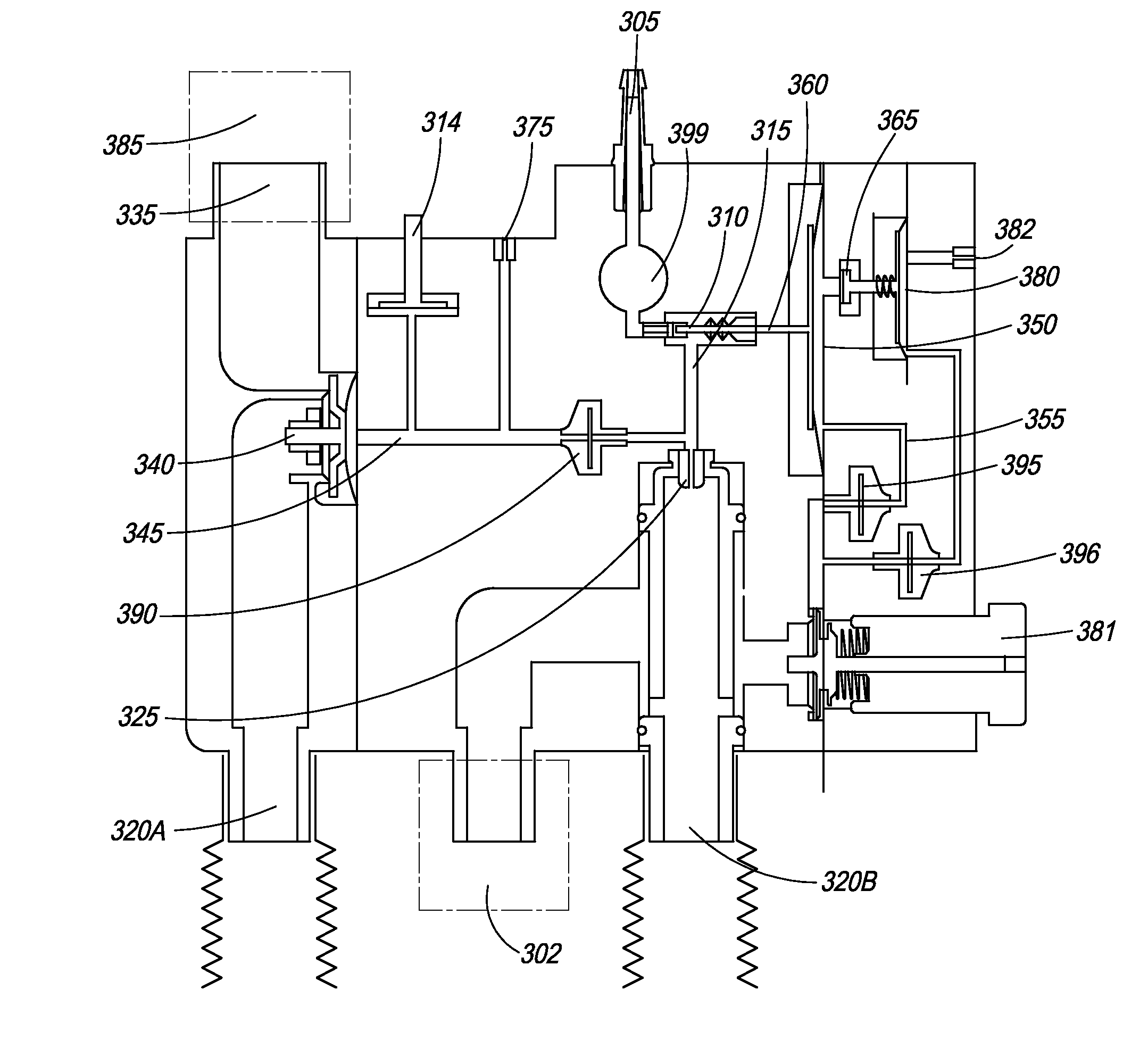
Figure 1 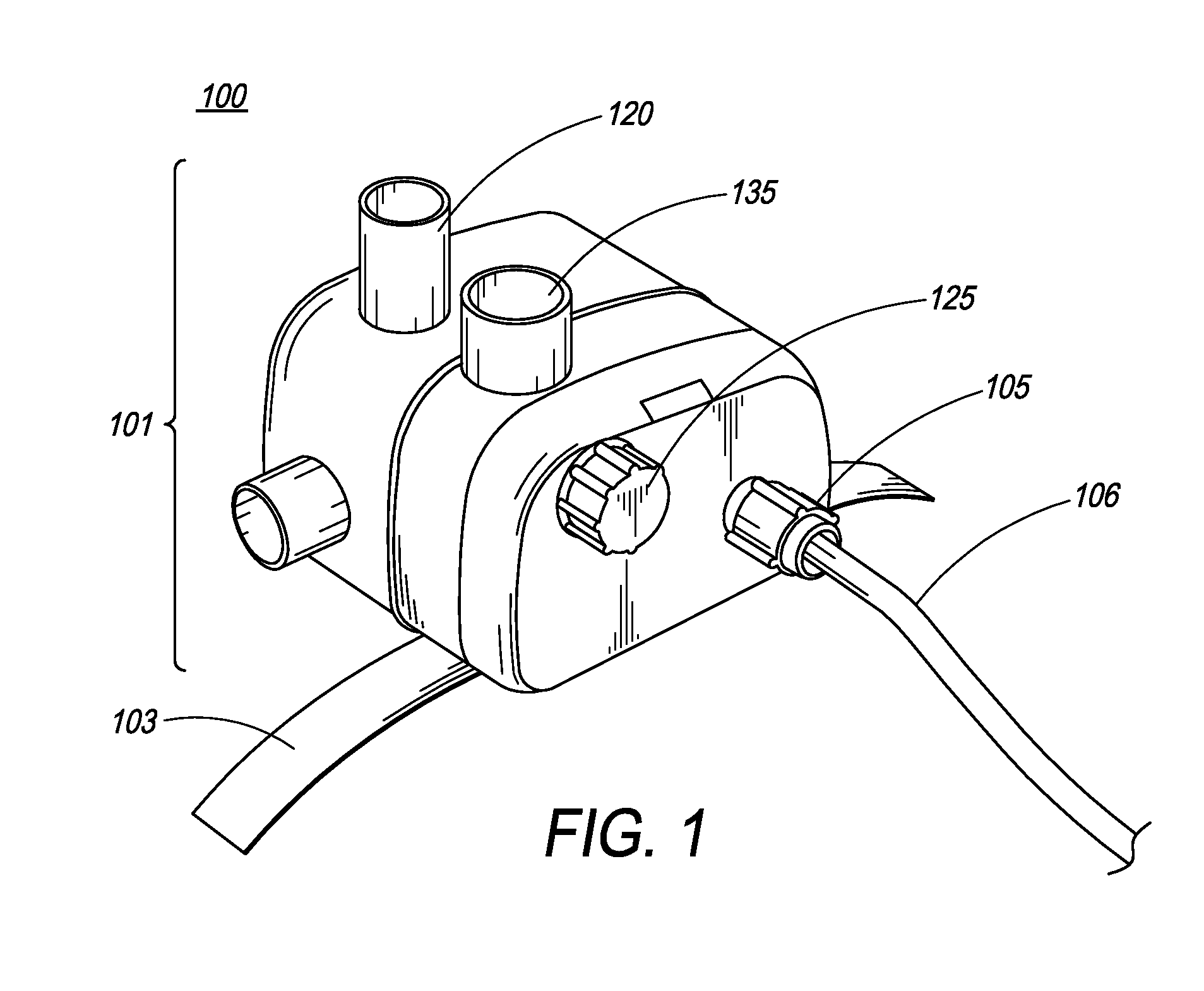
Figure 2 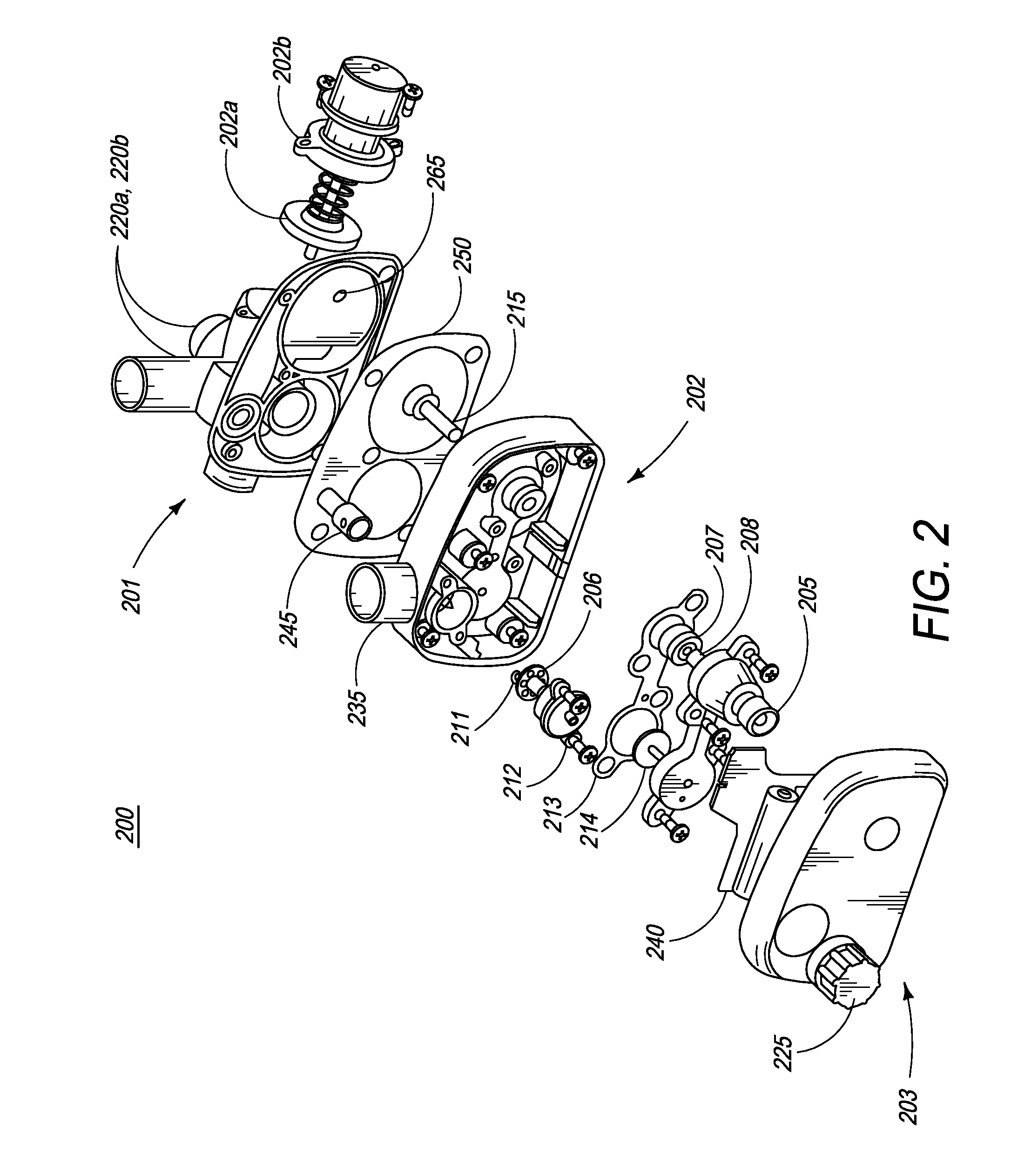
Figure 3
Abstract
Description
CROSS-REFERENCE
[0001] The present invention relies on, U.S. Provisional Patent Application No. 61 / 151,443, entitled “Ventilator for Rapid Response to Respiratory Disease Conditions” and filed on Feb. 10, 2009, for priority. Further, the present invention is a continuation-in-part of U.S. patent application Ser. No. 11 / 678,201, of the same title, filed on Feb. 23, 2007, which further relies on U.S. Provisional Patent No. 60 / 776,493, filed on Feb. 23, 2006 for priority and is a continuation-in-part to U.S. patent application Ser. No. 11 / 871,341, of the same title, filed on Oct. 12, 2007, which further relies on U.S. Provisional Patent No. 60 / 829,502, filed on Oct. 13, 2006, for priority. The specifications of all of the aforementioned applications are incorporated herein by reference in their entirety.FIELD OF THE INVENTION
[0002] The present invention relates generally to the field of ventilators, and, more specifically, to a ventilator system that addresses respiratory distress due to ...
Examples
first embodiment
[0077]FIG. 1 is an illustration of the ventilator of the present invention. In one embodiment, ventilator 100 comprises main housing 101 for housing ventilator components. In one embodiment, ventilator 100 is disposable. In another embodiment, ventilator device 100 is intended for single patient use. In yet another embodiment, ventilator 100 is intended for multiple-patient use, and thus, can be re-used. Preferably, ventilator devices intended for re-use are designed and manufactured such that they can be easily dismantled and cleaned.
[0078]In another embodiment, ventilator 100 is manufactured using materials that can be sterilized at a preferred sterilization temperature of 138° C., or the standard temperature of an autoclave. These materials include high temperature plastics, which require more advanced tooling. In one multiple-use embodiment, the ventilator is fabricated with a plastic material with a low melting point, thus allowing its manufacture with cost effective tooling.
[0...
second embodiment
[0133]In a second embodiment, the present invention is a ventilator system that has control and range of operation so that it meets the needs of ARDS patients in various stages of a compromised state to recovery.
[0134]In addition, the present invention, in a second embodiment, is directed towards a ventilator that is capable of responding to varying patient needs quickly and effectively.
[0135]In addition, the present invention is directed towards a ventilator that is capable of meeting the needs of the ARDS patient ranging from a critical state until the patient can be safely weaned from the ventilator. In one embodiment, the ventilator of the present invention is suitable for ARDS patients with a lung compliance range of:
[0136]a. Adult C10 to C90
[0137]b. Pediatric C5 to C50
[0138]Most patients suffering from respiratory failure in a pandemic setting will meet the criteria for acute lung injury (ALI) or acute respiratory distress syndrome (ARDS). Current patient guidelines support th...