
Production of hydrogen through oxidation of metal sulfides
a technology of metal sulfide and hydrogen, which is applied in the direction of chromium oxide/hydrate, tin oxide, niobium compounds, etc., can solve the problems of unavoidable nitrogen oxide formation, detrimental to efficiency, economic and environmental benefits, and achieve process efficiency and environmental benefits. , the effect of energy efficiency
Patent Information
- Authority / Receiving Office
- US · United States
- Patent Type
- Applications(United States)
- Current Assignee / Owner
- Publication Date
- 2012-02-09
- Estimated Expiration
- Not applicable · inactive patent
Smart Images
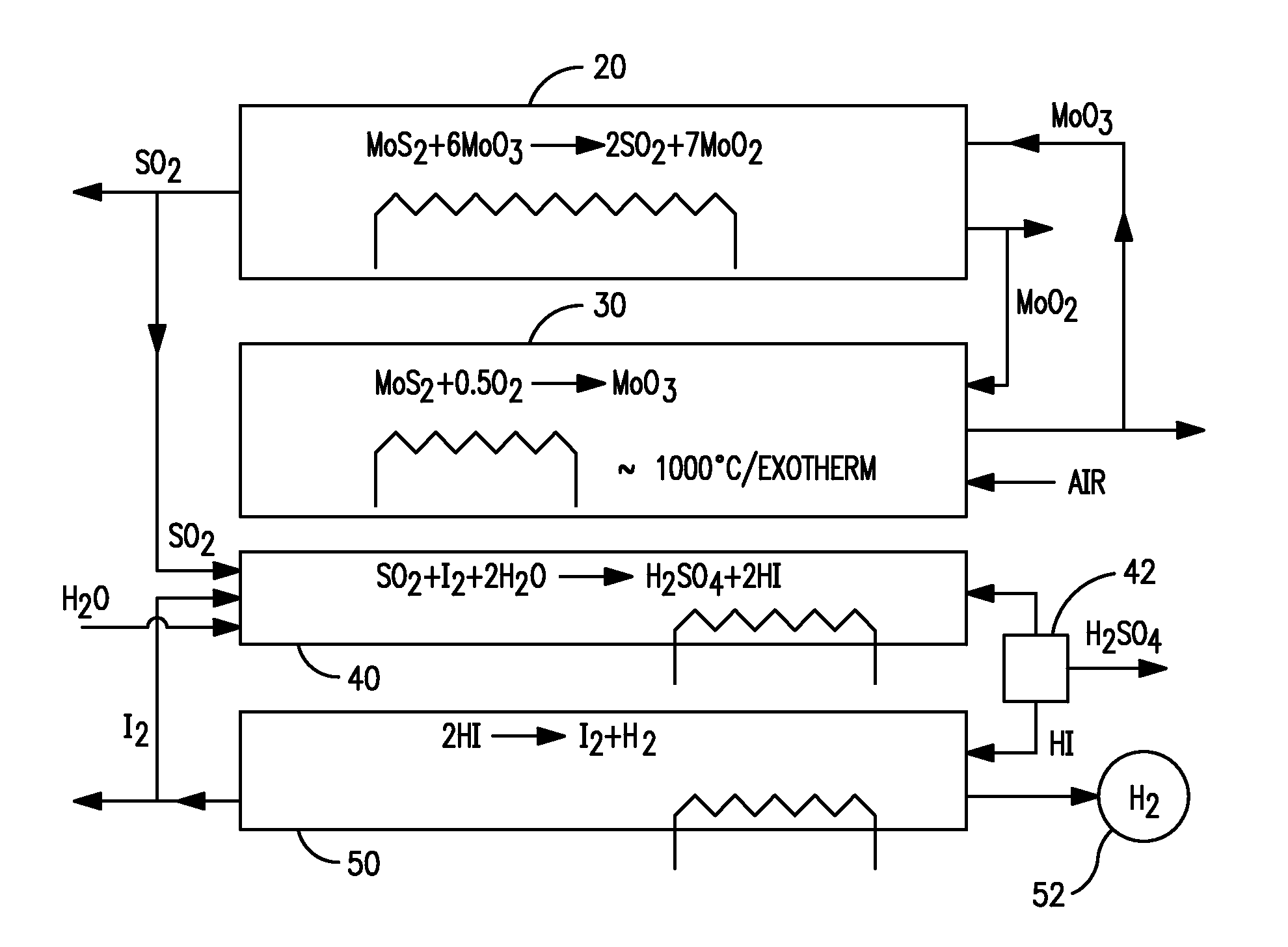
Figure 1 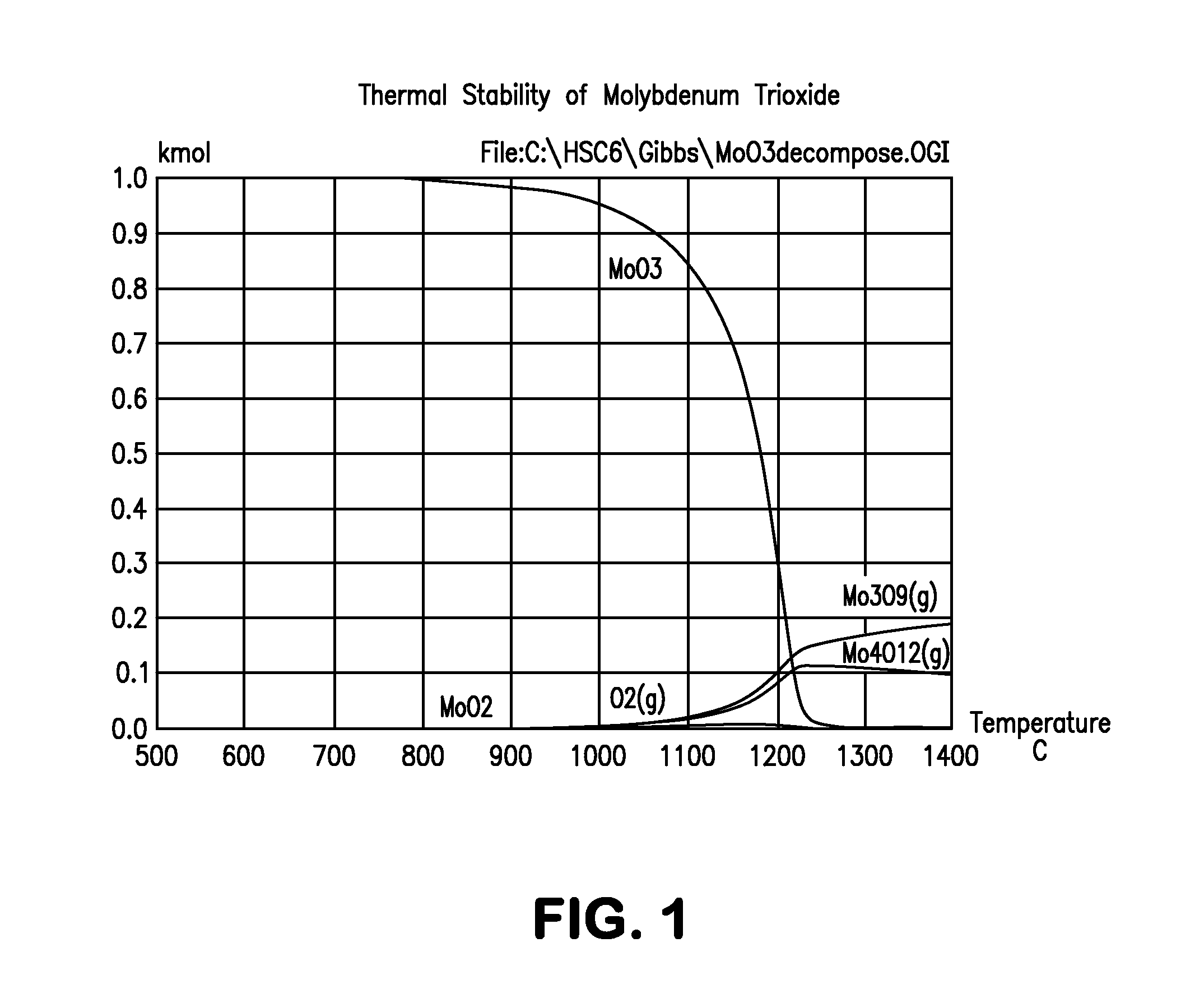
Figure 2 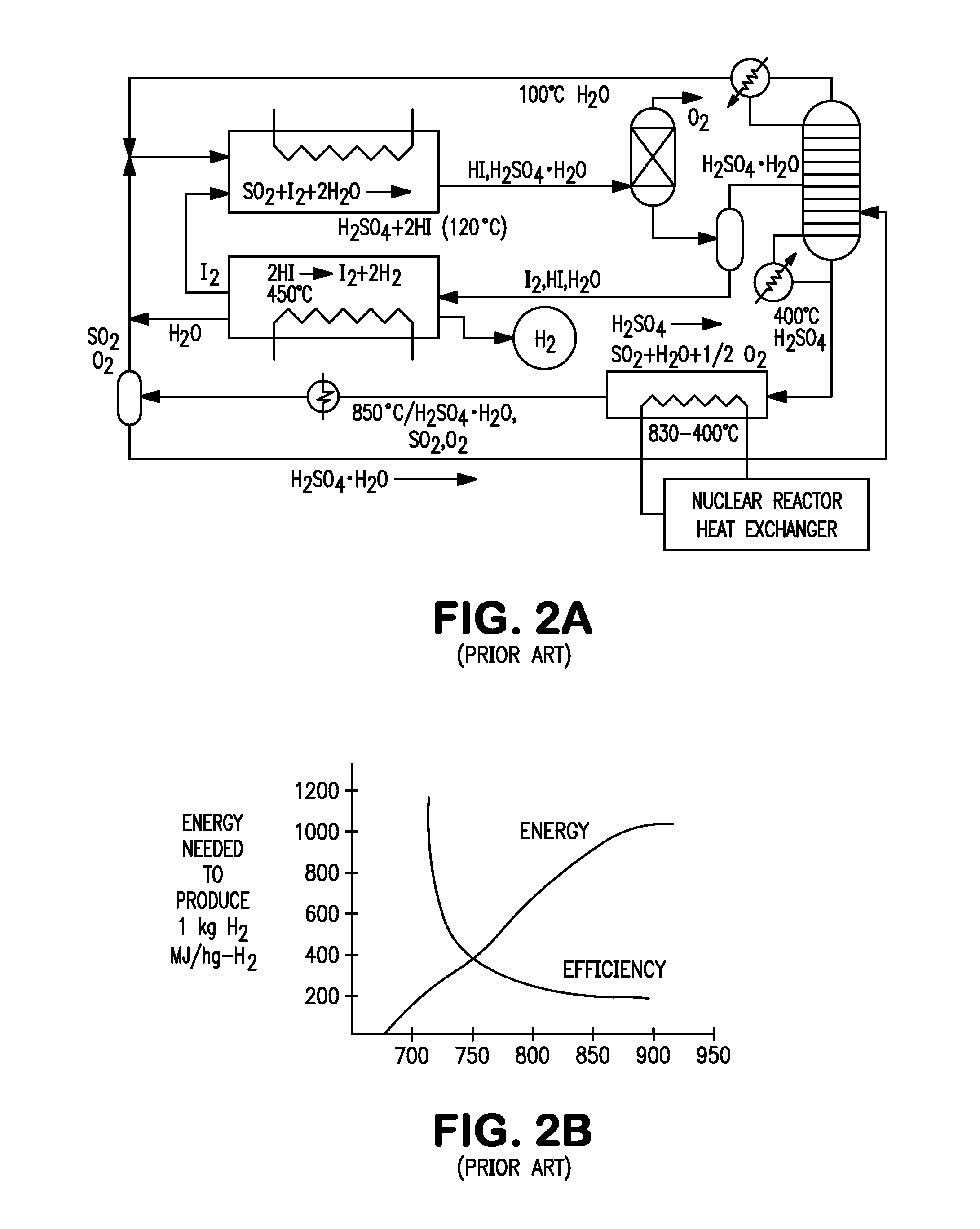
Figure 3
Abstract
Description
CROSS REFERENCE TO RELATED APPLICATIONS
[0001] This application is a continuation-in-part of the co-pending U.S. patent application of Lawrence F. McHugh, Ser. No. 12 / 148,397 ('397) filed Apr. 18, 2008, which has priority from the provisional application Ser. No. 60 / 992,559 filed Apr. 18, 2007, and is of common assignment with this application, the contents of all of which are incorporated herein by reference as though set out at length herein.FIELD AND BACKGROUND OF THE INVENTION
[0002] The present invention relates to a new thermochemical cycle (process and apparatus) for producing hydrogen through coupling the hydrogen cycle by way of hydroiodic acid dissociation to another thermochemical cycle for producing high energy-metal oxidation reactions of industrial scale and providing the sulfur dioxide needed for reaction with halogen to generate the halogen acid and sulfuric acid. The invention also relates to such metal oxidation reactions per se for conversion of metal sulfides to meta...
Examples
example
[0030]An example of a test version of the looping oxidation portion of the process to convert molybdenum oxide and sulfur dioxide was performed as follows: The equipment was essentially as in FIG. 3B. MoO3 of the following composition, wgt-% (Mo-63.8, Cu-0.21, C-0.01, S-0.01, Pb-0.01, P-0.01) and MoS2 of the following composition, wgt-% (Mo-59.5, Cu-0.05, Fe-0.14, Pb-0.01, Insol.-0.4, MoO3-0.017, H2O-0.0, Oil-0.02, MoS2-99.20) were screened to minus 20 mesh and were mixed in a ratio of 11b (0.453 kg) MoS2 to 5.94 lb (2.7 kg) MoO3 to achieve a 10% excess stoichiometric amount of MoO3. The material was fed into the 5-in. (127-mm) diameter 45 in. (1.14 m) long indirectly fired screw roaster (furnace 20). Nitrogen at a rate of 0.35 sft3 / min (9.91 / min) was fed counter currently as a sweep gas to remove the evolving SO2. Any entrained fines in the sweep gas were filtered out in a downstream baghouse.
[0031]The feeding-in rate was metered at 10 lb / h with a separate feed screw 2 in. (51 mm) ...