
Product Tracking and Alert System
a product tracking and alert system technology, applied in the field of automatic system for tracking vehicles, trailers, boats, etc., can solve the problems of repurchase of products and expensive propositions, and achieve the effects of improving accuracy and efficiency, and reducing labor and expens
Patent Information
- Authority / Receiving Office
- US · United States
- Patent Type
- Applications(United States)
- Current Assignee / Owner
- Publication Date
- 2012-05-24
- Estimated Expiration
- Not applicable · inactive patent
Smart Images
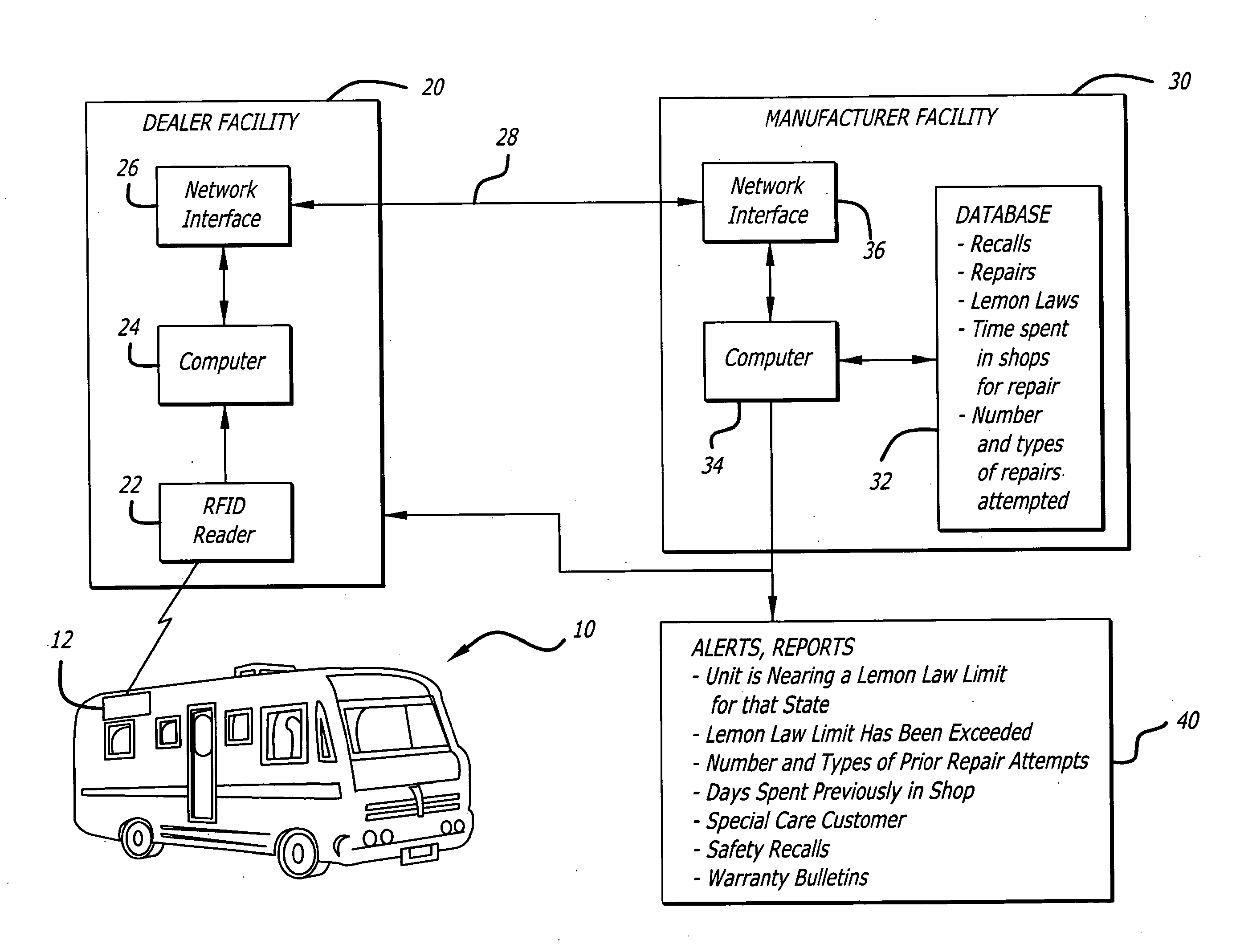
Figure 1 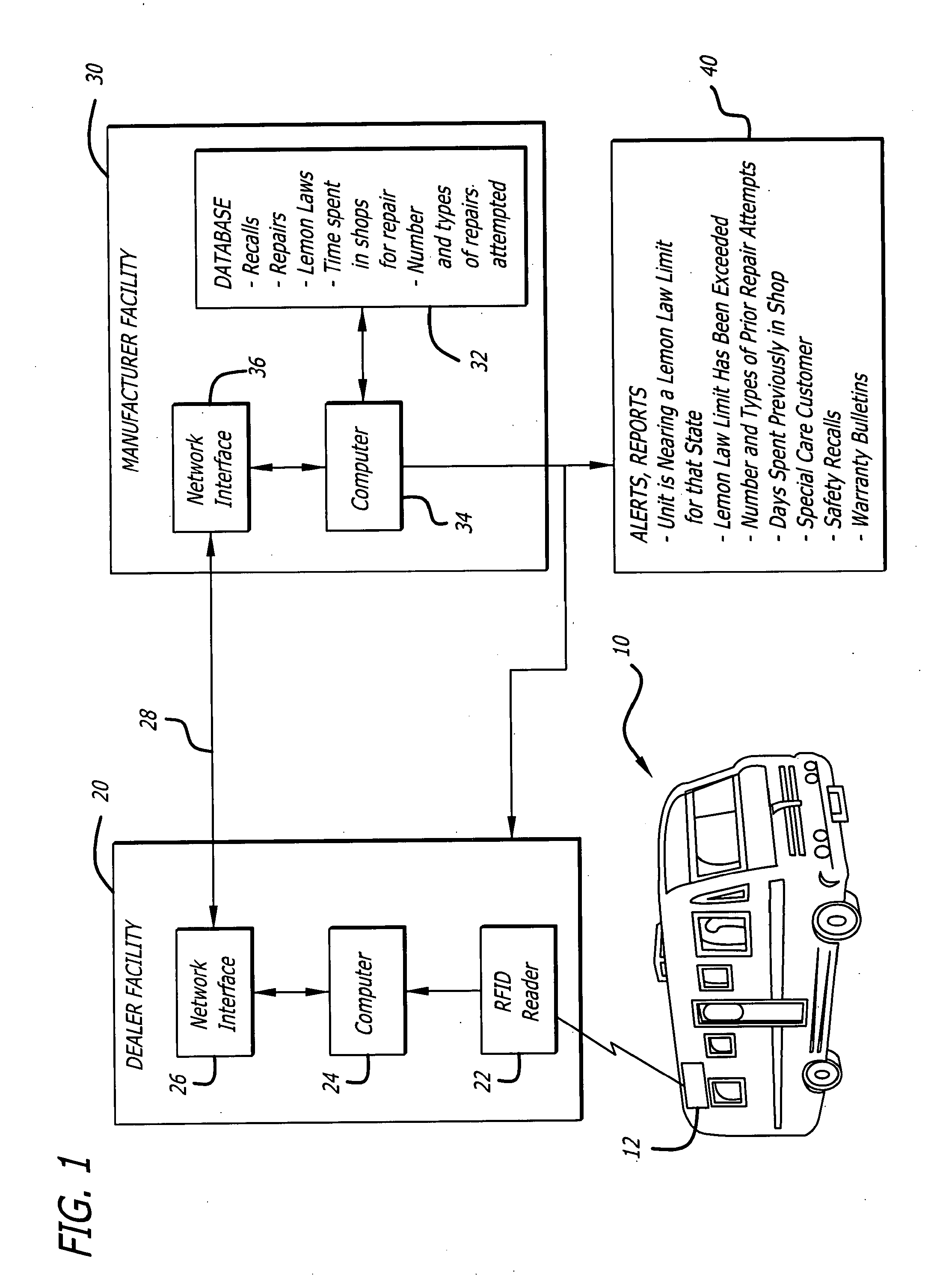
Figure 2 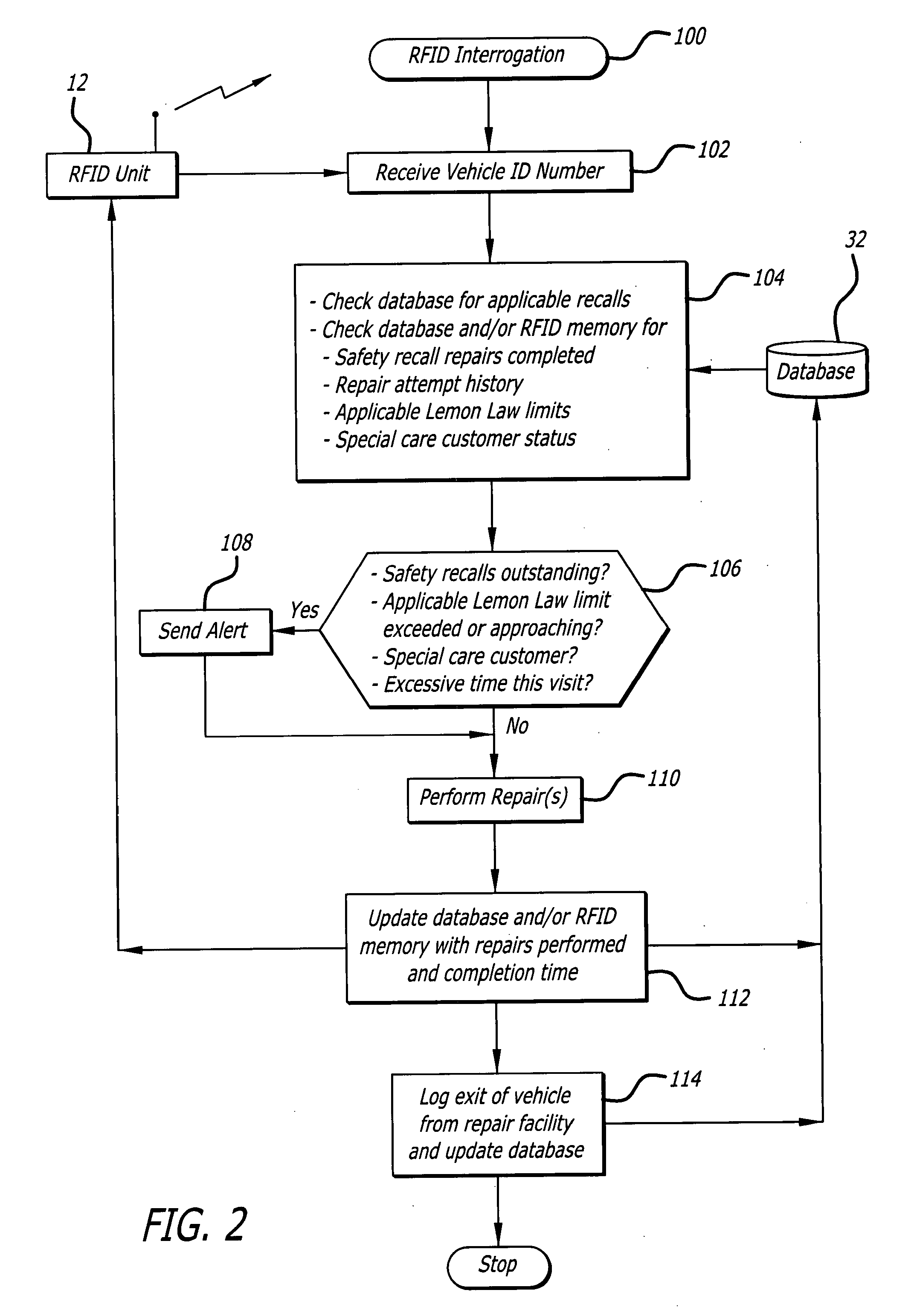
Figure 3
Abstract
Description
CROSS-REFERENCE TO RELATED APPLICATIONS
[0001] This application claims priority from U.S. Provisional Patent Application No. 60 / 837,275 filed Aug. 10, 2006.BACKGROUND OF THE INVENTION
[0002] 1. Field of the Invention
[0003] This invention relates to the field of vehicle, trailer, equipment and boat tracking. More particularly, this invention relates to the field of an automated system for tracking vehicles, trailers, and boats, and for providing certain information about those products to their manufacturers, dealers, lenders and users.
[0004] 2. Description of Related Art
[0005] Radio frequency identification (RFID) technology is a well-known technology that utilizes a small radio frequency receiver / transmitter (transponder) to respond to a corresponding interrogator (reader) unit, and send back a signal that uniquely identifies the object to which the RFID device is attached. In this way an object can be automatically and uniquely identified at a distance using only radio frequency interrog...
Examples
Embodiment Construction
[0030]I. Monitoring Repair Time, Attempts, and Other Relevant Repair Parameters
[0031]Consumer protection laws, including state Lemon Laws, vary from state to state. Depending on the state, the laws may cover only consumer vehicles rather than vehicles used purely for commercial purposes, and may cover automobiles, passenger trucks, recreational vehicles, motorcycles, and / or other types of vehicle's. The triggering condition may be that a vehicle has experienced a certain number of business or calendar days at manufacturer's authorized repair facility such as an automobile dealership, or has experienced more than a specified number of warranty repairs, or has experienced at least a specified number of repair attempts to fix a serious safety hazard, or some combination of the above. Generally, at least some portion of the repair attempts must have occurred during the manufacturer's warranty period.
[0032]FIG. 1 is a simplified system diagram showing an illustrative embodiment of the sy...