
Lactation Suppression Garment
a technology of lactation suppression and garments, applied in the direction of protective garments, brassieres, garments, etc., can solve the problems of small glands and milk in the breasts eventually drying up, and achieve the effect of maximum adjustability
Patent Information
- Authority / Receiving Office
- US · United States
- Patent Type
- Applications(United States)
- Current Assignee / Owner
- Publication Date
- 2012-06-07
- Estimated Expiration
- Not applicable · inactive patent
Smart Images
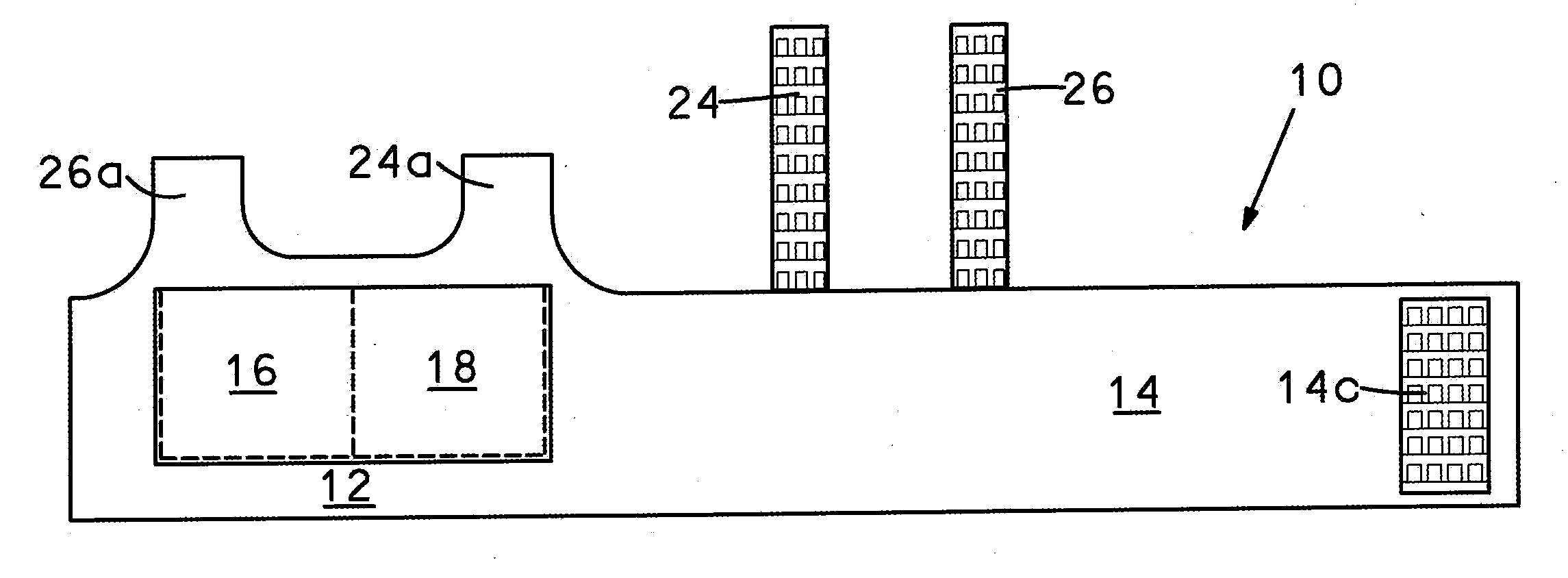
Figure 1 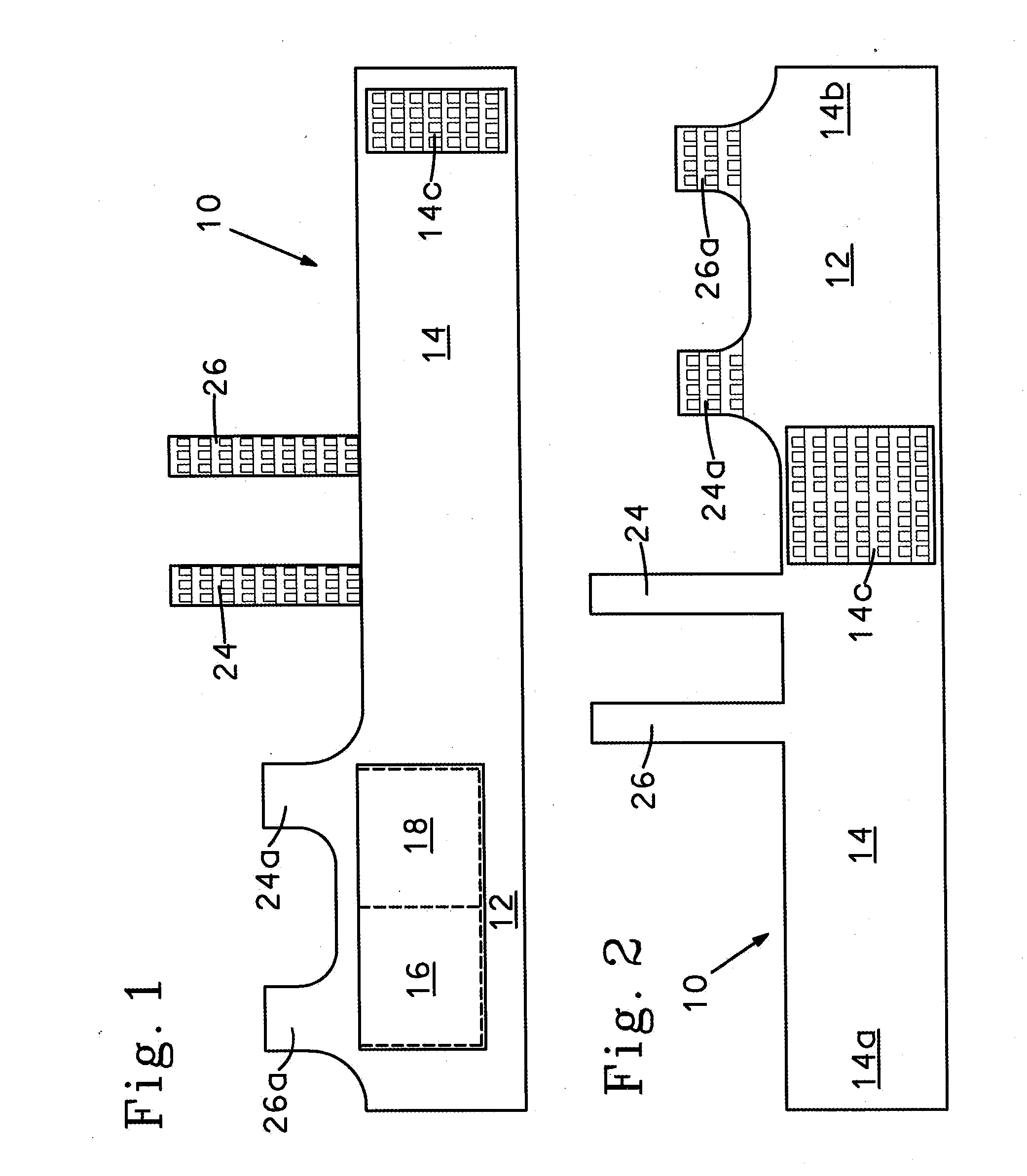
Figure 2 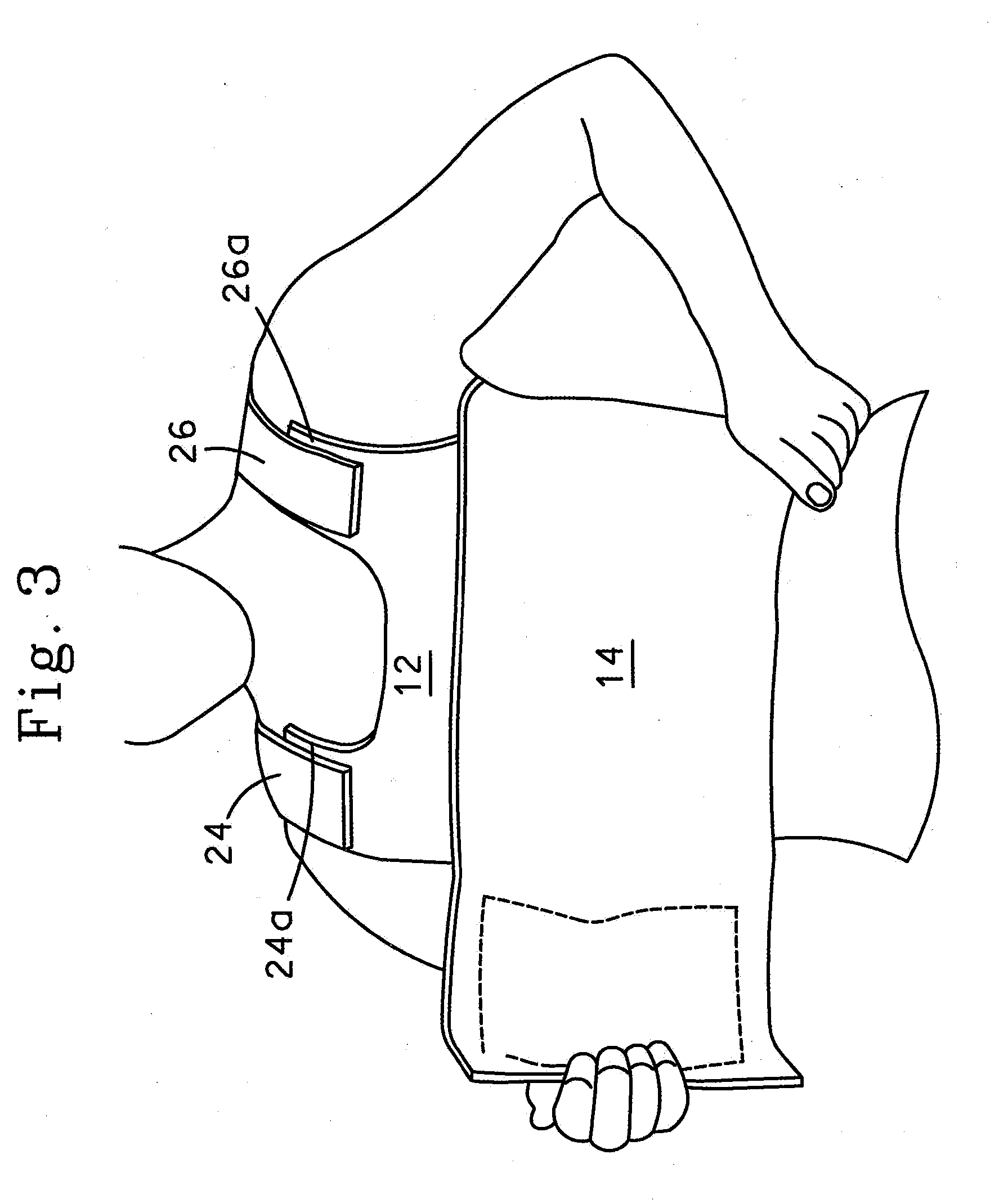
Figure 3
Abstract
Description
RELATED APPLICATIONS
[0001] This application claims priority of Provisional Application Ser. No. 61 / 420,510, filed Dec. 7, 2010.BACKGROUND OF THE INVENTION
[0002] There are few options available for women who wish to stop nursing or not nurse at all. Women are left to wear uncomfortable ill-fitting sports bras and use ice packs to try and alleviate swelling and pain associated with the lactation suppression process. Sports bras do not help women effectively because as the milk production decreases the breasts become smaller rapidly. To effectively support engorged breasts and to expedite the weaning process, a lactation suppression garment must fit the breasts as tightly as possible while maintaining comfort. Infection due to stasis of milk in the breasts is also a common problem while weaning.BRIEF SUMMARY
[0003] The lactation suppression garment disclosed in the exemplary embodiments herein is designed to be completely adjustable, allowing the perfect fit throughout the weaning process....
Examples
Embodiment Construction
[0021]Referring now to the drawings, FIG. 1 shows one form of a lactation suppression garment 10 constructed in accordance with the principles of the present invention. In the specific embodiment shown, the garment 10 includes two sections, a breast coverage section 12 and a wrap section 14. The breast coverage section 12 is configured to be worn on and at least partially cover a human breast, as shown in the illustration of FIG. 3. The wrap section 14 has an elongated configuration with at least one end being securable at a fixed location relative to the breast coverage section 12. In the specific embodiment shown in FIG. 1, the wrap section 14 is fixedly secured to a lateral side of the breast coverage section, and extends laterally outwardly therefrom. The wrap section includes at least one free end, the end 14a in the illustration of FIG. 1. The free end 14a of the wrap section 14 includes one component of a hook and loop fastener 14c (see FIG. 3), so as to allow the wrap sectio...