
Detecting Missing Rules with Most General Conditions
a rule and general condition technology, applied in the field of rule management systems, can solve the problems of difficult to detect the conditions of missing rules, unable to transform the most general form of missing rules, and missing rules arise, so as to reduce the number of tests to be evaluated.
Patent Information
- Authority / Receiving Office
- US · United States
- Patent Type
- Applications(United States)
- Current Assignee / Owner
- Publication Date
- 2013-06-27
- Estimated Expiration
- Not applicable · inactive patent
Smart Images
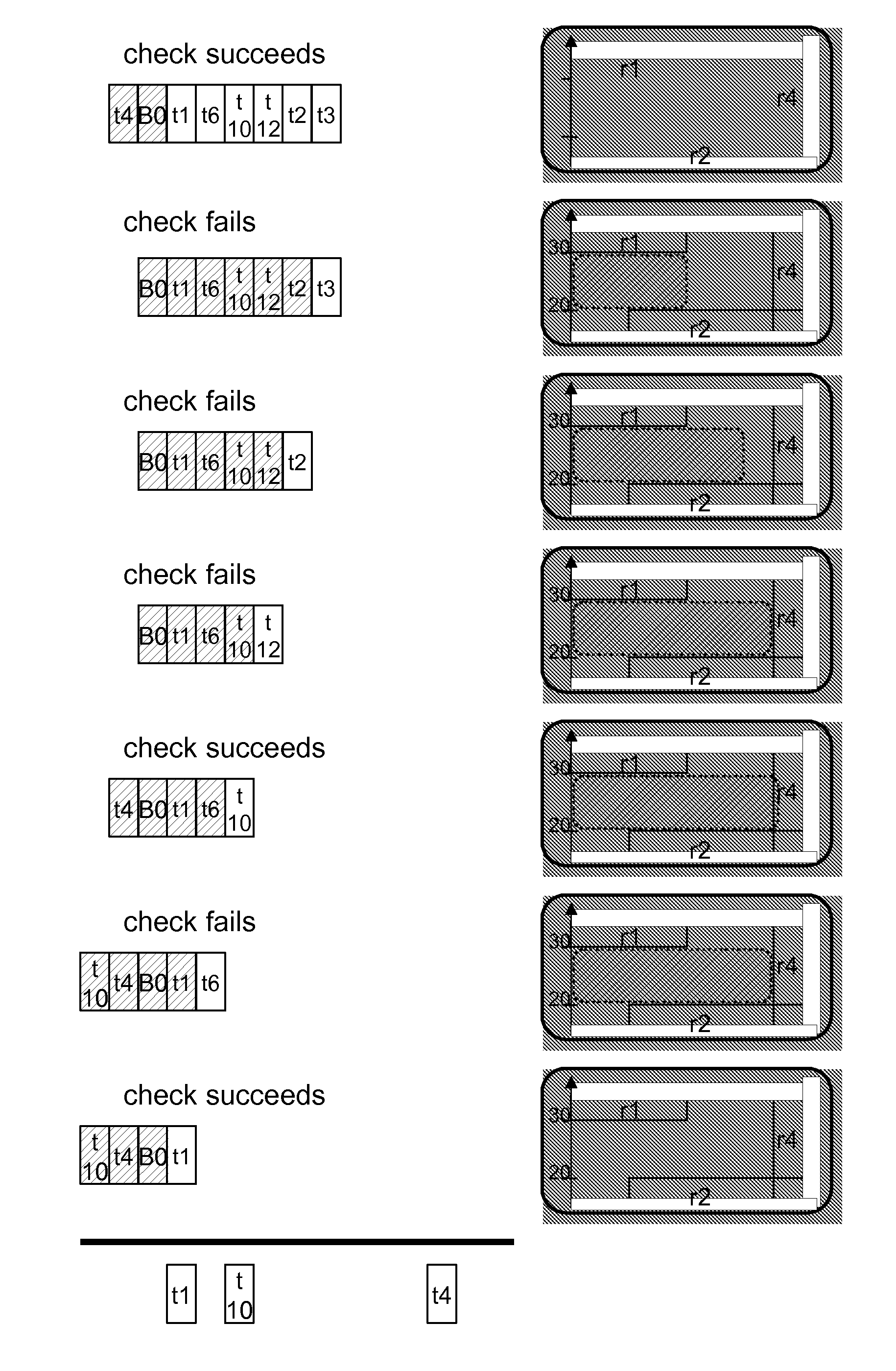
Figure 1 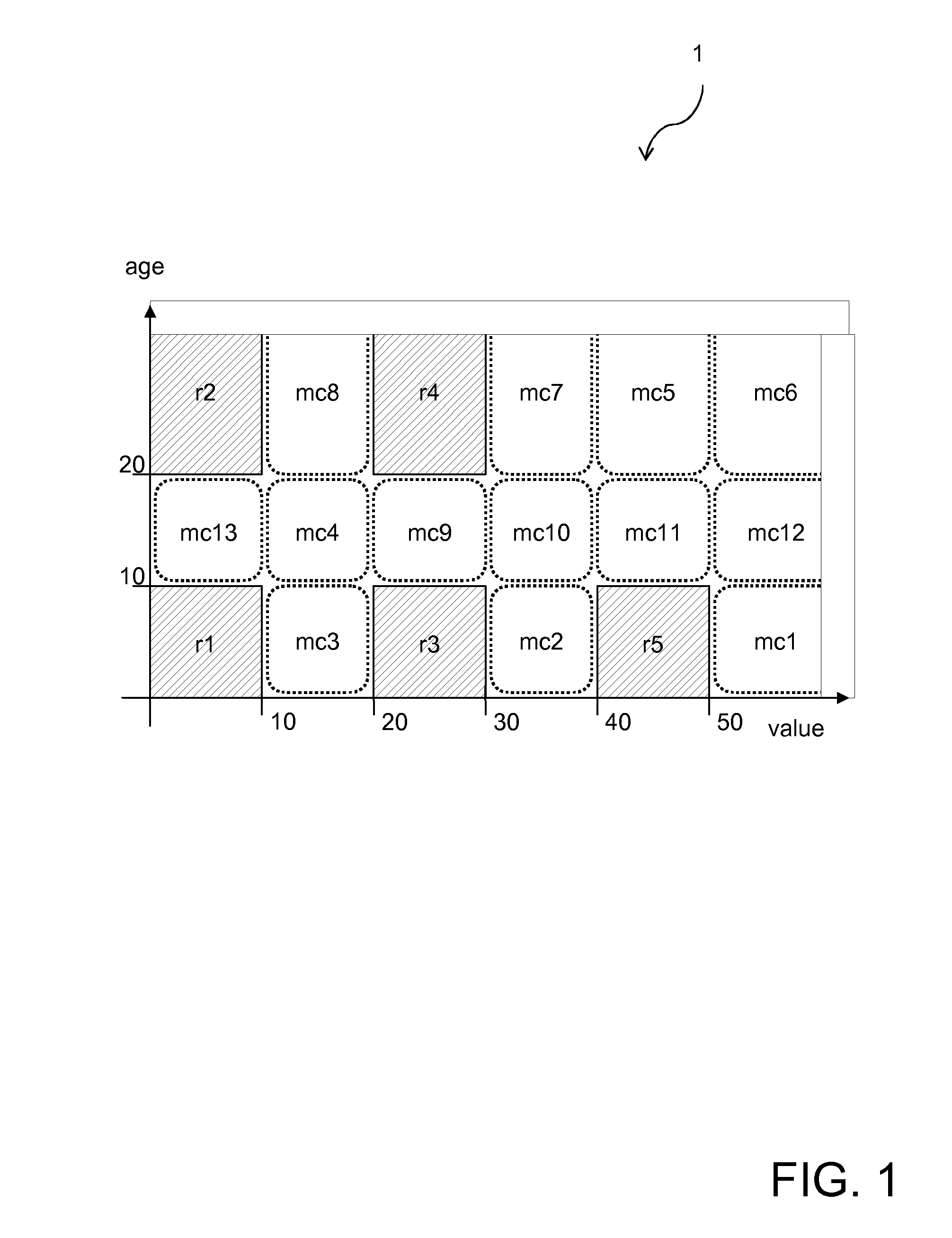
Figure 2 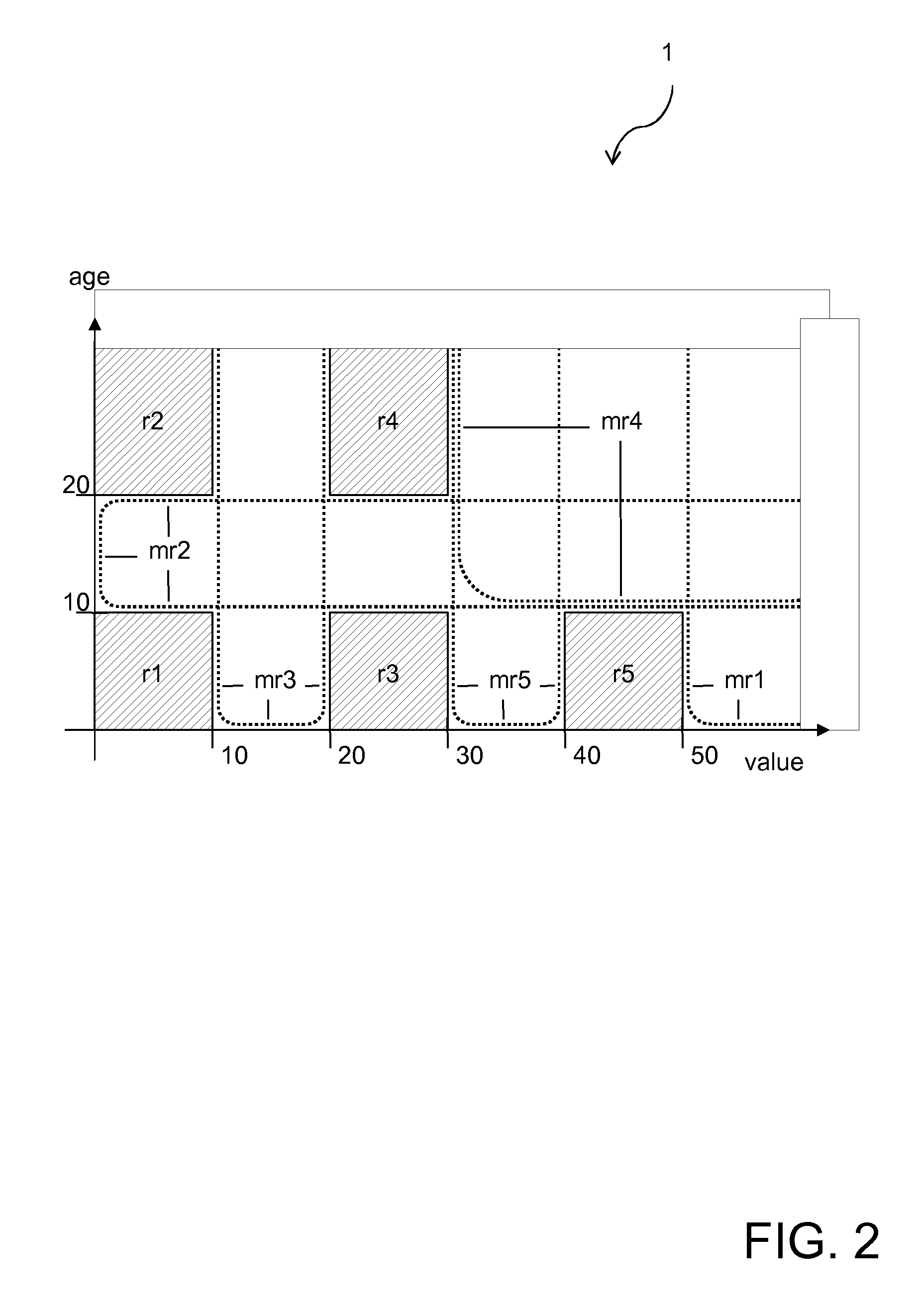
Figure 3
Abstract
Description
BACKGROUND
[0001] 1. Field
[0002] The present invention generally relates to rule management systems and specifically to a method and a system for detecting missing rules with most general conditions in a rule project having a given scope with a fixed number of objects of a given type.
[0003] 2. Description of the Related Art
[0004] Business Rule Management (BRM) technology relates to the area of decision-making automation in business problems such as loan approval, insurance claim processing or customer fidelity programs. Respective Business Rule Management Systems (BRMS) are implemented to work with rule projects. BRMS allow rule edition in a controlled natural-like language, which makes it easy to use without specific knowledge on generating rules. The rules can be kept in different versions in a rule repository. The BRMS further allows the execution of the rules by a rule engine, which also performs a rule analysis for detecting conflicting rules, redundant rules, and missing rules. Ano...
Examples
Embodiment Construction
[0049]Referring now to FIG. 1, a first exemplary rule project 1 with one object, which refers to a customer and has two attributes, which are by way of example age and value, can be seen. This is used to describe the general idea of the present invention.
[0050]The rule project 1 comprises a set of five rules r, which are denoted in this exemplary rule project 1 by r1 to r5, since they can be distinguished by their coverage of the objects. The rule project 1 involves single rules r with an arbitrary nesting of disjunctions, conjunctions, and negations. One example of these rules r is given below:[0051]if (the age of the customer is at least 20 and the value of the customer is at most 10) or (the age of the customer is at most 10 and the value of the customer is at least 20 and the value of the customer is at most 30) then set the category of the customer to “Gold”.
[0052]As those complex conditions are difficult to understand and to maintain, it is preferable to split disjunctive cond...