
Method for Mass Spectrometer with Enhanced Sensitivity to Product Ions
a mass spectrometer and product ion technology, applied in mass spectrometers, stability-of-path spectrometers, separation processes, etc., can solve the problems of product ions formed in the collision cell to drain out of the cell slowly or possibly even stall, interference between adjacent channels, etc., to achieve the effect of increasing the instrument sensitivity
Patent Information
- Authority / Receiving Office
- US · United States
- Patent Type
- Applications(United States)
- Current Assignee / Owner
- Publication Date
- 2015-06-25
- Estimated Expiration
- Not applicable · inactive patent
Smart Images
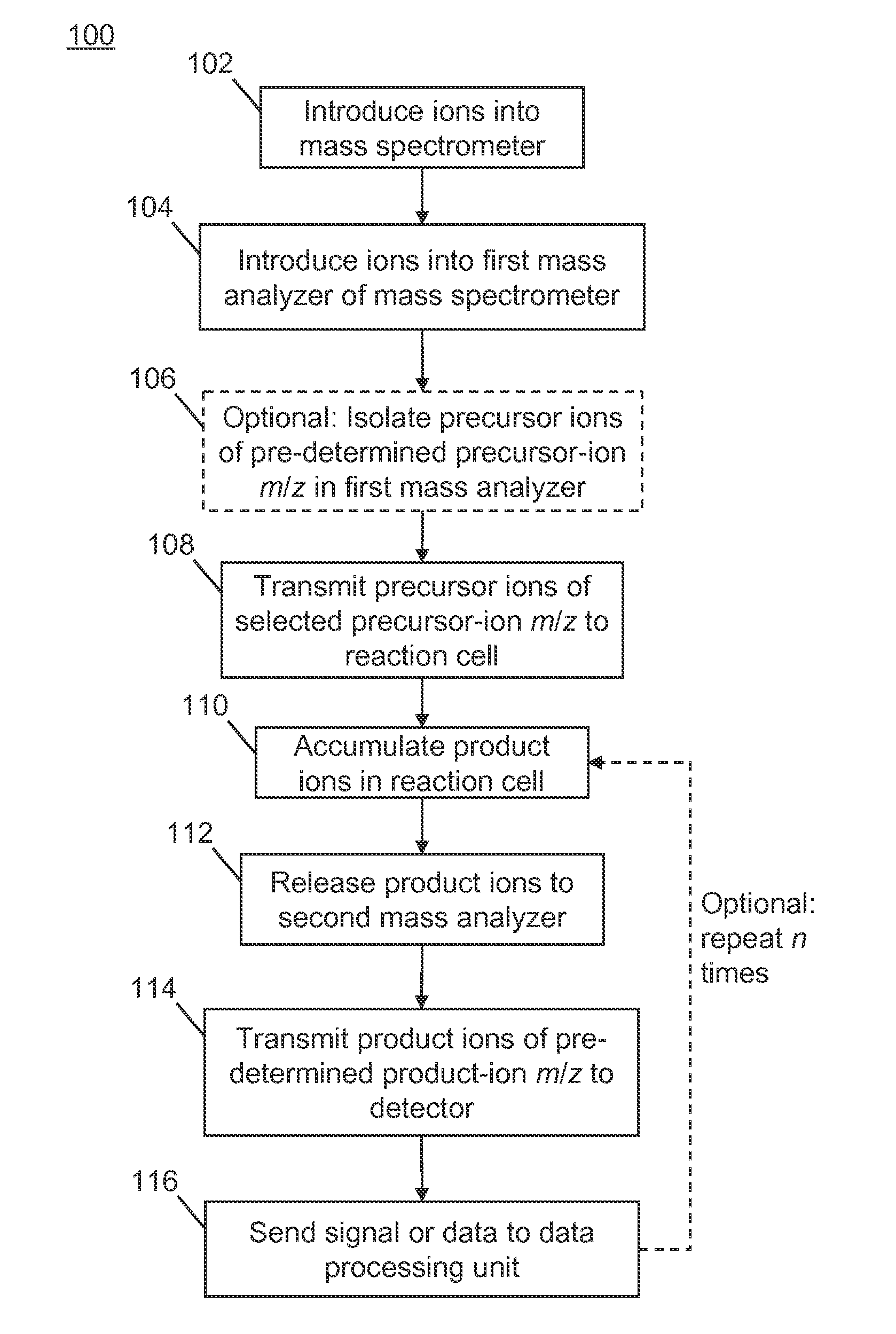
Figure 1 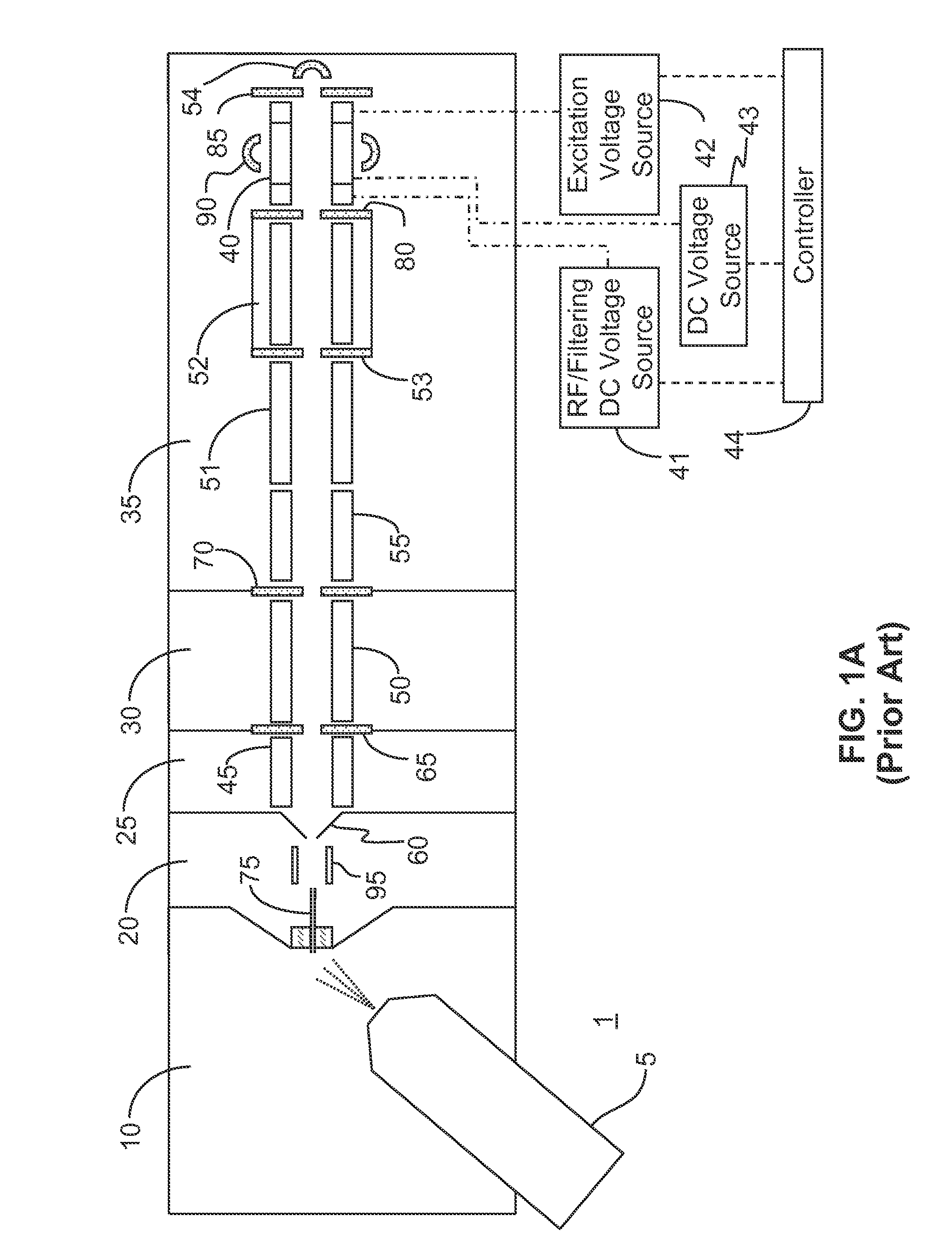
Figure 2 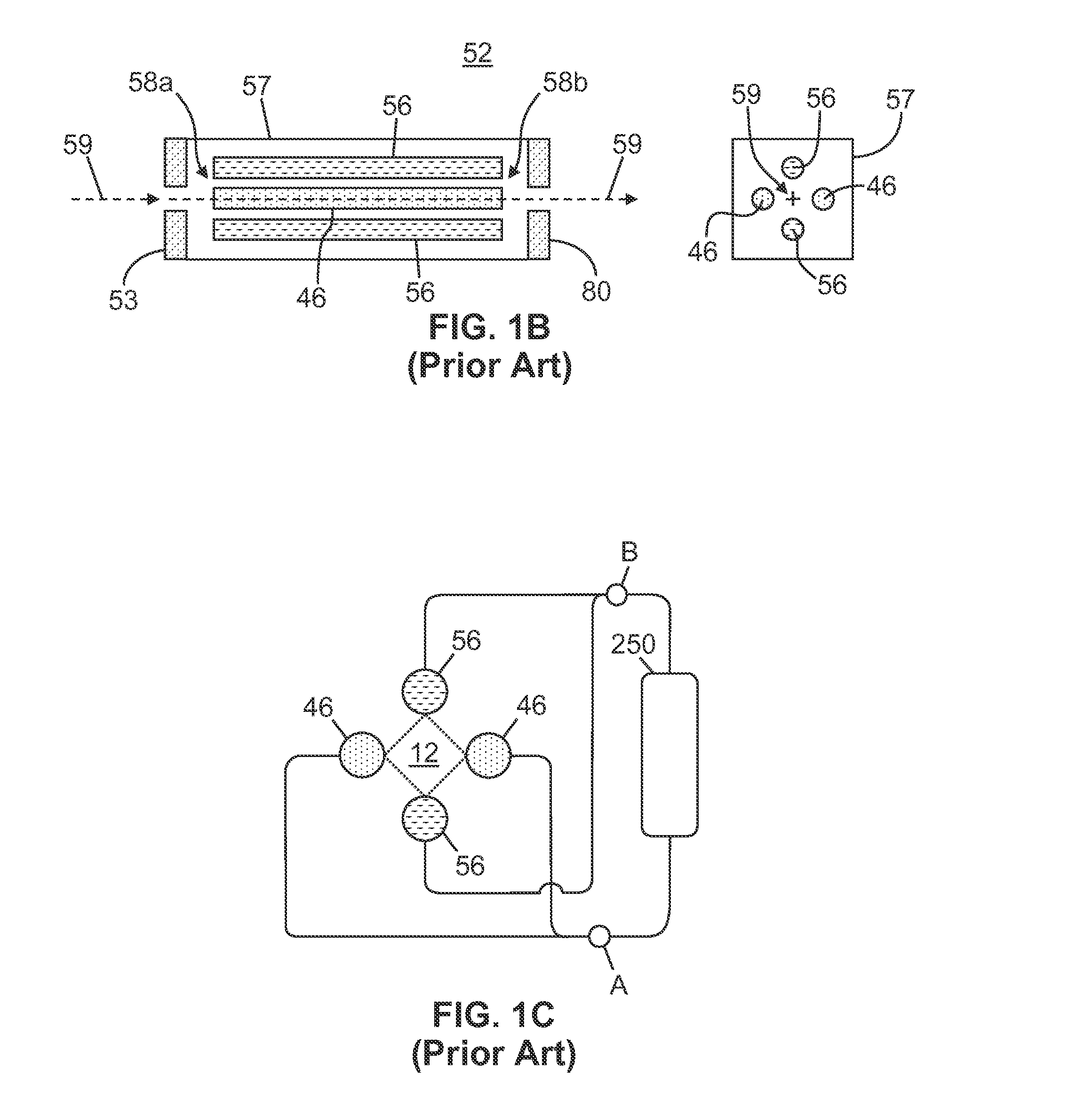
Figure 3
Abstract
Description
FIELD OF THE INVENTION
[0001] This invention relates generally to mass spectrometry and mass spectrometers and, in particular, to tandem mass spectrometry methods and apparatus.BACKGROUND OF THE INVENTION
[0002] The constant evolution of analytical instrumentation consists in achieving faster data acquisition and improved instrument sensitivity. In the field of mass spectrometry, structural elucidation of ionized molecules is often carried out using a tandem mass spectrometer, where a particular precursor ion is selected at the first stage of analysis or in the first mass analyzer (MS-1), the precursor ions are subjected to fragmentation (e.g. in a collision cell), and the resulting fragment (product) ions are transported for analysis in the second stage or second mass analyzer (MS-2). The method can be extended to provide fragmentation of a selected fragment, and so on, with analysis of the resulting fragments for each generation. This is typically referred to an MSn spectrometry, with...
Examples
examples
[0054]Proof of concept experiments were performed on a triple quadrupole instrument commercially provided by Thermo Fisher Scientific™ of Waltham, Mass. USA. For the purpose of demonstrating the signal increase, the removal pulse (the electrical signal that is ordinarily transmitted to the ion reaction cell 52 to effect ion release from the collision cell at the end of a conventional measurement period) was cancelled during the inter-scan time and the inter-scan time was set to be as long as one hundred milliseconds. In order to prevent cross talk and to confirm the validity and reproducibility of the accumulation effect, the accumulation and detection steps were repeated many times, with dummy transition-monitoring events introduced as necessary between such accumulation and detection steps.
[0055]All experimental results were obtained and processed in the following manner. Every data acquisition period after release of product ions from the reaction cell consisted of three segments...