
Method for preparing aromatic polyamide porous membrane and aromatic polyamide porous membrane prepared thereby
a technology of aromatic polyamide and porous membrane, which is applied in the field of preparation of aromatic polyamide porous membrane, can solve the problems of high production cost and environmental pollution, complex separation of additives, and difficult recycling of additives, and achieves easy control, good dissolving ability, and easy yield
Patent Information
- Authority / Receiving Office
- US · United States
- Patent Type
- Applications(United States)
- Current Assignee / Owner
- Publication Date
- 2019-03-28
Smart Images
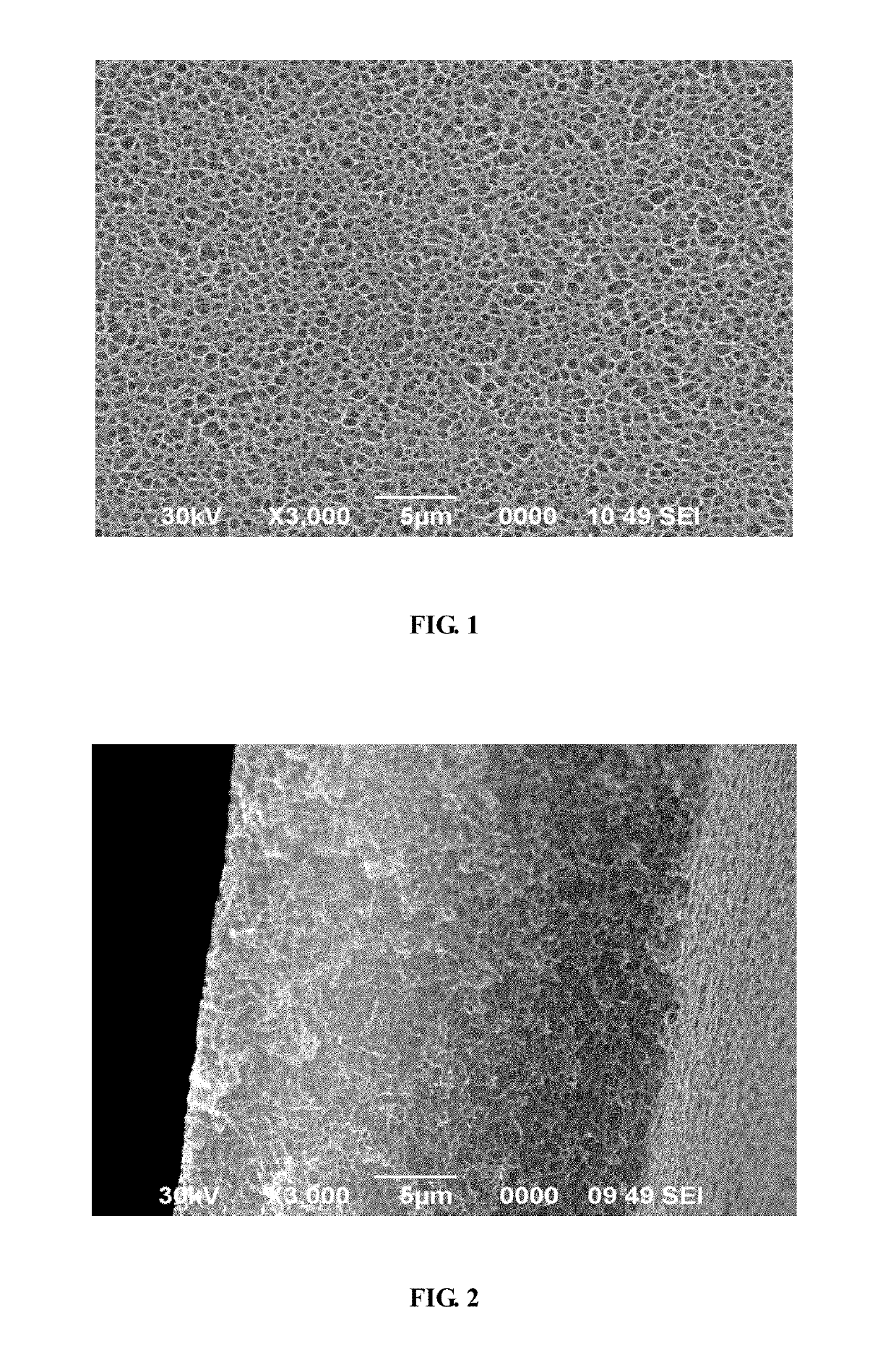
Figure 1 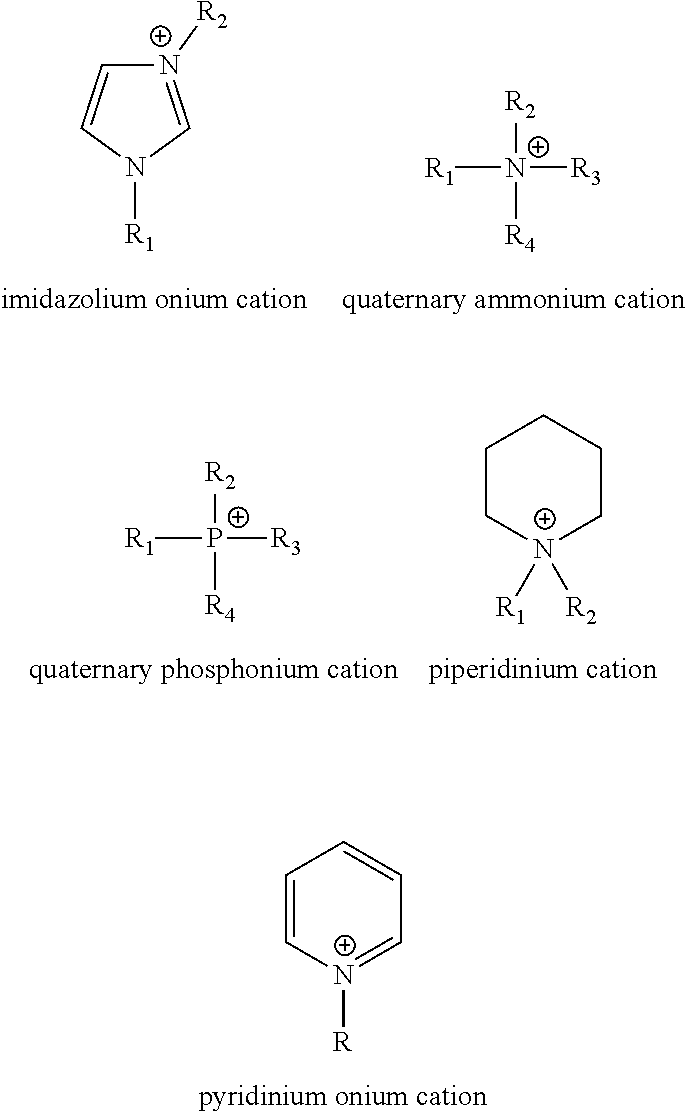
Figure 2
Abstract
Description
FIELD OF THE INVENTION
[0001] The present disclosure relates to a method for preparing an aromatic polyamide porous membrane and an aromatic polyamide porous membrane prepared by the method above.BACKGROUND OF THE INVENTION
[0002] Conventionally, porous membranes are prepared by thermally induced phase separation (TIPS) process or nonsolvent induced phase separation (NIPS) process. During the thermally induced phase separation process, crystallization performance of a thermoplastics polymer is utilized. In detail, under high temperature, the thermoplastics polymer, together with a diluent agent which has a high boiling point and low molecular-weight, forms a homogeneous casting solution; when temperature decreases, solid-liquid phase separation or liquid-liquid phase separation occurs. After that, the diluent agent is removed, thereby yields a polymer porous membrane. Meanwhile, as to the nonsolvent induced phase separation process, the polymer porous membrane is prepared during a polym...
Examples
embodiment 1
[0040]First, polymerizing in a reaction tank to obtain a poly (m-phenylene isophthalamide) solution 2000 g, wherein DMAC acting as the solvent, and a mass percentage concentration of the polymer is 20%. Second, mixing 800 g of 1-methyl-3-butyl imidazolinium hydrochloride with 240 g of anhydrous ethanol in a stirred tank to obtain an ionic liquid solution. Third, injecting the ionic liquid solution and the poly (m-phenylene isophthalamide) solution into a twin-screw extruder at a mass ratio of 1:1.8, and mixing dispersively therein to obtain a uniform mixture. After that, extruding the uniform mixture at a die-head by a melt pump into a coagulation bath to obtain a thin-film, wherein the coagulation bath being a mixed solvents of water and DMAC, a mass fraction of water is 50%, a temperature of the coagulation bath being 80° C. and a gel time thereof being 20 seconds. Next, pulling the thin-film into an extraction tank, wherein a temperature of the extraction tank being 30° C. And th...
embodiment 2
[0041]First, polymerizing by twin-screw to obtain a poly (m-phenylene isophthalamide) solution 2400 g, wherein DMAC acting as a solvent, and a mass percentage concentration of the polymer is 20%. Second, mixing 1000 g of methyl triethylammonium acetate and 200 g of deionized water uniformly in a stirred tank to obtain an ionic liquid solution, wherein the stirred tank being heated to 50° C. Third, injecting the obtained ionic liquid solution and the poly (m-phenylene isophthalamide) solution separately into a twin-screw extruder at a mass ratio of 1:1.5, and mixing dispersively therein to obtain a uniform mixture. After that, extruding the uniform mixture at a die-head by a melt pump into a coagulation bath to obtain a thin-film, wherein the coagulation bath being a mixed solvents of water and DMAC, a mass fraction of water in the coagulation bath is 20%, a temperature of the coagulation bath being 60° C. and a gel time thereof being 5 seconds. Next, pulling the thin-film into an ex...
embodiment 3
[0042]Embodiment 3 is similar with embodiment 2, and the difference lies in that, a mass of deionized water which is mixed with methyl triethylammonium acetate is 50 g, and the permeability of the porous membrane is 110 sec. / 100 CC.