
Bicyclic peptide ligands specific for pd-l1
a peptide ligand and bicyclic technology, applied in the field of polypeptides, can solve the problems of reducing the conformational flexibility of the cyclic structure, and achieve the effect of preventing, suppressing or treating a disease or
Patent Information
- Authority / Receiving Office
- US · United States
- Patent Type
- Applications(United States)
- Current Assignee / Owner
- Publication Date
- 2022-03-24
Smart Images
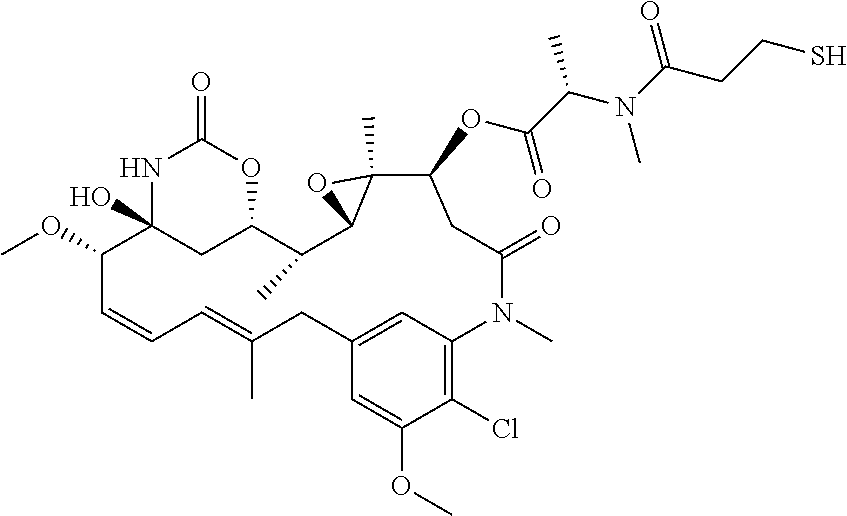
Figure 1 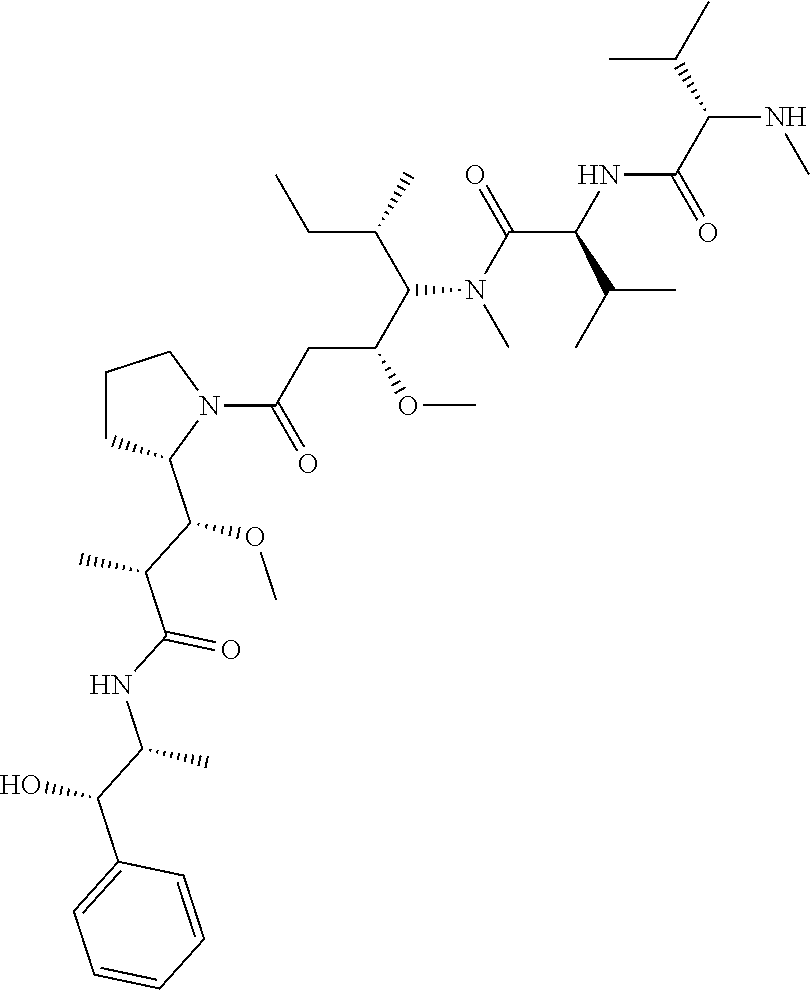
Figure 2
Abstract
Description
FIELD OF THE INVENTION
[0001] The present invention relates to polypeptides which are covalently bound to aromatic molecular scaffolds such that two or more peptide loops are subtended between attachment points to the scaffold. In particular, the invention describes peptides which are high affinity binders of PD-L1. The invention also includes drug conjugates comprising said peptides, conjugated to one or more effector and / or functional groups, to pharmaceutical compositions comprising said peptide ligands and drug conjugates and to the use of said peptide ligands and drug conjugates in preventing, suppressing or treating a disease or disorder mediated by PD-L1.BACKGROUND OF THE INVENTION
[0002] Cyclic peptides are able to bind with high affinity and target specificity to protein targets and hence are an attractive molecule class for the development of therapeutics. In fact, several cyclic peptides are already successfully used in the clinic, as for example the antibacterial peptide van...
Examples
examples
[0168]Materials and Methods
[0169]Peptide Synthesis
[0170]Peptide synthesis was based on Fmoc chemistry, using a Symphony peptide synthesiser manufactured by Peptide Instruments and a Syro II synthesiser by MultiSynTech. Standard Fmoc-amino acids were employed (Sigma, Merck), with appropriate side chain protecting groups: where applicable standard coupling conditions were used in each case, followed by deprotection using standard methodology. Peptides were purified using HPLC and following isolation they were modified with 1,3,5-tris(bromomethyl)benzene (TBMB, Sigma). For this, linear peptide was diluted with H2O up to ˜35 mL, ˜500 μL of 100 mM TBMB in acetonitrile was added, and the reaction was initiated with 5 mL of 1 M NH4HCO3 in H2O. The reaction was allowed to proceed for ˜30 −60 min at RT, and lyophilised once the reaction had completed (judged by MALDI). Following lyophilisation, the modified peptide was purified as above, while replacing the Luna C8 with a Gemini C18 column (...