
Carrier and attachment method for load-bearing fabric
a carrier and fabric technology, applied in the field of carrier and fabric, can solve the problems of fabric unraveling or separating along the periphery of the fabric, the use of expensive looms and stretching machinery, and the inability of conventional attachment methods to provide the necessary strength and durability to withstand the forces applied to the fabric, etc., to achieve the effect of simple and effective, strong and durable interconnection, and relatively simple and inexpensive manufacturing of carrier and fabri
Patent Information
- Authority / Receiving Office
- US · United States
- Patent Type
- Patents(United States)
- Current Assignee / Owner
- Publication Date
- 2005-05-31
- Estimated Expiration
- Not applicable · inactive patent
Smart Images
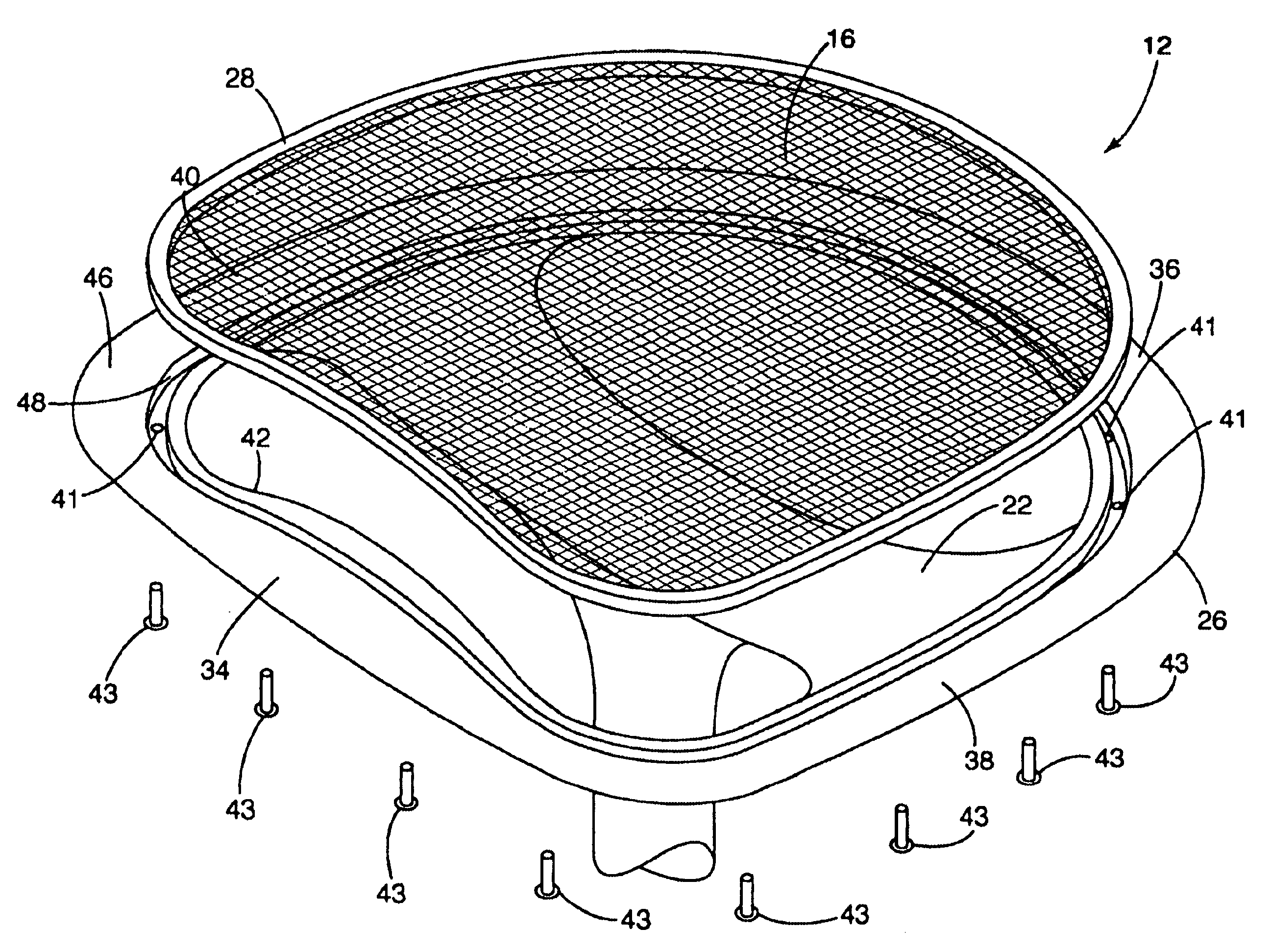
Figure 1 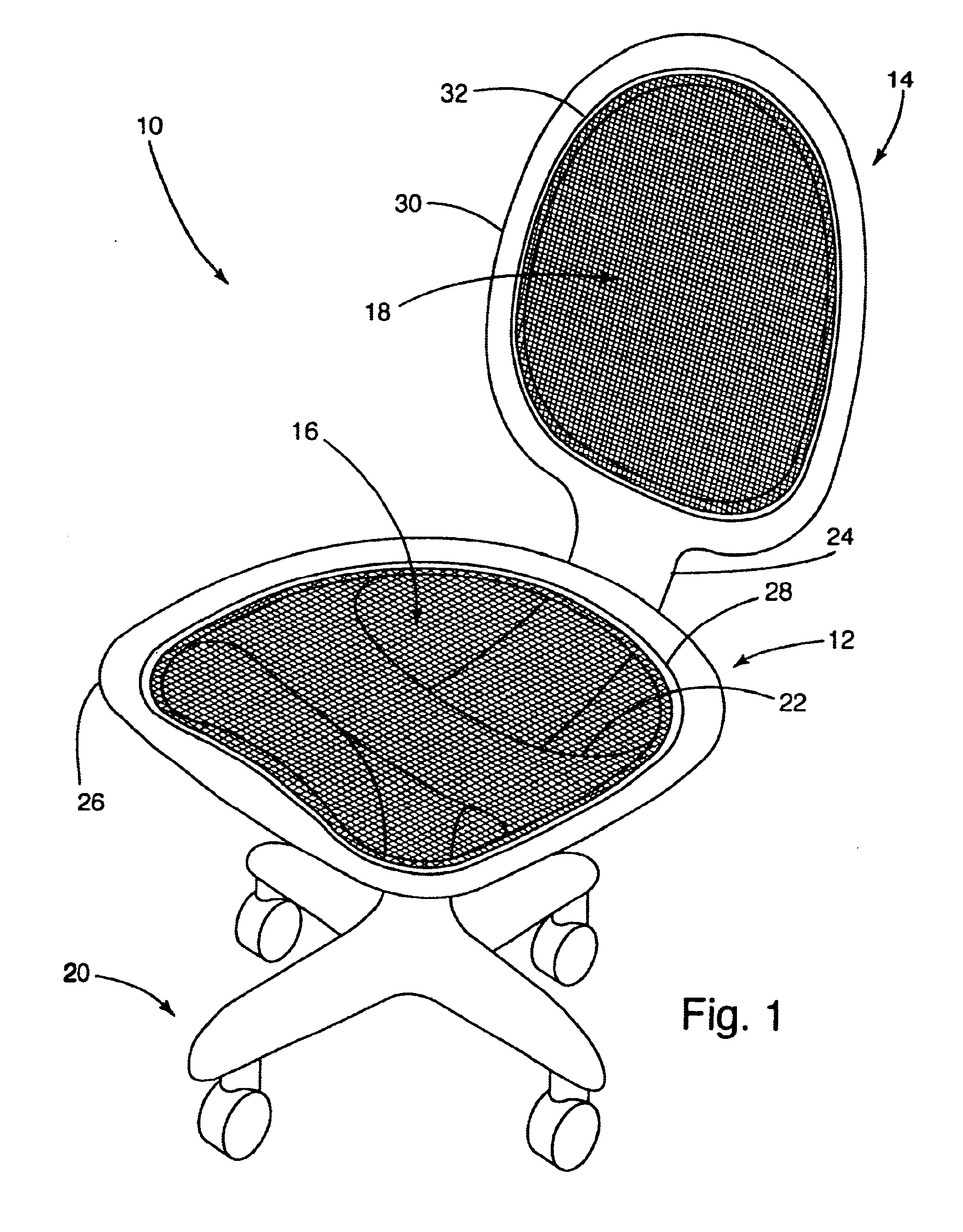
Figure 2 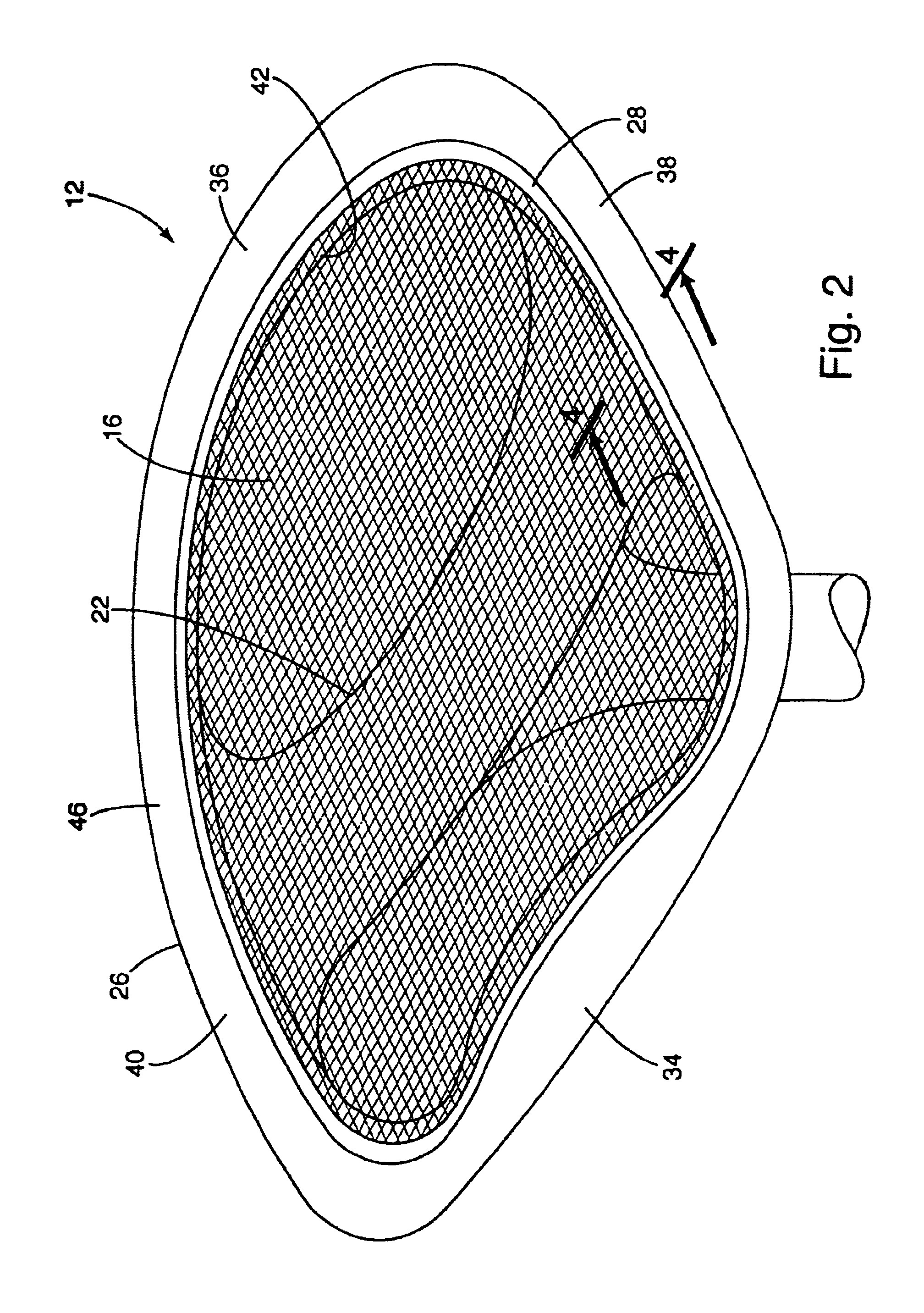
Figure 3
Abstract
Description
[0001] This application is a continuation-in-part of U.S. application Ser. No. 10 / 342,602, filed Jan. 15, 2003 which is a division of U.S. application Ser. No. 09 / 666,624, filed Sep. 20, 2000 (now U.S. Pat. No. 6,540,950).BACKGROUND OF THE INVENTION
[0002] The present invention relates to load-bearing fabric, and more particularly to components, tools and methods for securing a load-bearing fabric to a support structure.
[0003] The use of load-bearing fabrics continues to grow dramatically in various industries, including the automotive, office and home seating industries. The term “load-bearing fabric” is commonly used to refer to a class of high strength, highly durable textiles that are typically woven from elastomeric monofilaments and conventional yarns. Some of today's load-bearing fabrics have greater strength and durability characteristics than spring steel and other conventional load bearing materials. In addition to their strength and durability characteristics, load-bearing fa...
Examples
Embodiment Construction
[0053]For purposes of disclosure, and not limitation, the present invention is described in connection with an office chair 10 having load-bearing fabric that forms the seat and back of the chair. The present invention is well-suited for use in a wide variety of other applications incorporating load-bearing fabric, such as other furniture applications, keyboard trays, mouse trays and cots. In the following description, the terms “inner,”“outer,”“inwardly,”“outwardly,”“upper” and “lower” are used to refer to directions relative to the geometric center of the fabric. Additionally, the word “expand” means to stretch, deform or otherwise increase the size of the object; the word “stretch” means to expand primarily through longitudinal elongation; and the word “deform” means to expand primarily through deflection or bending.
[0054]An office chair manufactured in accordance with a preferred embodiment of the present invention is shown in FIG. 1, and generally designated 10. The office chai...