
Magnetic nanoparticles
a nanoparticle and magnetic technology, applied in the field of magnetic nanoparticles, can solve the problems of difficult use of colloid, affecting blood flow, and nanoparticles are often chemically unstabl
Patent Information
- Authority / Receiving Office
- US · United States
- Patent Type
- Applications(United States)
- Current Assignee / Owner
- Publication Date
- 2006-10-19
- Estimated Expiration
- Not applicable · inactive patent
Smart Images
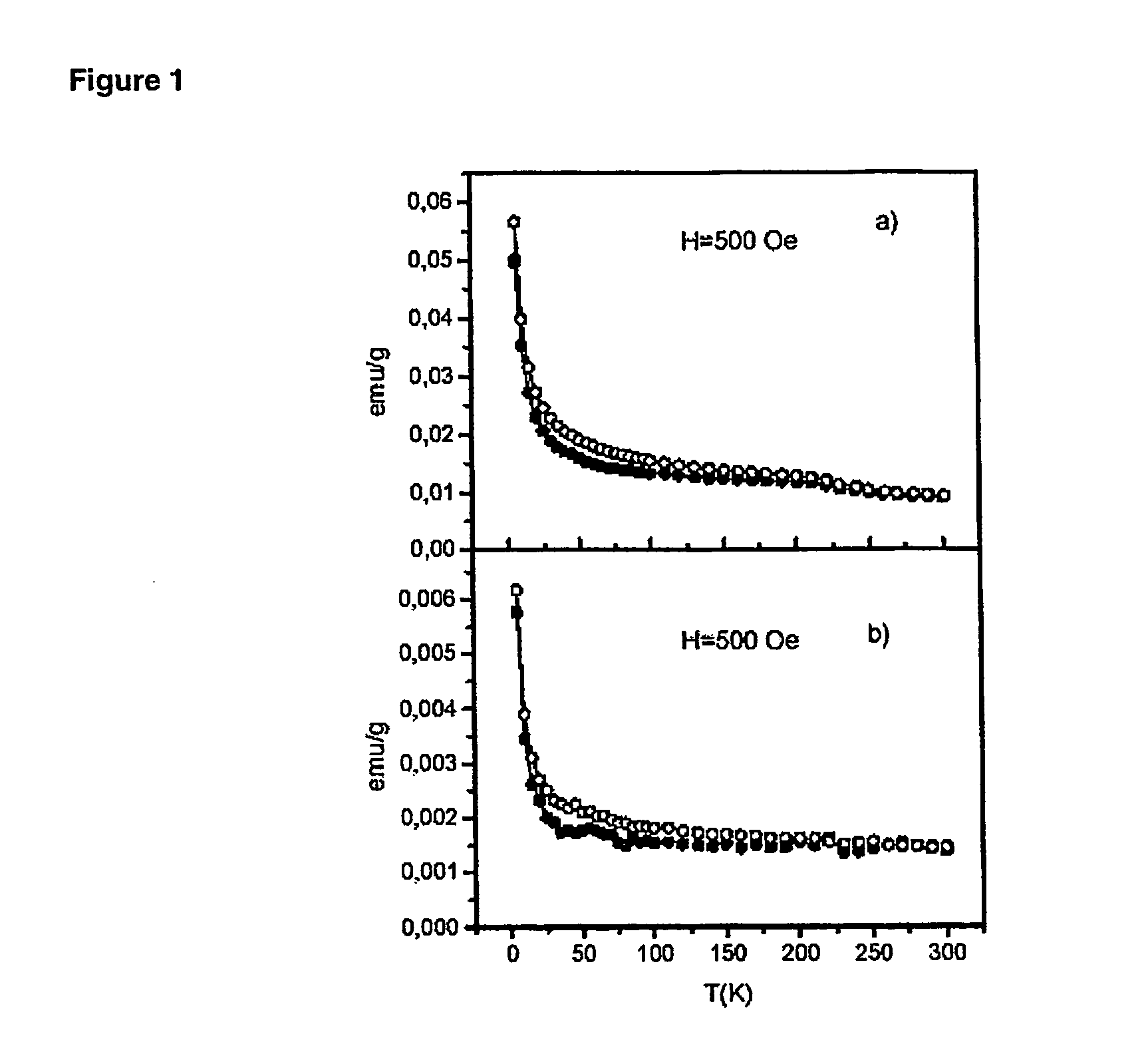
Figure 1 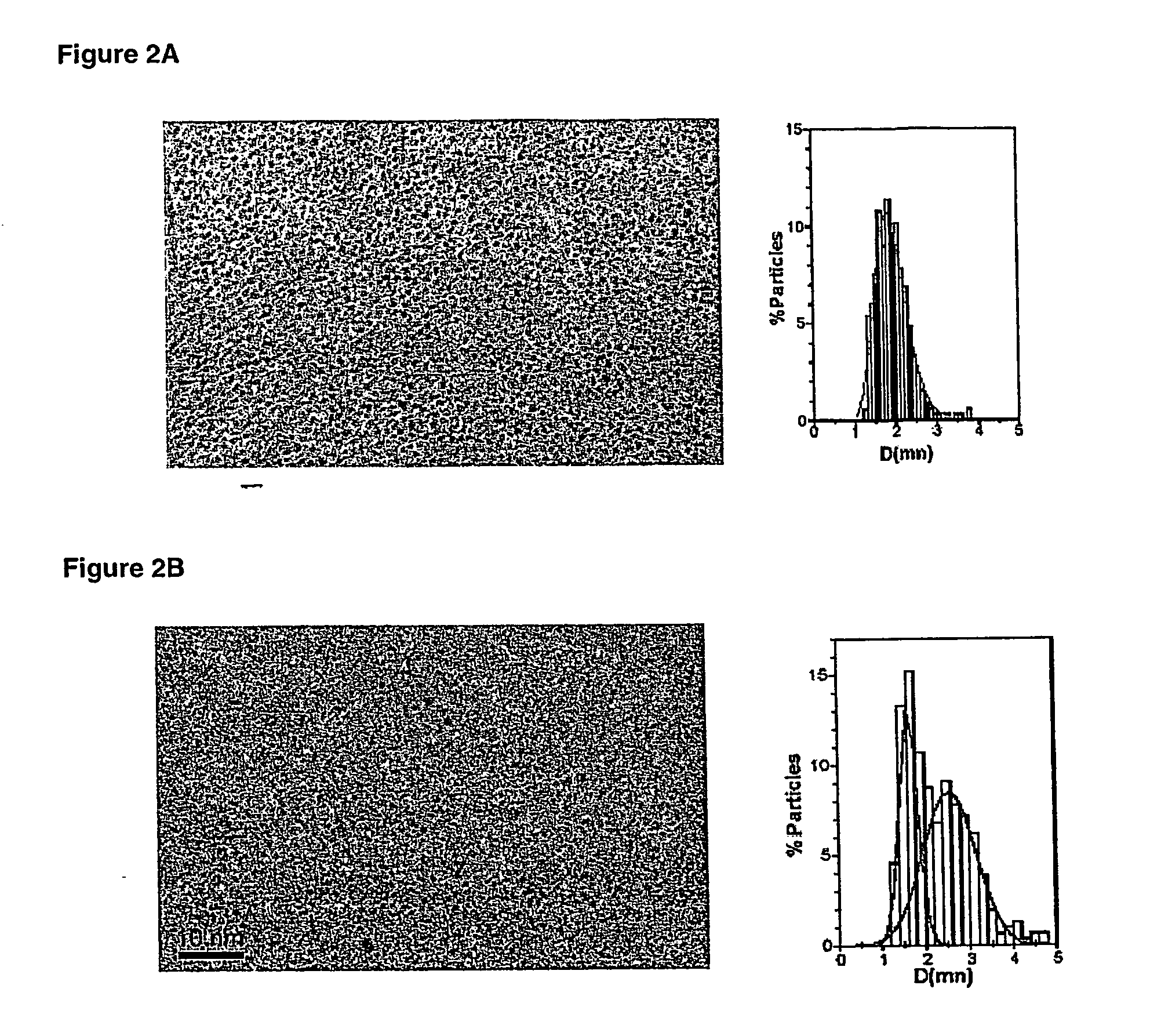
Figure 2 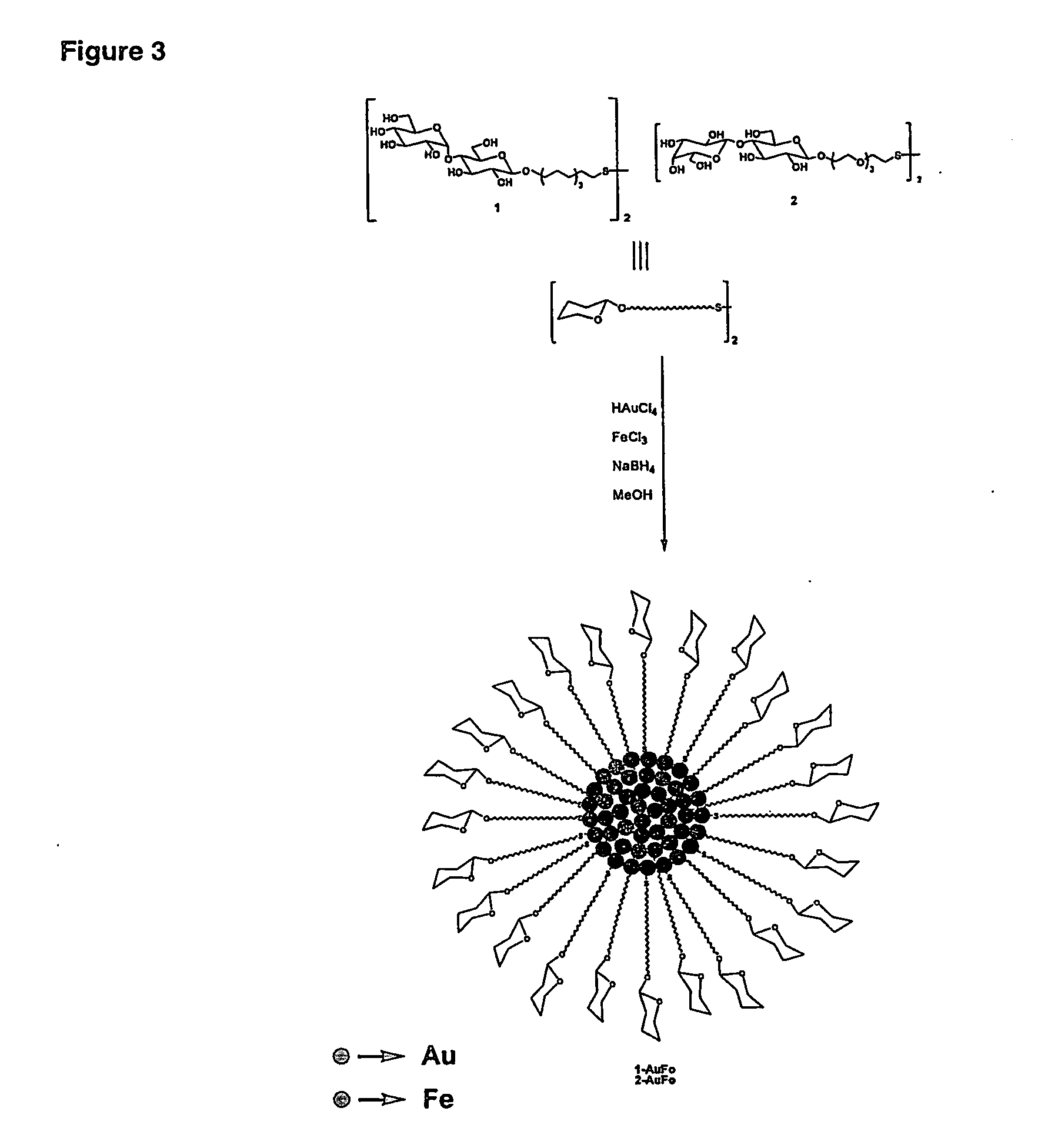
Figure 3
Abstract
Description
FIELD OF THE INVENTION
[0001] The present invention relates to magnetic nanoparticles, and in particular to magnetic nanoparticles having immobilised ligands and their use in studying the interaction of these ligands with other species. The present invention further relates to applications of the nanoparticles, for example for screening, diagnosis and therapy. BACKGROUND OF THE INVENTION
[0002] The development of methodologies to produce nanoparticles with bio-responsive properties has opened the way for producing useful tools for molecular diagnostics, therapeutics and biotechnology [1]. Metal, semiconductor and magnetic colloidal nanoparticles are presently under intensive study for potential applications [2].
[0003] Nanoparticles containing paramagnetic materials such as iron oxide have been made which exhibit unusually strong magnetic properties under external magnetic fields. These magnetic nanoparticles can be used in many biomedical applications, including cell separation, in...
Examples
example 1
Au—Fe Nanoparticles
[0125] A method of synthesising magnetic glyconanoparticles covalently bound to ligands was devised. By way of example, thiol derivatised neoglycoconjugates 1 and 2 of two significant oligosaccharides, the non-antigenic disaccharide maltose (Glcα(1→4)Glcβ1-OR) and the antigenic lactose (Galβ(1→4)Galβ1-OR), were prepared to functionalise in situ magnetic nanoparticles (FIG. 3, scheme 1). The synthesis of the disulfides 1 and 2 was carried out by glycosidation of the conveniently protected maltose and lactose derivatives with 11-acetylthio-undecanol and 11-acetylthio-3,6,9-trioxa-undecanol, respectively.[12] Both linkers have been used to test the influence of their hydrophobic or hydrophilic nature in the properties of the whole material. Compounds 1 and 2 were isolated as disulfide forms, and used in this form for the preparation of gold-iron protected glyconanoparticles. The water-soluble glyconanoparticles 1-AuFe (malto-AuFe) and 2-AuFe (lacto-AuFe) were obtain...
example 2
Magnetic Au Nanoparticles
[0140] Water soluble gold glyconanoparticles (GNPs) stabilized with self-assembled monolayers (SAMs) of different carbohydrate molecules were prepared by the chemical reduction of a metal salt precursor in aqueous solution in the presence of an excess of thiol derivatised neoglycoconjugates. The preparation sample procedure used as a starting point the Penadés et al [11][19] that produces gold GNPs in which the metal cluster has been at same time protected and functionalised with the organic molecule. The formation of Au—S covalent bonds isolate the metal cluster preventing its growth (core diameter≈2 nm) and confer on the nanoclusters exceptional stability in solution.
[0141] In this example, we report on the experimental observation of magnetic hysteresis up to room temperature in gold glyconanoparticles with average diameters of 1.4 and 1.5 nm. By increasing the ratio of thiol:gold in the Penadés procedure, GNPs sample with diameter of less than 1.5 nm c...
example 3
Au—Gd (III) Nanoparticles
[0149] Gold glyconanoparticle (GNPs) may be complexed to Gd(III) and other lanthanides to give new contrast agent. The neoglycoconjugate ligands present in the GNPs (60 to 100 molecules) are the chelating moiety.
[0150] Preparation of lactoEG4-Au(Gd) glyconanoparticles: To a solution of the corresponding gold glyconanoparticle (20.0 mg) in water (1 mL) a solution of GdCl3.(0.5 M, 1.08 mL) was added. The mixture was stirred in the absence of light during 20 h. The solution was filtered by centrifugation (MICROCON YM30, 13000 rpm, 8 min). The residue was washed (8×0.5 mL, methanol / water, ⅓). The nanoparticles were dissolved in water and lyophilized to give 17.5 mg of dark violet nanoparticles. TEM: average diameter 2.5 nm. EDX: Gd 6.8%; Au 33.2% atomic.
[0151] Determination of relaxivities: 1H NMR relaxation times T1 and T2 (37° C., pH 7.2) of the water protons in aqueous solution were measured at 1.5 Tesla in a Brucker Minispec NMR spectrometer. T1 values we...