
Time division protocol for an ad-hoc, peer-to-peer radio network having coordinating channel access to shared parallel data channels with separate reservation channel
a radio network and time division technology, applied in data switching networks, high-level techniques, wireless commuication services, etc., can solve the problems of tdd systems, which have not been deployed in voice systems, and conventional carrier-sense multiple access (csma) algorithms experience diminishing returns, so as to achieve maximum spectrum use, improve message reliability, and improve throughput and reliability.
Patent Information
- Authority / Receiving Office
- US · United States
- Patent Type
- Patents(United States)
- Current Assignee / Owner
- Publication Date
- 2006-08-29
- Estimated Expiration
- Not applicable · inactive patent
Smart Images
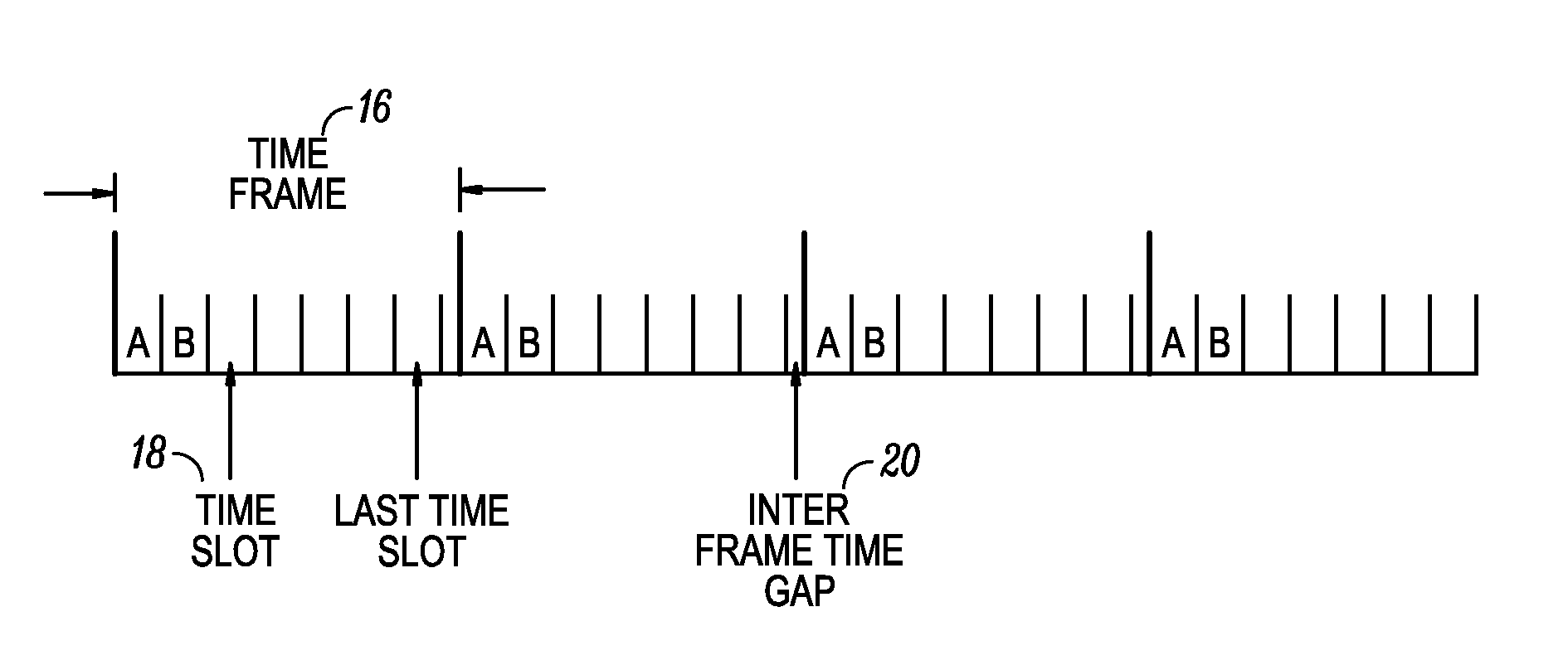
Figure 1 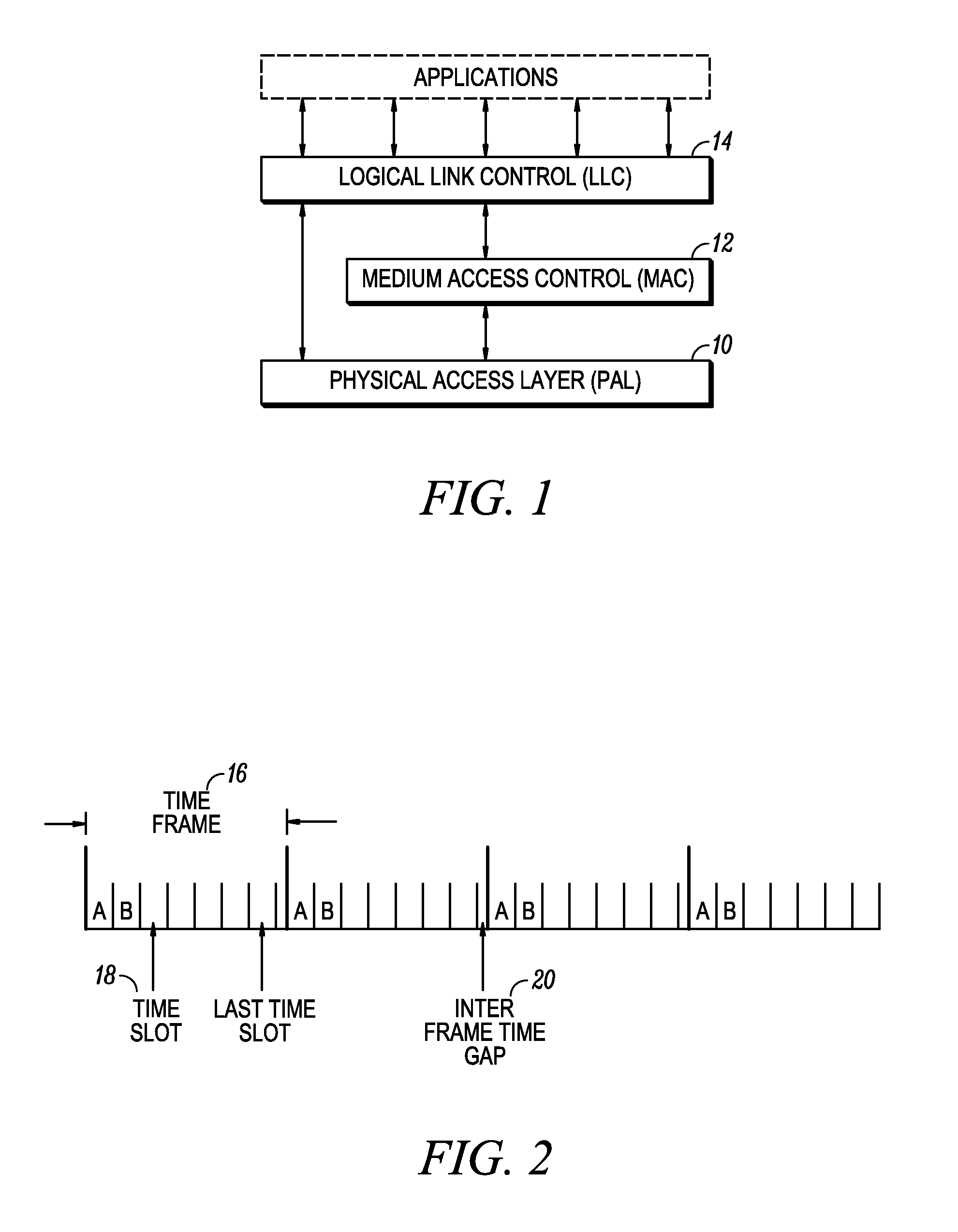
Figure 2 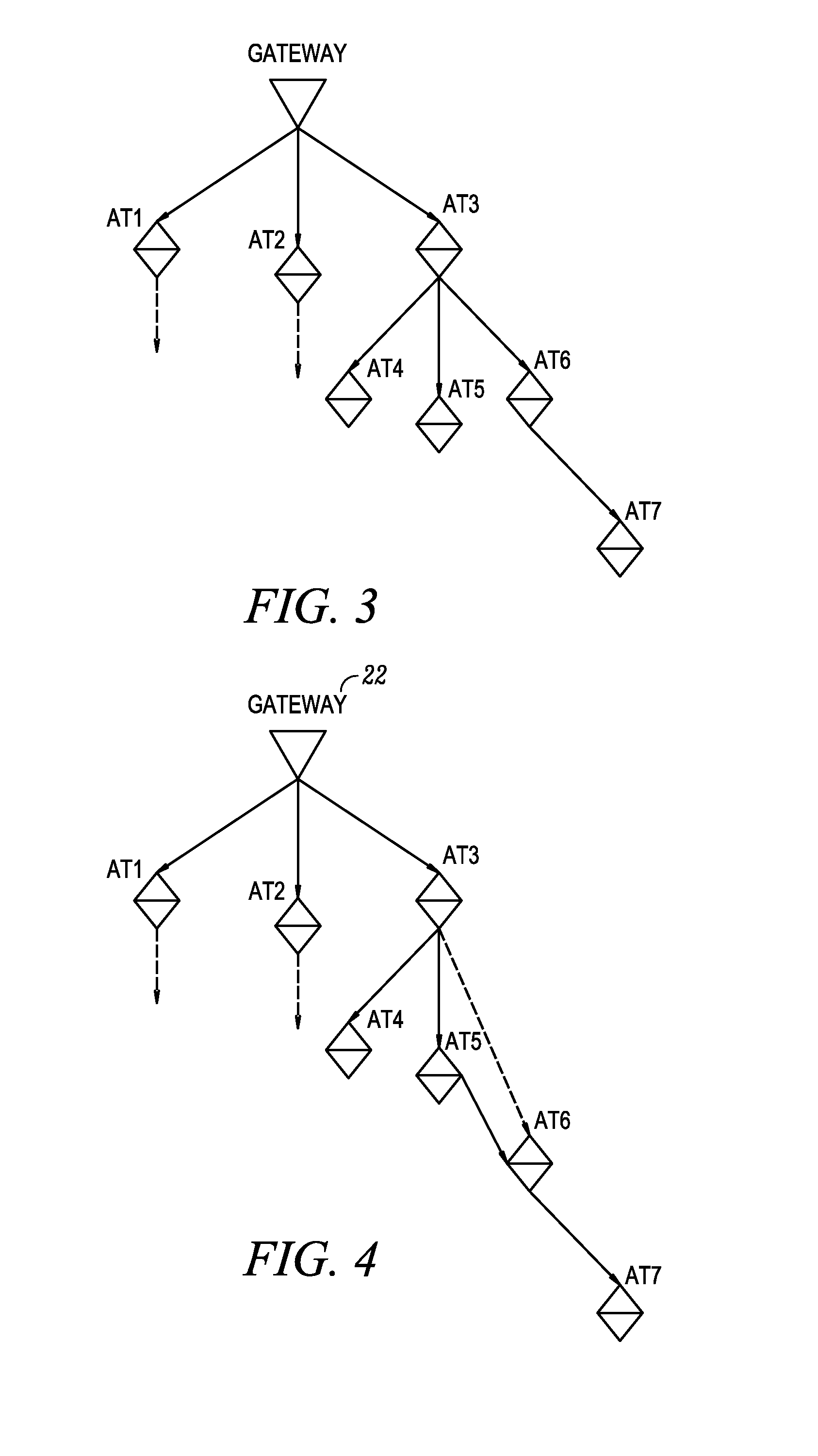
Figure 3
Abstract
Description
CROSS-REFERENCE TO RELATED APPLICATIONS
[0001] This is a continuation of co-pending application Ser. No. 09 / 815,157 filed on Mar. 22, 2001.
[0002] Priority of provision application Ser. No. 60 / 246,833, filed on Nov. 8, 2000 is herewith claimed.BACKGROUND OF THE INVENTION
[0003] The present invention is directed to a novel protocol for an ad-hoc, peer-to-peer radio network system having coordinating channel access to shared parallel data channels via a separate reservation channel. This system is disclosed in copending application Ser. No. 09 / 705,588, filed on Nov. 3, 2001, entitled “Methods and Apparatus for Coordinating Channel Access to Shared Parallel Data Channels”, which application is incorporated by reference herein in its entirety.
[0004] The network system having coordinating channel access to shared parallel data channels via a separate reservation channel of copending application Ser. No. 09 / 705,588 is directed to a network system, such as radio network, where each node, or radio...
Examples
Embodiment Construction
[0034]For purposes of a better understanding of the description, the following definitions and abbreviations are hereby given:
Definitions
“Service Area of a Terminal”
[0035]The geographical area where the transmission of a terminal can be received at a level higher than environment noise.
“Receive Set of a Terminal”
[0036]The set of terminals located within the service area.
“Transmit Set of a Terminal”
[0037]The set of terminals containing one particular terminal within their service areas.
“Service Set of a Terminal”
[0038]The set of terminals that can receive the transmission of one particular terminal and can be received at that terminal (the intersection between the receive set and the transmit set).
“Simple Connection”
[0039]An abstract notion associated to two terminals that can communicate one with another.
“Connecting Path”
[0040]A set of adjacent Simple Connections.
“Service Group of a Terminal”
[0041]The largest set of terminals containing at least one Connecting Path between the host ...